

Goethe in progress 2023 – Teaching & studies
Teaching in Dialog
Rarely have there been such good reasons to talk about milestones: in 2023, Goethe University developed a new mission statement for teaching and studying. It is dialog-oriented, sustainable and international and gives particular weight to research-based learning. At the same time, the university will once again be granted "self-accreditation rights", meaning that it can independently decide on the introduction of new degree programs, further develop existing ones and certify the quality of its study programs. And finally, the Generative AI working group received an award for its handout on dealing with artificial intelligence in teaching. A good year for teaching!
- Leitbild für Lehre & Studium
"Develop your own Goethe University mission statement"
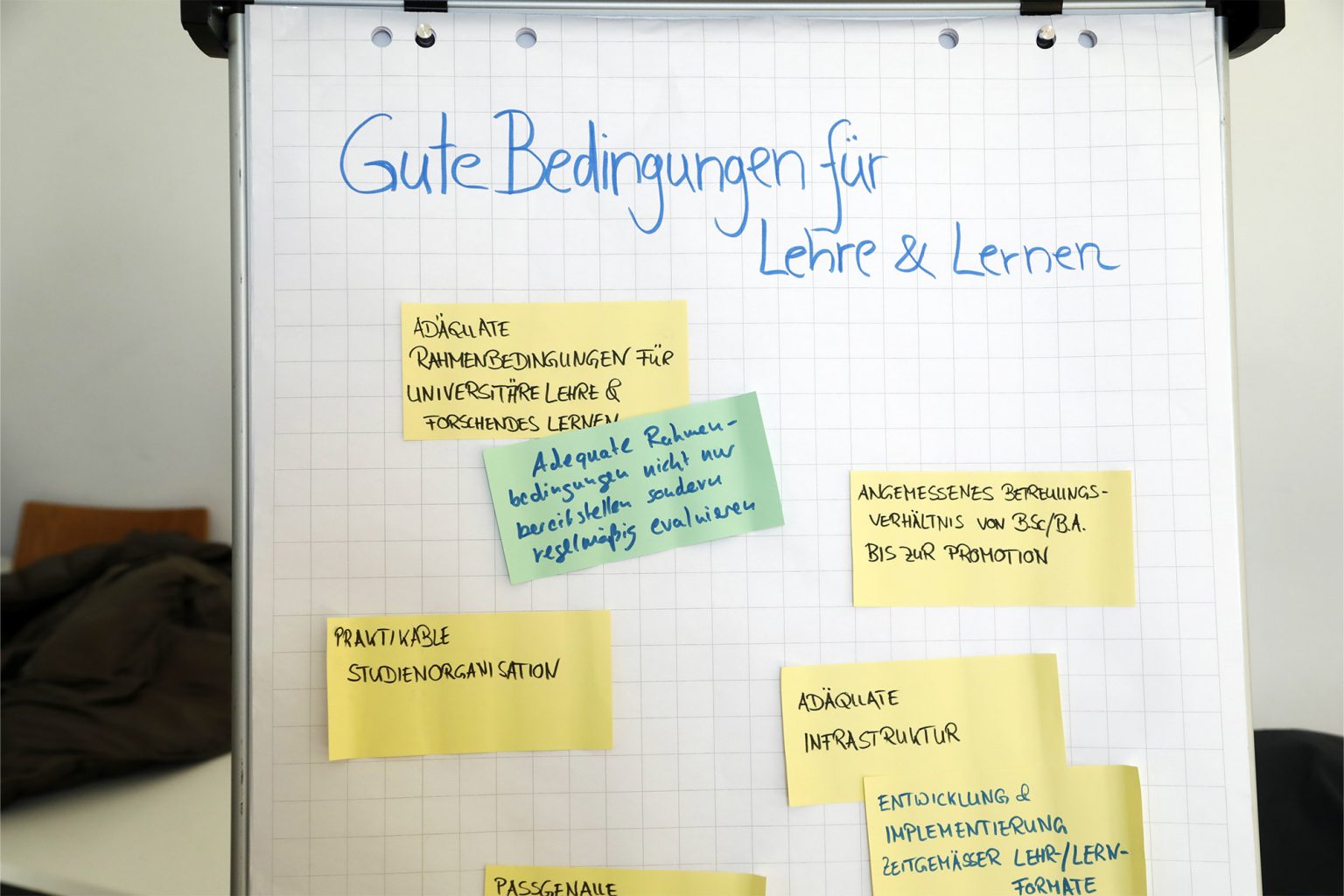
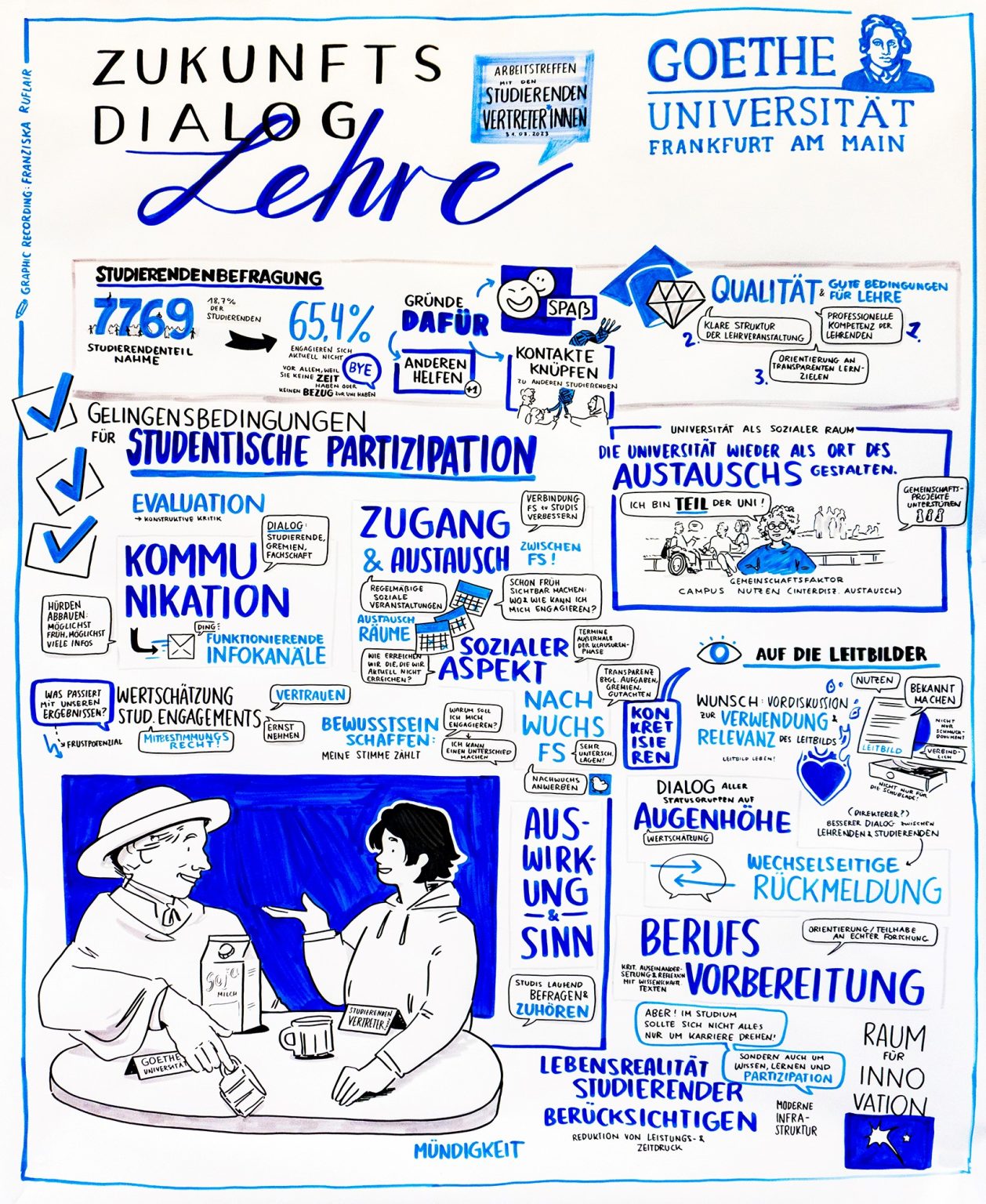
Goethe University has a new mission statement for teaching and studying. The "Future Dialogue on Teaching" process began at the start of 2023, and the new mission statement was ready by the end of the year. In between, there was passionate debate.
- System accreditation
Seal of approval for quality management
Goethe University can continue to decide independently on the introduction of new and the further development of existing degree programs and certify the quality of its degree programs.

- Lehre & Digitalisierung
Will artificial intelligence write my scientific texts in the future?
The ChatGPT language model made its debut at the end of 2022, and there are now other chatbots that seem to make academic work child's play. Goethe University has responded to this development.
- GROW
Growing into working life
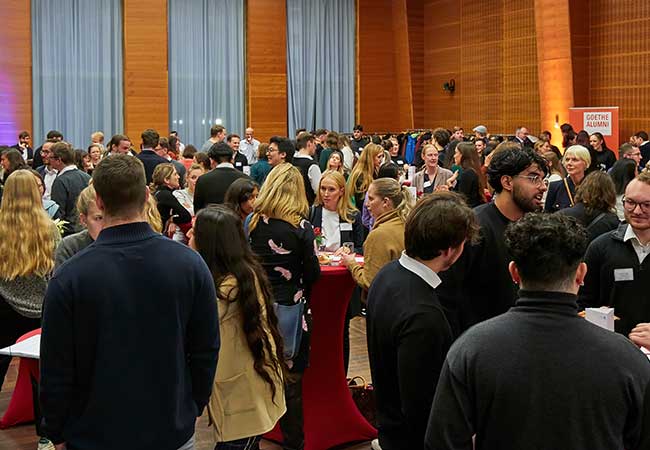
With the GROW! mentoring program, Goethe University supports students and graduates in the transition from university to career.
Short & sweet
Photo: Uwe Dettmar
- Leitbild für Lehre & Studium
"Develop your own Goethe University mission statement"
Goethe University has a new mission statement for teaching and studying. The "Future Dialogue on Teaching" process began at the start of 2023, and the new mission statement was ready by the end of the year. In between, there was passionate debate.
- Leitbild für Lehre & Studium
"I would be delighted if the mission statement became an opportunity for experimentation"
The future dialog on the mission statement for teaching and studying was initiated by the Vice President for Studies, Teaching and Continuing Education Prof. Christiane Thompson herself. At the start, all participants received urgent advice from the invited keynote speaker Annika Boentert: "Develop your own Goethe University mission statement!" Did you succeed? In an interview, Christiane Thompson explains what has remained of the previous mission statements and how sustainable and international teaching must be. Her successor Prof. Viera Pirker has been overseeing the mission statement process since April 2024.
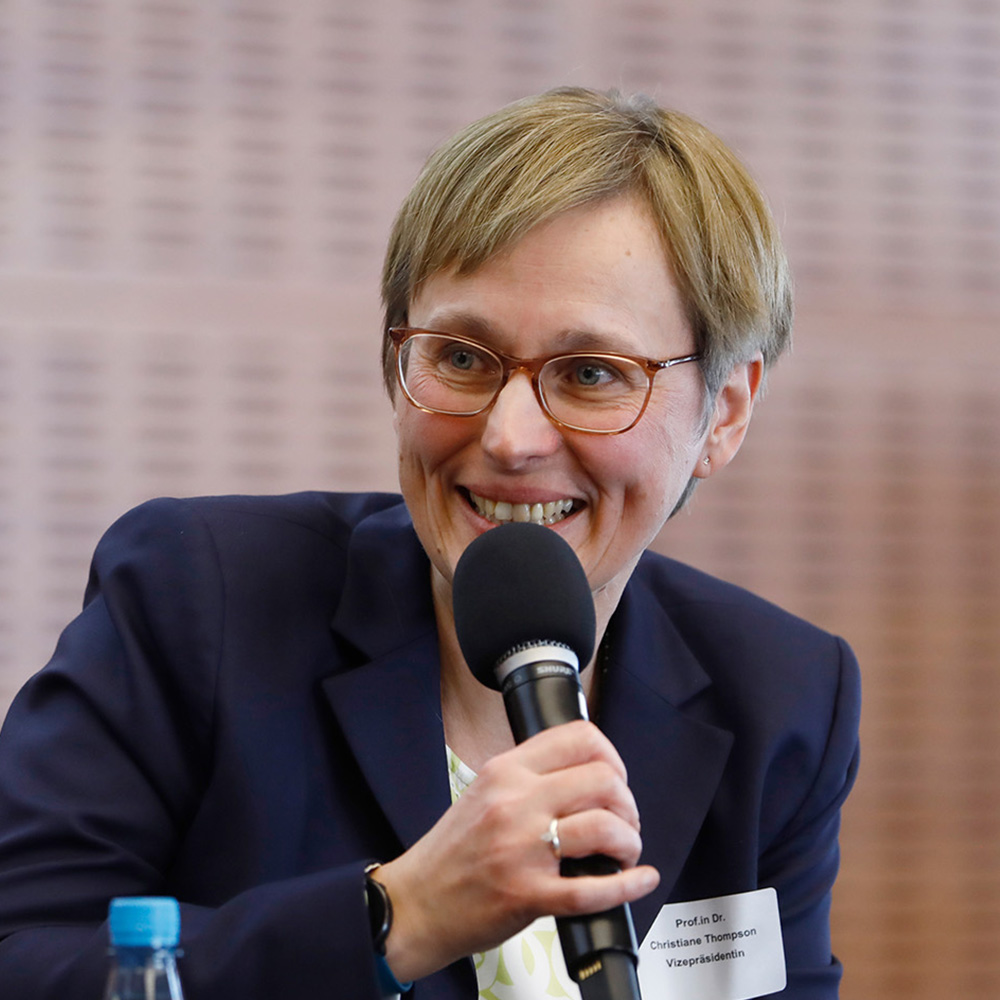
Prof. Christiane Thompson
Educational scientist and Vice President for
Studies, Teaching and Continuing Education
Photo: Uwe Dettmar
Ms Thompson, last year, as the responsible Vice President, you initiated the development of the new mission statement for teaching and studying at the beginning of 2023 and supported it until it went live. What was particularly difficult along the way?
Prof. Christiane Thompson: One of the challenges of such a process is always getting everyone involved around the table. When it comes to teaching and studying, it is even more important to have all status groups and, in particular, the students on board. It was also a challenge to find formats in which everyone involved felt that they were making a contribution. In addition, Corona was not that long ago and a reorientation process with regard to digitalization had begun in many areas. So we were working in a time of upheaval. It's also difficult to find the right words.
Which formats have you chosen?
In order to bring the students to the table, we organized a workshop with their representatives in March. The aim was to hear once again from the student councils about the issues that are important to them. We also used other events that took place during the year on studying and teaching for the mission statement process. I also really liked the fact that we had a stand at the summer festival where we spoke to people: A mission statement for teaching and learning – why do we need it?

Were there any terms that were discussed at length?
For example, we later removed some sentences from the section on 'research-based learning'; they were simply not suitable for certain subject cultures. The text we have at the end must apply equally to everyone. The special features of subjects must therefore be formulated in the respective teaching profiles of the departments. The students also did not identify with the term "student participation". They pleaded for a more politically coded vocabulary such as "participation", which we then adapted.
What is particularly important to you in this mission statement? Are there any favorite sentences?
Yes, I actually have several points that I think are really well done. For example, I think it's very important that the realities of student life are included in the mission statement for teaching and studying for the first time. I also think it's important that we have included the topic of sustainability as part of a future-oriented academic education. We are at a point where we have to say that the future is not secure at all. If the foundations of life are being destroyed, we have to ask ourselves in our studies and teaching what that actually means. What can we do to ensure that there is a future at all? This question of sustainability, in conjunction with the question of justice, is included at the end of the mission statement.
For me too, the aspect of research-based learning is a strong identifier with Goethe University. Today, it is very much about the form of independent engagement with content. It's about acquiring skills that enable you to deal with knowledge in a critically reflective way, to classify it and also to acquire new knowledge. This is what Goethe University stands for.
"The mission statement must be broken down by everyone and culturally translated"
At the kick-off meeting, the keynote speaker encouraged us to develop our own Goethe University mission statement. Is there anything specific to Goethe University in this mission statement?
In my opinion, you can see what is specific to Goethe when it comes to research-based learning, which I have already mentioned. Not only because we already have this point in the 2014 Principles of Teaching, but also because we actually take a very close look at how we teach and learn at the respective teaching centers. We monitor ourselves very closely, also with regard to the topic of AI in teaching. Research-based learning, embedded in a dialog orientation, is therefore very important at GU.
This does not mean that there is consensus everywhere. On the contrary, there is also a lot of controversy. However, the opportunity and ability to work this out and then to recognize these different positions – that is something I have never experienced before at Goethe University.
A mission statement implies obligations and rights for everyone involved. Which ones, for example?
The first part on teaching and studying in dialog describes that students help to create a productive teaching and learning atmosphere. It also states that lecturers should continuously improve their qualifications and that, in addition to these key players in teaching and studying, there are also other employees who do a great deal to ensure that the infrastructure for studying and teaching is well designed. For example, a student advisory service or people who host a learning management system are needed for teaching and learning to function. We also need members who ask themselves how we can create spaces for international encounters and transcultural spaces for debate, understanding and dialogue if we want to be an international university. Of course, not all of this can be described in the mission statement, but is part of the learning profiles of the departments. They need to ask themselves: What does internationality actually mean for us? How do we take into account the heterogeneity of students in our teaching formats? The mission statement has to be broken down by everyone and translated into the subject culture.
If you had one wish, what would happen to the mission statement now?
I would like the mission statement to provide secure support in the various areas of the university, so that it becomes really tangible. And I would be delighted if the mission statement also became the starting point for an idea-driven and future-oriented approach to studying and teaching, an opportunity for experimentation.
Questions: pb
Here, you can find the teaching and study mission statement developed in 2023.
- Leitbild für Lehre & Studium – Sechs Fragen an...
"Let it work with a reflective mind and an open heart"
How can different subject cultures be united in a guiding principle for teaching and studying without being lost? What role do digitalization, sustainability and internationality play in teaching? And what role do students' lives play between housing shortages, part-time jobs and caring for family members? Many questions were hotly debated during the mission statement process. Prof. Dr. Arnim Lühken, Dean of Studies in the Department of Biochemistry, Chemistry and Pharmacy, Philip Schwed, student teacher of History and Music, and Maximilian Brauch, Head of the Study Program Development and Evaluation Group, provide information on this. Together with his team, he coordinated and supported the "Future Dialogue on Teaching".
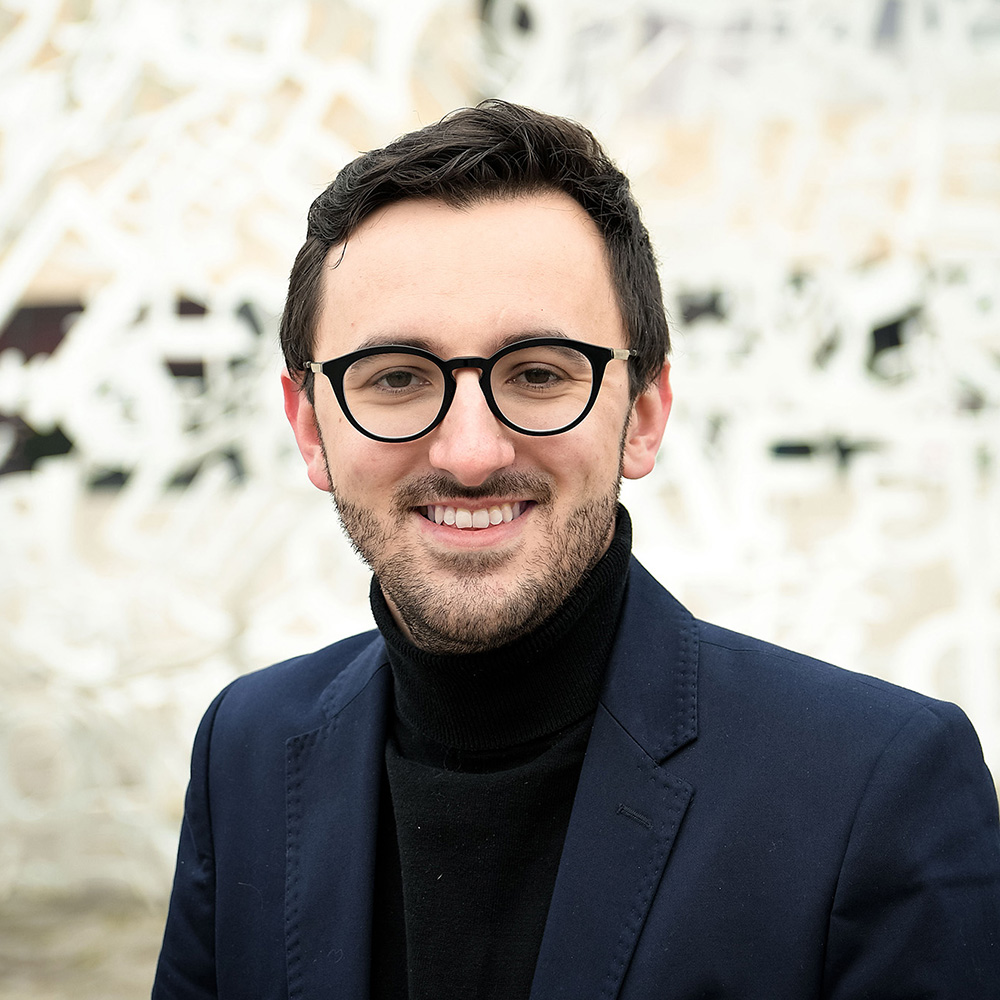
Maximilian Brauch
Group Leader Study Development and Evaluation
Photo: Oliver Schlaffer/SLI
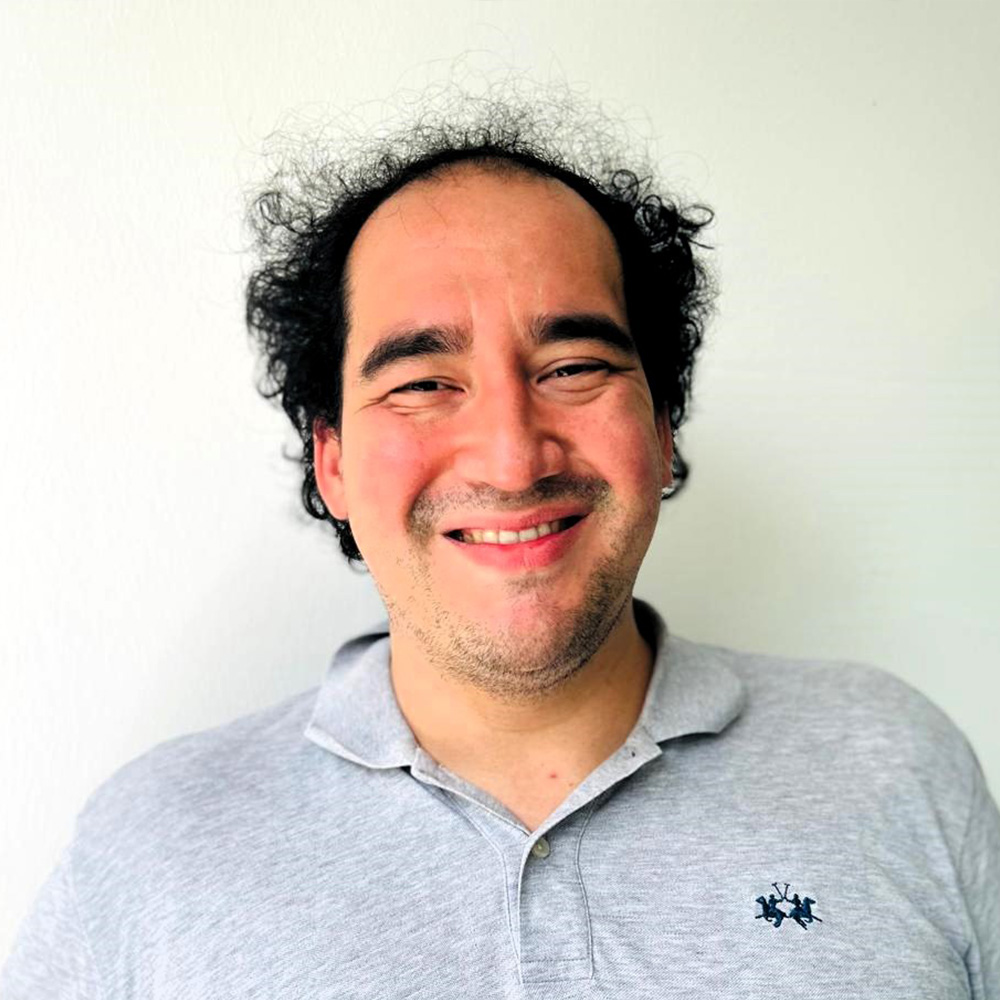
Philip Schwed
Student in teaching history and music
Photo: Anna Sophie Reitnauer
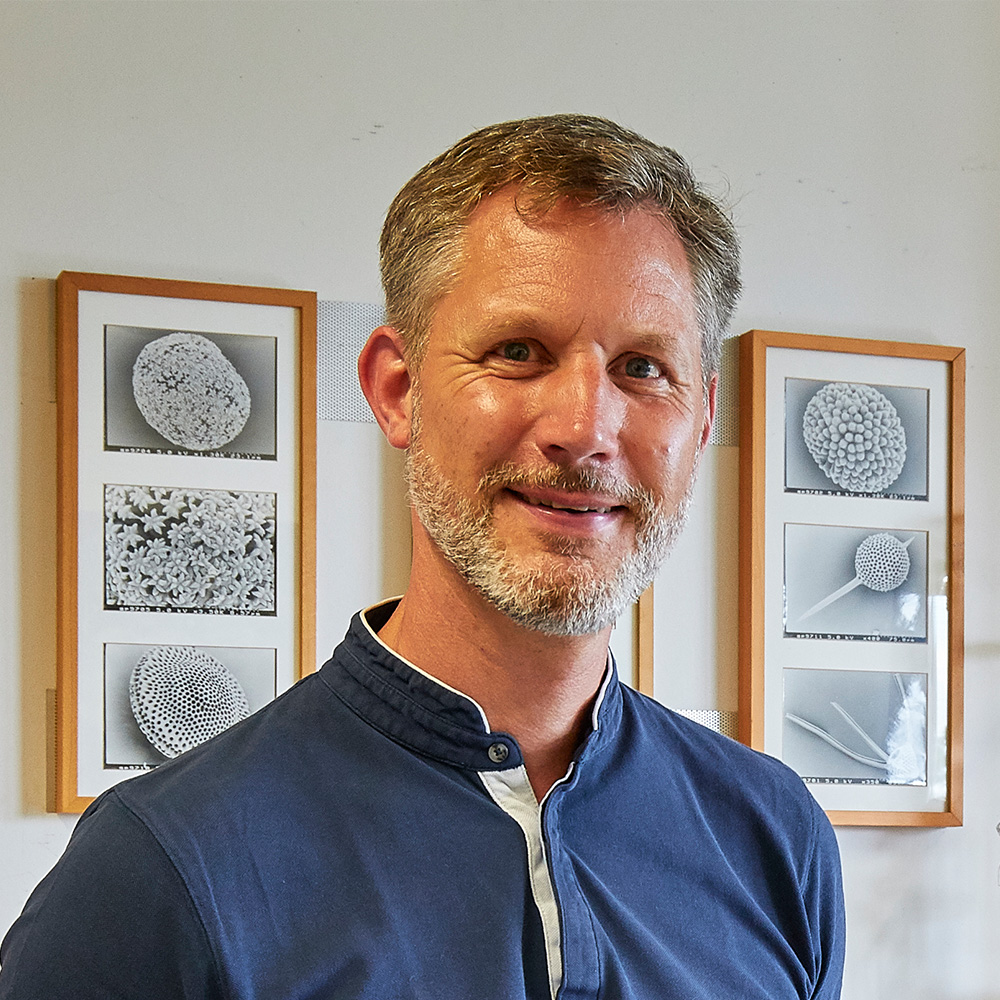
Prof. Arnim Lühken
Dean of Studies in the Department of Biochemistry, Chemistry and Pharmacy
Photo: Jürgen Lecher
1. The mission statement is in place: What have been the biggest challenges for you along the way?
Brauch: The coordination of such a university-wide process is complex. Although we had a project plan and time horizon in mind, the "Future Dialogue on Teaching" required us to react flexibly at all times. There was a wide range of input from all those involved in the process that had to be coordinated and a wide variety of topics that had to be processed in such a way that in the end everything fitted into a two-page paper and ideally also had a "Goethe-specific touch" – that was a very big challenge.
Schwed: One of the biggest challenges was to formulate the content in condensed sentences. Many ideas for the mission statement emerged during the development process, but at the same time the text could not be too long. The mission statement now includes in particular the perspective on the realities of student life and the overlaps between teaching, research and studies.
Lühken: Goethe University comprises a community of over 50,000 people who want to live and develop their individuality in this very place. It required the utmost passion and a lot of listening to incorporate and preserve this diversity in a common mission statement.
2. What is particularly important to you in this mission statement? Is there a "favorite point"?
Brauch: Personally, the section "Teaching and studying in dialog" is particularly close to my heart. In a nut shell, it describes the aspirations of our quality management system. In my opinion, quality assurance and development can only work through dialog and participation. This applies to (re)accreditation procedures as well as to the development of subject-specific teaching profiles. In our politically and socially polarizing times, the role of the university as a place of discourse cannot be emphasized often enough. I am therefore very pleased that dialog in all areas relating to teaching is once again particularly emphasized as a core element and self-imposed requirement.
Schwed: From a student perspective, the points that emphasize cooperation between students and lecturers are particularly important to me. There are many opportunities for students to get involved in committees and thus help shape teaching – this should be clearly emphasized. It is also important to me that the university sees itself as a place of diversity and discourse – and also as an international place that speaks out against discrimination of any kind, where all students can be free of fears and worries and make decisions about the future of the university together with teaching staff.
Lühken: The emphasis on dialog in the mission statement is particularly important to me. Because constructive dialog between all members and participants is the foundation of a teaching and study culture at Goethe University that enables satisfaction, success and sustainability.
3. Is there anything specific to Goethe University in this mission statement?
Brauch: Of course, mission statements for teaching and studying in the German university landscape are similar in many respects. This is precisely why we decided at the kick-off that a certain "Goethe specificity" should not be missing from the new mission statement. For me, it lies in the point "student life realities". I haven't read much about this in other mission statements.
Schwed: At Goethe University, there are various procedures for scrutinizing the quality of teaching. How teaching is received and what needs to be improved can be seen, for example, in evaluations and reaccreditation processes for degree courses. Cooperative processes in teaching and practical relevance are also becoming increasingly important in the individual subjects. Digitalization is also playing an increasingly important role in teaching. Overall, it is remarkable that Goethe University makes this form of co-design of studies possible.
Lühken: Teachers and students at Goethe University have a tradition of neither shying away from discourse nor conflict. The mission statement for teaching and studying looks back on this tradition.
4. A mission statement provides guidelines: What rights and obligations are associated with it – for the university as an institution, for the teaching staff, for the students?
Brauch: A mission statement should not be a standardization instrument per se that is applied to a degree programme like a checklist and worked through point by point. Rather, it is about looking at the mission statement from a subject-cultural perspective and discussing how the sometimes abstractly formulated content can be translated into the respective subject culture and degree programs. To this end, we at Goethe University have developed the instrument of subject-specific teaching profiles, which act as a hinge between the general mission statement for teaching and studies and the degree program profiles. And, of course, the mission statement also has an orientation function by repeatedly posing the question: "Do I see and feel in my work as a lecturer and as a student in the courses that the mission statement is being lived out in my studies?"
Schwed: A mission statement can provide an argumentative basis for many discussions and applications. When applying for QSL funds (funds to improve the quality of studies and teaching, ed.), for events organized by student councils, the AStA or autonomous tutorials: The mission statement can always serve as an argument that these extracurricular offers must exist. The mission statement is the summary of what teaching at Goethe University is all about and thus a guiding principle of university life. This gives rise to rights, such as the participation of students in the design of teaching, and also obligations, such as for lecturers, who should ensure that a course remains "studyable".
Lühken: I would like to emphasize and demand the prerequisite for this question: All 50,000 of us get, take and bear responsibility for good teaching and good study conditions!
"I am very pleased that dialog is particularly emphasized as a core element"
5. What does this mission statement make possible? What would not exist without it?
Brauch: The technocratic-sounding answer is: without an existing mission statement, we as a university would not have been granted the right to self-accredit our degree programs – because universities today are obliged to have a mission statement for teaching and studying. The nicer answer is: the fact that we have to have a mission statement for teaching and studying has made us pause in the fast-paced everyday life of the university and conduct the "future dialog on teaching" in the first place. It was challenging and exhausting, but we agreed on what is really important to us as a university community in teaching and studying. Also so that we can do justice to the claim of a future-oriented course of study.
Schwed: The mission statement is a common understanding of how good teaching can succeed and what the prerequisites for this should be. Without a mission statement, this basis would be missing. The mission statement emphasizes that Goethe University promotes the participation of everyone in the design of teaching and studies.
Lühken: Especially at a large university, we have to pull together to ensure that teaching and studies can be organized and successfully implemented in terms of objectives and content. The mission statement provides us with these strands.
6. If you had one wish: What should happen to this mission statement now?
Brauch: I hope that the new mission statement will become widely known among teaching staff and students. Because only then will it start to come to life. A PDF file with the name "Mission statement for teaching and studies", hidden away on a website, is of little use. I would also like the new mission statement to be used critically – in the context of teaching and also in the quality assurance and development procedures for our degree programs.
Schwed: I hope that the mission statement will be made more widely known and that as many people as possible will take note of it and put it into practice: in courses, seminars and lectures. Many things in teaching are already in line with the mission statement, but its conscious link to courses is not always immediately apparent. I would like all teachers and students at Goethe University to be able to refer to the mission statement in future.
Lühken: My wish is to read the mission statement for teaching and studying with a reflective mind and an open heart for the Goethe Community and let it work for you!
Questions: pb
(Why) does Goethe University need a mission statement for teaching?
At the beginning of the "Future Dialogue on Teaching" process, six participants provided information on what they expect from it: Till Arnold and Yasmine Goldhorn are students at Goethe University. Maximilian Brauch is a course development officer. Dr. Markus Lindner is a research assistant at the Institute of Ethnology. Professor Dr. Mirjam Minor is Professor of Business Informatics. And Professor Christiane Thompson is Vice President for Studies, Teaching and Academic Continuing Education.
- Leitbild für Lehre & Studium
What is the secret of good teaching?
What do academics at Goethe University understand by "good teaching"? What do teachers themselves enjoy, how do they experience the interaction with students? The staff magazine GoetheSpektrum asked lecturers about this in 2023 – for example the literary scholar Prof. Roland Borgards and the biologist Dr. Bianca Bertulat.
- Leitbild für Lehre & Studium
"We wanted to create something moving and agile"
Prof. Roland Borgards dared to experiment with his colleague Esther Köhring in the summer semester 2023 – and designed the usual lecture series as talks with readings. Two experts were invited to each of the "Talks on Ludwig Tieck", which were moderated by Borgards and Köhring themselves.
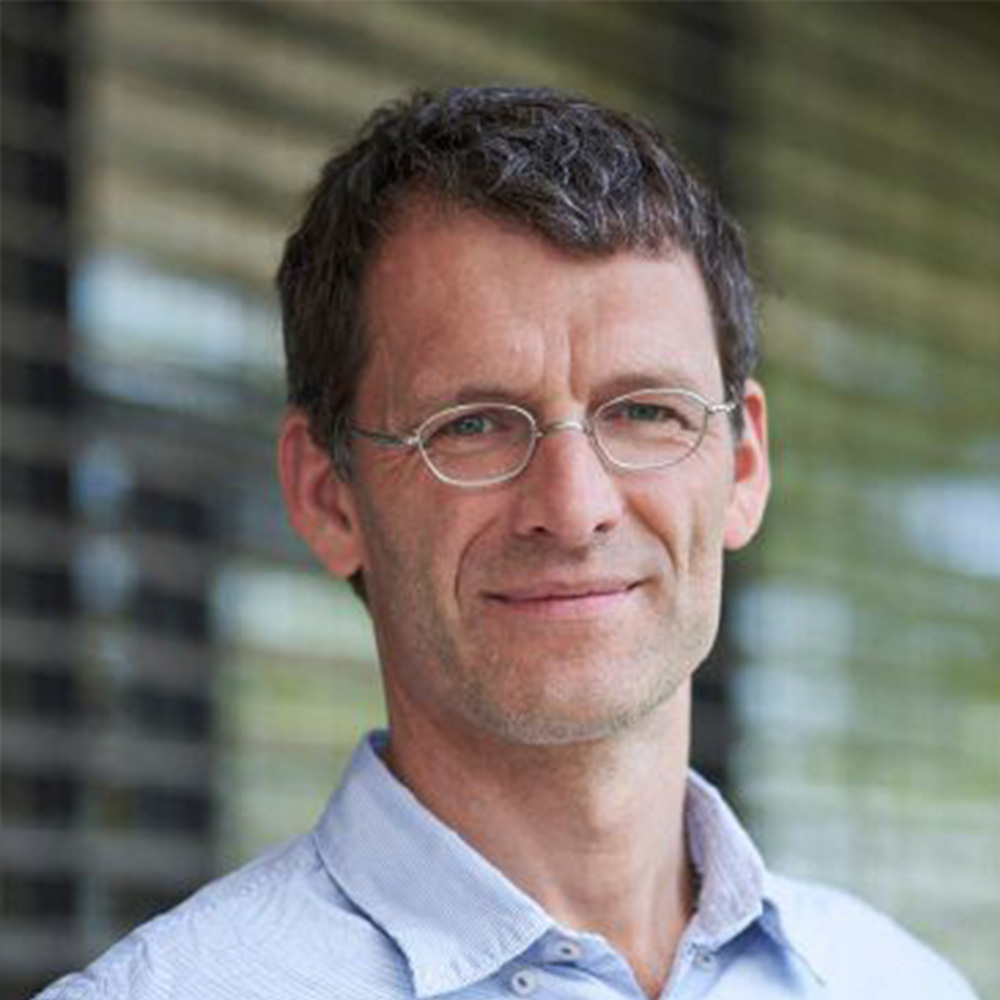
Roland Bogards, Professor of Modern German Literature from the 18th Century
to the Present at the Institute for German Literature and its Didactics
Photo: Stefanie Wetzel
Mr. Borgards, what prompted you to replace the lecture with moderated talks and readings?
Roland Borgards: The starting point for us were three considerations: Firstly, Tieck is an author who encourages conversation, polyphony, dialog. So we thought: Tieck would certainly have been pleased with the format. Secondly, we also wanted to create something moving and dynamic for the audience – a pleasingly heterogeneous group of students, interested parties and researchers: not the finished specialist lecture, but an open debate. And finally, we also wanted to try out something new for ourselves, to move out of the tried and tested paths, a process of self-refreshment, so to speak.
Do you know how the series of talks was received by the students?
This procedure proved successful for all three participants: for Tieck's texts, for the listeners and for those involved in the conversation. On the one hand, the students demonstrated this in the concentrated and consistent manner in which they participated in all six conversations. However, this became particularly clear in a subsequent seminar, in which we returned to the Tieck texts and the conversations in a relatively small group of just over 10 students. Here, it was not only noticeable that these discussions were followed attentively, but that they were also immediately able to fuel and enrich our own discussions about the literary texts. After all, this is precisely what the format demonstrated: that a literary text is not simply something I can (or should or must) know something about, but something that should get me talking, discussing, thinking and formulating. Literary texts are inspiring occasions for speech that need to be seized. 'Talk about me! This is what these texts call out to us.

How did you learn to teach yourself?
One activity that has inspired me and continues to inspire me is improvisation. I am also a saxophonist, play jazz and free improvisation. That has a big influence on my teaching. Musically, it's basically about combining planning and the unplannable in a highly dialogical situation that emphasizes the present moment. This is how I prepare seminar sessions (and also lectures): I think very carefully about what I want, I play through different things (in instrumental terms: I practise), and the better prepared I am, the more freely I can then deal with what I have prepared in the situation, the further I can move away from it, the more closely I can listen to what the students bring to the table, the more it can become a joint performance. If it's a jazz band, then all the participants in the seminar are part of the band. But to emphasize it once again: This improvisation is not more vague in its results than other forms of teaching, but often much more precise. And it is definitely much more participatory.
What have you always wanted to tell your students?
Everything I want to say to my students, I say to them again and again: Studying is work, but it's fun! Writing and interpreting can be learned! Literature is a great thing! It's perfectly okay not to understand some things at first, or never to understand them at all (I actually quite like not understanding things myself from time to time)! Be engaged! University is a space of opportunity: Use it!
Questions: pb
- Leitbild für Lehre & Studium
"I'm a big fan of simulations"
Dr. Bianca Bertulat is the academic coordinator of the Goethe Orientation Studies in Natural and Life Sciences. For her innovative, creative and committed work, she received the 1822 University Award for Excellence in Teaching in 2023.
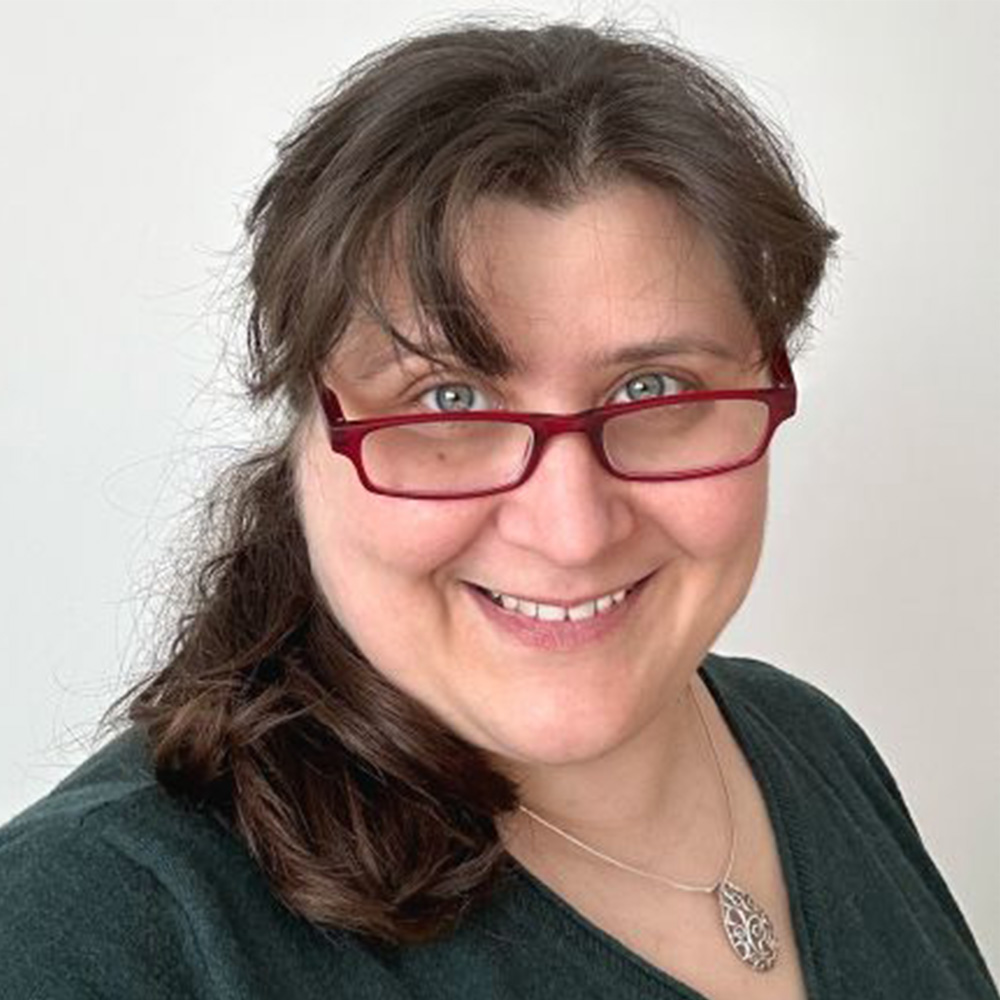
Bianca Bertulat, Academic Coordinator of the Goethe Orientation Program
Natural and Life Sciences
Photo: private
Ms. Bertulat, what can students learn from you?
Bianca Bertulat: I hope they take away with them that science, learning and approaching new things is fun. That more or less everything is interlinked and it therefore makes sense to look beyond your own subject. This is exactly what the interdisciplinary practical projects of the Goethe Orientation course, for example, which I supervise each summer, convey. It's particularly fun to see how much creativity the students have and how enthusiastically the teams pursue their ideas. The "Extreme Weather" practical project in particular is a perennial favorite that will be entering its fourth round this summer semester.
What are your favorite teaching methods?
I'm a big fan of simulations, problem-based learning and workshops. In short: all formats in which learners and teachers come into contact with each other. However, many of these formats stand or fall on the willingness of the participants to get involved. But when this works or starts to work, it is enormously enriching for both sides. It's always nice when students realize how much they themselves contribute to the success of an event and that asking questions is always perfectly fine.
When do you enjoy teaching?
Always, actually. It's fun to implement a new concept, it's fun to keep optimizing the established, and it's fun to deal with the unforeseen. But the most fun is when the students gain new experiences or even surpass themselves within a semester. As coordinator of the B.Sc./ B.A. Natural and Life Sciences, I get to experience this quantum leap from the first to the third semester up close – from the orientation phase with its uncertainties and doubts to the start of the degree course when students have found "their" subject. It's always great to see students who are fully committed to their discipline and when the team effort in the orientation phase pays off for all colleagues from the five departments involved.
What frustrates you sometimes in teaching?
I always find it a bit of a shame when students don't make full use of teaching formats. For example, when fewer and fewer participants come to a lecture series in the winter semester towards the end or when hardly any questions are asked in a discussion round. Or I have to read and comment on texts that feel like they were written between two commercial breaks on the phone. I sometimes get a "Please revise, that's not how I read it".
How did you learn to teach yourself?
I was very lucky to have many good role models in teaching myself... and a few terrible ones. On the whole, this has helped a lot, because of course you imitate what you like (for example, showing your own enthusiasm and arousing interest in different ways) and avoid what you thought was terrible (for example, embarrassing people for asking "stupid" questions). But ultimately, for me, learning to teach is never finished. I am constantly learning from students and colleagues.
What have you always wanted to tell your students?
Have fun, and when you've found your "thing" and are on fire for it, don't let individual events along the way tell you that you can't do it. Look for the tools that will help you crack this nut and just keep at it. It's worth it!
Questions: pb
Photo: Elke Födisch
- System accreditation
Seal of approval for the quality management system
Goethe University can continue to decide independently on the introduction of new and the further development of existing study programs and certify the quality of its study programs. The so-called "self-accreditation right" was granted to it again in March 2024 by the national Accreditation Council through the successful system reaccreditation. The decision was preceded by an intensive internal reflection and external assessment process lasting over two years.
Who actually obliges Goethe University to be accredited and who defines the external requirements? The need for accreditation of study programs is a result of legal regulations and guidelines, including the Hessian Higher Education Act. The quality requirements are essentially defined and monitored by the Accreditation Council based in Bonn, which is responsible for this in Germany. Universities can choose between program accreditation, in which all degree programs are individually accredited externally, and system accreditation.
Goethe University is system-accredited. What does that mean? The "system accreditation" of a university confirms that a closed system of interlocking instruments and measures in the area of study and teaching is in place and suitable for ensuring the external quality requirements for study programs. With the system accreditation in 2016 and the successful system reaccreditation in 2023/24, Goethe University was granted the right to (re)accredit its study programs independently until the end of September 2030 and to award the seal of approval of the Accreditation Council on its behalf. In March 2024, the Accreditation Council officially confirmed this right to Goethe University with the note "without conditions"; the assessment process that began in 2022 was thus completed without monita.
Diversity of opinion as a sign of creative restlessness
The original decision for system accreditation and thus against individual program accreditations was linked to further objectives for Goethe University, such as gaining autonomy and self-control and the intention to invest in the sustainable expansion of its own structures. The stocktaking at the beginning of the system reaccreditation process in 2022 has now shown that since 2016, the suitability of the instruments and processes for flexibly adapting the curricula has been continuously improved and participatory and dialog-oriented quality assurance procedures have emerged that support the departments.
The central hinge of Goethe University's quality management system is the university's internal Accreditation Commission: it exercises the right of self-accreditation at degree course level and thus ensures the implementation of external requirements, but also the internal demands on the quality of the degree courses (e.g. defined in the new mission statement for teaching and studies). The committee makes decisions on accreditation and reaccreditation, issues conditions and recommendations and reviews their fulfillment.
Internal commission celebrates its 10th anniversary
The fact that the quality management system in the area of teaching and learning is so well accepted by the members of the university is largely thanks to the Accreditation Commission. Representatives of all subject cultures, including students, sit on the committee and review the curricula for their practical suitability. The fact that different views sometimes clash here is evidence of a creative restlessness that all those involved see as an essential prerequisite for the improvement process. The appreciation of the Accreditation Commission as an independent decision-making body is based on its consistent decision-making practice and on the involvement of all subject areas and status groups, which act as multipliers of good practice examples in the subject areas. The systematic discussion and reflection of conditions under which studying and teaching can succeed is thus a guarantee for organizational learning at Goethe University. The fact that the Accreditation Commission is now celebrating its tenth anniversary in 2023 is a wonderful addition to the pleasing events of this year in the area of teaching and learning.

Self-image for studying and teaching strengthened
How can it be illustrated that the system reaccreditation procedure itself has also strengthened the university's self-image in the area of teaching and learning? The multi-stage system accreditation procedure offered numerous opportunities for reflection, for example as
- the self-documentation of the main system was developed
- materials have been developed to document the effectiveness of the procedures and instruments at study course level
- an exchange with external experts took place as part of two complex inspections
- a statement on the expert evaluation has been submitted
- the process was critically monitored by a dialog forum with members from all status groups.
Those involved in the quality management system (QM system), who discussed its strengths and potential for improvement in various rounds of talks, included the Presidential Board, students, teaching staff, the Accreditation Commission, deaneries of studies, study commissions, the Senate Commission for Studies and Teaching, examination offices, the Interdisciplinary College of Higher Education Didactics, as well as the advisors for studies and teaching, strategic organizational and quality development, the Equal Opportunities Office and the International Studies Department. Prof. Christiane Thompson, who as Vice President for Teaching, Studies and Continuing Education was responsible for and promoted the system reaccreditation, describes the special role of the intensive exchange in the course of preparing for the visit of the national Accreditation Council: "The numerous discussion formats for the preparation and support of the procedure alone show how great and focused the interaction of the actors and the joint agreement on quality goals in the area of studying and teaching work at Goethe University. We have undoubtedly succeeded in creating a culture that is supported by a broad awareness of quality at the university."
Successful interplay of instruments
What's more, the exchange forums were also intended to act as a catalyst for the necessary normative regulations, strategic objectives and operational measures at Goethe University. And indeed, they formed the starting point for the following processes, some of which were essential:
- Normative: the amendment of the evaluation statutes
- Strategic: the development of a new mission statement for teaching and studying
- Operational: Specifics in the Quality Management Manual.
All of these different but interlinked processes are evidence of a long-established quality management system and at the same time justify its significant further development in 2023.
In its final report, the external panel of experts praised the successful interplay of these various processes. The panel also attests to Goethe University's understanding of quality, which highly values the dialog and participation of all relevant stakeholders, especially students, while at the same time granting the departments a high degree of autonomy. According to the experts, the self-responsibility of the departments is demonstrated by the successful work of the study commissions. In the view of the experts, Goethe University has a very well-positioned dynamic QM system that is supported by all stakeholders.
Gerd Helm
Coordinator System Reaccreditation
Illustration: Teaching at Goethe-University, AI-generated/studium digitale
- Lehre & Digitalisierung
Will artificial intelligence write my scientific texts in the future?
The ChatGPT language model from the company Open AI made its debut at the end of 2022, and there are now other chatbots that seem to make academic work child's play – with consequences for studying, teaching and research. Goethe University has reacted quickly to this development – for example by setting up the Generative AI working group. How is the working group exploring the consequences of AI for the university? And how do students deal with AI? Three interviews shed light on this.
- Lehre & Digitalisierung
"Our success will be measured by whether we manage to create a 'use case'"
The Generative AI working group is researching the consequences of AI for Goethe University. The two studiumdigitale employees Julia Schmitt and Dr. David Weiß, who is also the head of the working group, provide information on why rolling out technology alone is not enough and why it is important not to lose your cool in the AI hype.
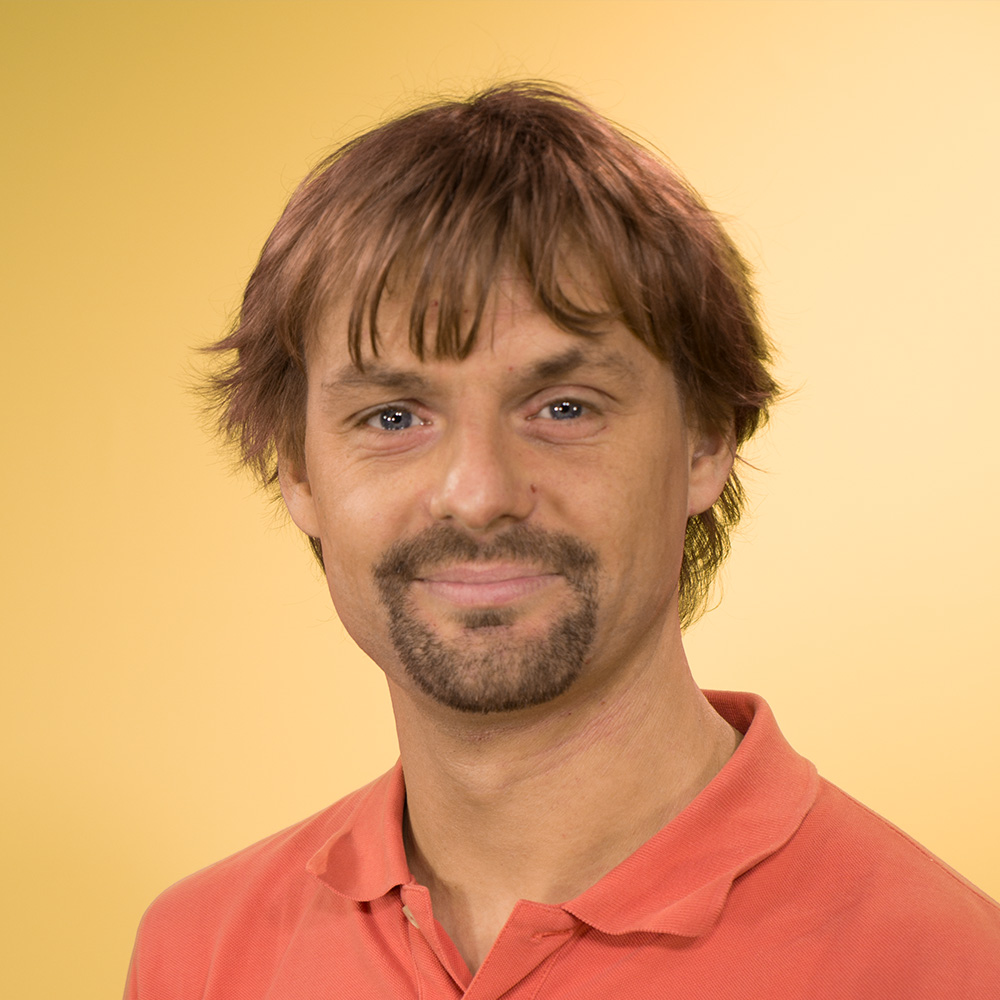
David Weiß
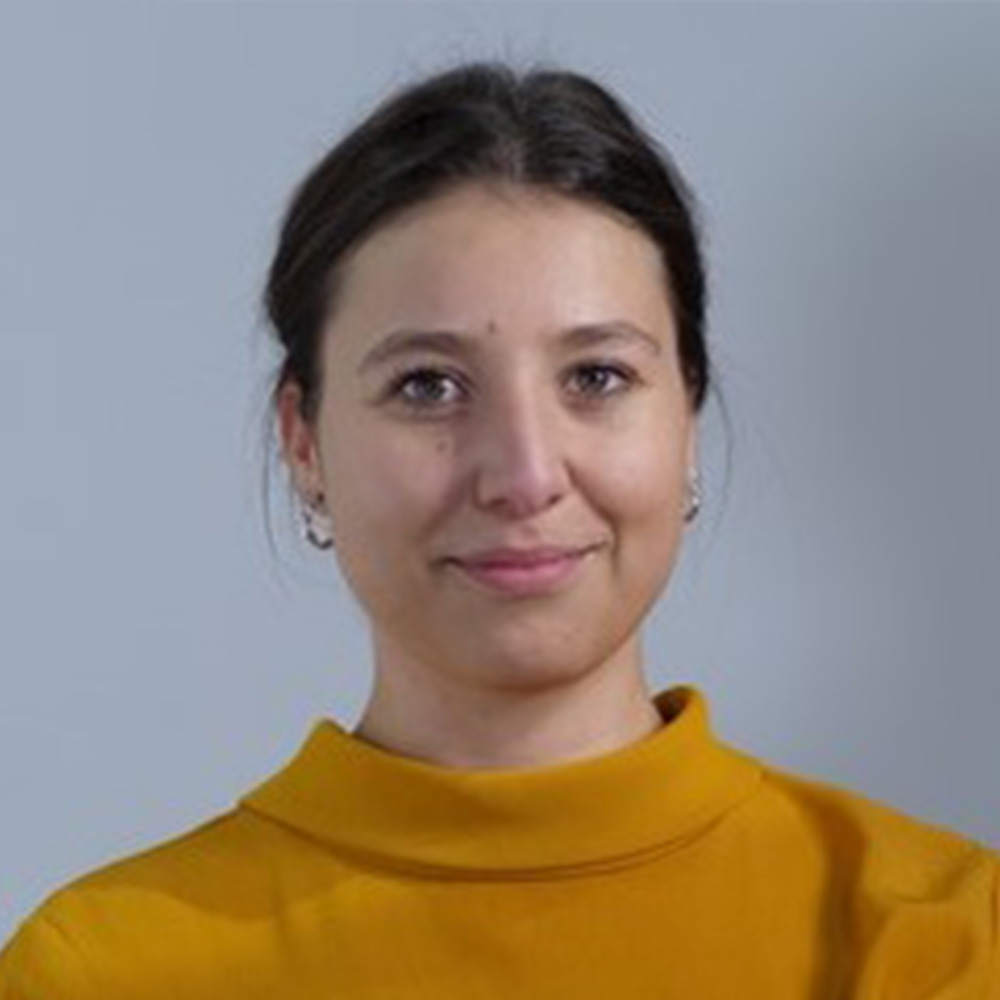
Julia Schmitt
studiumdigitale employees of the Generative AI working group
David Weiß is head of the AG
Photos: Gregor Brinkmeier/studiumdigitale
"Don't ban it, experiment with it!" Nora Hoffmann, head of the GU writing workshop, recommended when dealing with ChatGTP shortly after it was published. Is this also the attitude with which the Generative AI working group was founded?
Dr. David Weiß: Yes, this core statement was the most important thing at the beginning of our working group. It clarified the position of Goethe University on the topic for all teaching staff. At other universities in Hesse, there was quite a bit of reluctance or objections at first. But we thought that was the wrong approach.
Julia Schmitt: We assumed that: The AI that is there will be used one way or another. That's why the AI working group was set up on the initiative of Professor Thompson, the Vice President for Academic Affairs and Teaching – with members from different disciplines and status groups. So we also have deans of studies and students on board.
Weiß: We then decided together: AI needs to be embraced as a technology and we need to look at what this could mean for teaching and for the university as a whole in the future. With this in mind, we set off and the first step was to draw up a handout for teaching staff and students. In doing so, we tried to address the fears and reservations of lecturers and students. Can I use AI in my thesis? If so, under what conditions? How should I mark it? These are questions among the students. And the lecturers ask questions like: Can I also prohibit AI if, for example, it makes sense for students to develop things on their own? We have brought these questions together in the handouts and are constantly expanding them with an FAQ. For example, "Where can AI provide support in teaching?"
Schmitt: The handout, which then went online in September 2023, was named as one of four best practice examples from German universities by the Hochschulforum für Digitalisierung (the nationwide think & do tank "Hochschulforum Digitalisierung" is a joint initiative of the Stifterverband, the CHE Centre for Higher Education Development and the German Rectors' Conference (HRK), editor's note). This is partly because we have addressed the recommendations not only to teaching staff, but also explicitly to students.
"The future is already here, but it's just not equally distributed"
You also included tips on the use of AI at other universities in the handouts. Was there a kind of collaboration between the willing?
Weiß: You mention something that is actually the case from my perspective: the fact that universities are increasingly working together is a good movement. Corona was the start of this. At the time, the aim was to convert teaching to online virtually overnight. Without the Hessen-wide "Hessen Hub" project, for example, it wouldn't have gone so well. We realized that everyone had the same problem and that we could support each other at twelve universities. This has now been demonstrated again with the AI topic. This has resulted in a series of AI impulses, i.e. presentations by experts, which can now be found at hessenhub.de.
These recommendations are a first step. What came next?
Schmitt: We helped organize events and, for example, dedicated a Dean of Studies Day entirely to the topic of generative AI and the handouts. But we also went to the departments and asked: Where is the problem right now? Where is AI already taking place, where is there potential for development in the coming months and where do we need support?
And where did it burn?
Weiß: The future is already here, but it's not equally distributed. There are a few departments that are making progress with AI. In the working group, for example, we had a Bachelor's student from psychology who agreed with her supervisor to use AI in her Bachelor's thesis. The student was already very aware of the issue and before she started her thesis, she set out rules about which tools she was allowed to use and under what circumstances.
Schmitt: On the other hand, there are lecturers who haven't done much with the subject so far, then read an exam or a thesis and something seems strange to them. Then, together with the examination offices, a decision has to be made on a case-by-case basis as to whether there has been an attempt to cheat. There are still AIs that can recognize this, even if they often deliver incorrect results. However, when you see how quickly AI systems are developing, it is only a matter of time before attempts to cheat are no longer recognizable at all. The main sticking point for teachers is therefore this uncertainty as to whether and how students should use AI and whether they should allow it. As long as this topic is still being discussed throughout Europe, teachers are still pretty much on their own at the moment. The question is also, when is something plagiarized? That is probably very difficult to answer.
Weiß: And at the same time, careers and life biographies depend on this assessment.
"AI seems to be a great tool for research"
What does it mean for the working group that subjects deal with AI differently?
Weiß: Even though AI is such a hype topic, we shouldn't allow ourselves to be put under so much pressure. With Chat GPT alone, we could spend years, even decades, investigating all the questions we have. At studiumdigitale, we follow the SMS process, i.e. scouting, maturing and service. We are currently in the scouting phase. We are initially trying to build up best practice examples in a community with a tool lab. In my computer science course, for example, I make AI part of the teaching. I set out the rules for the tools in advance: Anything can be used, but it just has to be communicated. We have the task solved once with AI, once we solve it alone and then talk about it: Where did results come out that were completely off the mark, but where were there also results that provided new insights? Someone from geography didactics is now implementing the same thing that I did with eight participants with 120 students.
How were your first experiences with AI – disappointing or inspiring?
Weiß: In my seminar, the experience is mostly inspiring, but sometimes also disappointing. AI seems to be a great tool for research: it focuses on the context of a very broad subject area, especially where you don't yet have an overview. In research in particular, there are many opportunities to see new connections between studies that may not have been there before. ScienceOS is such a platform: it provides answers to a research question with the corresponding sources. You can use these as a kind of guide to grind your own research question.
Schmitt: AI can also help with writing. studiumdigitale offers workshops for teachers and the writing center for students.
Does AI work as a sparring partner in the writing process?
Schmitt: It's often a problem for students in particular to start with a blank sheet. With AI, I can basically send someone out first to break the ice for me. And basically, it no longer matters in which language I receive a paper, I can have it translated directly. Language translation, at least for the main languages, can really be seen as a solved problem. And I can also have technical language translated in such a way that it is very likely to be understandable. However, you always have to reflect on this critically...
What was it like in your seminar: did you ever take a critical look at AI?
Weiß: In my computer science seminar, I noticed that there is actually more exchange on the topic of AI overall. Previously, it was more difficult to get discussions going in presence. AI has become more of a proxy topic. Some people find it much easier to start a conversation, along the lines of: I'm not actually personally affected right now, but let's take a look at the process from the history of AI. But in the end, we talk a lot about how we actually proceed, what is good and what is not. I see a great opportunity in that alone. These conversations are processes of reflection, regardless of what the AI answers. A lot of things are put to the test.
Schmitt: But why we want to build this community of practice: The use of AI looks completely different in every specialist area. So we have to ask the question of how useful the use of AI is at least 16 times, i.e. in all specialist areas. Many people think that AI has the same effect everywhere. However, a computer scientist on a Master's course can write a program code with AI and receive an evaluation directly, which then has to be checked for errors. But what does philosophy do with AI?
If each subject has to examine where AI makes sense and where it doesn't, then it will take time before differentiated answers are available.
Weiß: Yes. Because it goes so far that you don't just have to look at the importance of AI for a subject, but there are now also AIs that I can have locally on my computer. I just enter my literature collection or my seminar notes into them to get summaries. However, on the technical side, there are of course still huge construction sites. At the moment, there are providers with questionable sources. And when I enter a colleague's texts, for example, data protection also plays a role.
"AI may actually come up with ideas that we don't even have an overview of"
Can I be sure that my private documents and the publications of colleagues that are legally protected will not be reused?
Weiß: Exactly not. It's about copyright, but also about data protection. But let's go back to the question of what AI brings to individual areas ... It may be that AI actually comes up with ideas that we don't have an overview of, because AI has read much more than we have. But it could also be that it is just a warm rehash of many things, i.e. answers that have already been given. This is a question that can really only be answered per subject. We have to expose this and keep an eye on it.
Does AI already have long-term and medium-term consequences for degree programs?
Weiß: On the one hand, interdisciplinary courses on AI are currently being developed at Goethe University, for example from the ALI project. In addition, other degree courses will have to adapt their requirements. There will be a lot of change. Definitely.
You also address ethical aspects in your handouts...
Weiß: Of course, this includes disclosing that you have worked with an AI. Schmitt: But it's also primarily about access to the tools. Who can access this tool now? Who has the best version? Who can only use an old one because it's free? It's about the distribution of resources and accessibility – with consequences for our education system. But ethical aspects also include the fact that older literature that has not yet been digitized is not reproduced. So what does AI do to our understanding and knowledge of the world?
Another ethical question is the extent to which women or small groups in society are less represented or not represented at all. A simple example: One prompting strategy is to tell ChatGPT, imagine you are a computer scientist with 20 years of professional experience. You have programmed in JavaScript. Now write me some code on topic XY. Then I get a program code. But if I enter that you are a computer scientist with 20 years of professional experience and then ask for the same program code, the results will be worse, i.e. at a simpler level.
"So you can't just roll out the technology, you have to ensure acceptance"
But the major providers have already tried to make adjustments to the "minority problem"...
Weiß: However, it will only become clear in the coming months and years whether there really are new technologies for this. After all, the existing technology does not allow us to become more sophisticated. And that is also immensely important for research: it depends on the results being reproducible, i.e. not being different tomorrow than they are today. New technologies have to be invented or combined to achieve this.
No matter what the subject culture is like, the professional and critical handling of AI is probably part of every degree program...
Weiß: No student can say I don't want anything to do with it. And we have a real obligation to provide training in this area – both students and teaching staff. Basically, this is yet another new wave of media literacy.
While you want to train, the AI is already developing further...
Weiß: That's the difficulty: teaching students prompt engineering, which changes during this time. What's more, we members of the working group also carry out this task alongside our day-to-day business. The success of the working group will therefore be measured by whether we concentrate on a few areas, go through them properly from a technical, legal and ethical point of view and come up with a "use case", i.e. a representative application. Other universities take a different approach and have brought out tools much faster in some cases. And then they weren't accepted: There were reservations, legal consequences and other problems. So you can't just roll out the technology, you have to ensure acceptance.
Schmitt: We have recently designed our Community of Practice in the form of a website. This GKI website is there for teachers and students to register. In a somewhat more advanced forum, teachers and a few selected students will then be able to exchange information on specific tools and specific learning scenarios, i.e. we will only make the tools available to them. A collection of tools that we at studiumdigitale offer from the working group, which can then be used, which are quasi Goethe University-approved. According to our basic concept of scouting, maturing and service, this is exactly what we want: "Together we will become competent in dealing with AI".
What about the costs?
Weiß: That is also still an open construction site. We have no idea how the costs will develop. But theoretically, a single person who enters the texts stored on their computer into an AI can ensure that the entire quota is used up. We now need to test this thoroughly. Only then can we take the next step and open up AI to all students. After all, 43,000 students potentially using AI is a completely different number. In the end, we may end up purchasing licenses for 16 small AIs, each of which we will make available to a department.
At the same time, we need to think about where we can integrate AI into existing infrastructures, into learning management systems such as Moodle or OLAT. And then we also have to ask where we might have to offer our own models on our own hardware, because we are dealing with highly sensitive administrative data that must not leave the university under any circumstances. We are in talks with Mr. Schielein (the university's Chief Information Officer (CIO), editor) about this.
On the subject of sustainability: what about energy as a resource?
Weiß: This is primarily an issue when training these models. These generic models, such as ChatGPT, actually require enormous resources. On the other hand, it's amazing how quickly progress is being made in terms of energy consumption . Time is working for us here. But this is also an issue that we are discussing with Mr. Schielein and agree on using cloud infrastructure. This can handle large data or large models much more efficiently. It's also about data centers that are much more efficient than small ones, such as our large data center "Green Cube". The CSC (the Center for Scientific Computing at Goethe University, editor's note) also has possibilities. In addition, the state of Hesse is also making efforts to provide infrastructure via hessian.AI (The Hessian Center for Artificial Intelligence, editor's note). In the medium term, hubs will be created where a lot of computing power can be rented for short periods of time.
Then there's the C3S, the Center for critical computional studies at Goethe University, which aims to accompany this digital future with critical awareness...
Weiß: The C3S is also a member of our working group and after the initial phase, I imagine that we will hand over certain topics to the C3S. And that's a good thing. As a university, we have to think beyond things and say what the next steps could be. For example, what thoughts does AI provoke simply by being in the world?
Are there plans for the WG to provide empirical data for C3S research?
Weiß: Yes, the community of practice and the tools could be researched qualitatively and further developed in the direction of learning analytics. But AI as a whole is a topic that affects us all and can only be tackled if it is supported and co-developed by the university management right down to the last member of staff.
Questions: Pia Barth
Here, you can find the website of the AG Generative AI.
- Lehre & Digitalisierung
What AI says about the Generative AI working group
What are the tasks of the Generative AI working group at Goethe University? The following text was written by an AI based on the interview, which you can read in the edited version under the title "Our success will be measured by whether we can create a 'use case'".
In March 2023, a working group (WG) was founded at Goethe University to deal with the integration of artificial intelligence (AI) into teaching. This working group consists of members from various disciplines and status groups, including students and lecturers.
The main task of the working group was to develop a guide for teachers and students in order to create clarity and confidence in dealing with AI. This guide was published in September 2023 and recognized by Hochschulforum Digitalisierung (HFD) as one of the best practice examples in Germany.
The working group focused on promoting the use of AI in teaching by organizing workshops and events to raise awareness and qualify teachers and students. A particular focus was on the ethical, didactic and legal classification of AI use.
Another aim was to establish a community of practice in which teachers and students can share their experiences and learn from best practices. A special website was set up for this purpose, where interested parties can register and take part in discussions.
The working group plans to provide specific AI tools that have been tested and approved by Studium Digitale. These will initially be made available to teachers and selected students in order to test and further develop their use in practice.
In the long term, the working group aims to roll out the findings and tried-and-tested tools across the university and integrate them into existing infrastructures such as learning management systems. The aim is also to collaborate with the C3S (the Center for Critical Computational Studies (C3S) at Goethe University, founded in 2023, researches the interactions between digitality and democracy and the dynamics of change, ed.) and other relevant institutions in order to further research and optimize the ethical, didactic and technical aspects of AI use.
In summary, the working group has laid important foundations in its first year of existence to promote the use of AI in teaching at Goethe University and at the same time address the associated challenges.
The following form of evidence of how AI has been used corresponds to Goethe University's recommendations for the use of generative AI in teaching:
| AI-based tool | Form of use | Affected parts of the work | Remark |
|---|---|---|---|
|
Whisper-WebUI with OpenAI/Whisper (Model: large-v2) |
Transcription of an approx. one-hour audio recording of an online interview |
Complete work |
The calculation took place locally on a laptop. No data was sent to OpenAI at |
|
LobeChat with OpenAI connection (Model: GPT-4o) |
Prompt: "please summarize the following conversation for an annual report:" + transcript |
Complete work |
ll content has been shared with OpenAI |
- Lehre & Digitalisierung
Experiment, don't forbid
How to deal with ChatGPT? At the beginning of 2023, UniReport asked Dr. Nora Hoffmann, Head of the Writing Center, and her research assistant Alexander Kaib about this. Both had a clear stance on this: experiment, don't ban.

Dr. Nora Hoffmann
Photo: Picture People
ChatGPT has been a big topic for the science and education sector since the beginning of the year at the latest; how do you look at it as a writing center?
Nora Hoffmann: We are a little disturbed by the scaremongering that students will no longer write term papers themselves in future and will only cheat. But that would be an inappropriate assumption – students often see the benefits of writing their own papers to develop their own thoughts and arguments. The idea of banning ChatGPT would also be impossible to implement. It wouldn't even be possible to prove whether the bot was used to create a text. Of course, there is this risk of fraud, but on the other hand, it should be much more about the fact that this program also opens up new opportunities for us. It would therefore make sense to inform students about the limitations and dangers of as well as the opportunities, to let them try it out and experiment. After all, they will certainly have to be able to deal with various forms of AI in a professional context in the future. AI literacy is also a skill that they will need to learn for the scientific field, just as we expect them to be able to use word processing or literature management programs, for example. It would therefore be wrong to leave them alone with this.
Alexander Kaib: We are also interested in researching ChatGPT in terms of writing science and didactics. We still know too little about this. The question I ask myself is whether the use of bots reduces creativity in writing or even enhances it. Does it help you to come up with new ideas quickly, e.g. if you have texts suggested to you that you change and revise? Or, conversely, does it steer your own ideas in certain directions and make you less creative as a result? I can imagine both. Our most important piece of advice stems from this indecision: You should try it out with students, see where it helps you, approach it with curiosity...
"The use of ChatGPT should be more widespread in technical and scientific subjects"
Do you already have experience of who works with it?
Kaib: So far, we only have anecdotes from tutors and workshop participants. Everything is represented: Some have had no experience with it at all, some are critical of it. Many use ChatGPT when writing in English. One participant reported that she successfully had the outline of her paper created. Its use is said to be more widespread in technical and scientific subjects.
Does it affect humanities scholars and natural scientists equally, or should the answer be more subject-specific?
Kaib: I think that in natural science subjects, texts are often more exemplary overall: Protocols and research articles usually have a clearly predefined structure. Since AIs are particularly good at creating model texts, I could imagine their increased use in the natural sciences. In addition, in subjects where you tend to write exams until the higher semesters, writing is sometimes considered less important anyway. In the humanities, on the other hand, a lot of term papers are written, which are subject to different requirements depending on the lecturer, so there are also fewer conventional patterns that can be easily reproduced by AI. However, the general tip is: you should try ChatGPT in all subjects, but always involve the students.
Hoffmann: The natural and social sciences work a lot with data, whereas the humanities basically write texts based on texts; therefore, the danger of using a bot for the entire text production might seem greater in the humanities. This is perhaps also a reason why the humanities subjects are generally more critical of the tool.
The economist Prof. Walz said in an interview with UniReport that it makes no sense to have students write reproductive texts; instead, they should learn to write creative texts. Before the emergence of artificial intelligence, did universities actually know why writing and learning writing skills is so important?
Hoffmann: We had a similar development with e-learning during the pandemic: suddenly, lecturers had to think much more than before about what they wanted to achieve with their teaching and how they wanted to design it accordingly. With ChatGPT, you are thrown back to basics: Students are expected to think through and reflect on a topic independently in a term paper, to develop their own ideas. In the past, however, perhaps not all lecturers conveyed this so explicitly as a goal and did not guide students methodically, because the focus was more on the text product (to be graded) than on the creation and writing process. Now the focus on this process is becoming more important again, as we have to ask ourselves: What should humans be able to write, and what could perhaps be done by a machine?
Kaib: In addition, reproducing texts that could be written by ChatGPT are often important for student learning processes. Summarizing a lecture in your own words, for example, is quite different from reading through an AI-generated summary.
"Basically, you can already say that ChatGPT will not spit out any truly original and creative texts, let alone new scientific findings"
Among other things, the Writing Center videos talk about the different stages of the academic writing process; one stage involves going over the written text several times and engaging with it editorially and self-critically. If I had a text artificially created, would it be a similar engagement with what I have written?
Kaib: Yes, quite conceivable. But I'm not sure whether this creation of a rough draft by the bot doesn't restrict thinking. After all, ideas flow into the first draft and continue to develop during the writing process. If, on the other hand, I have a half-finished text in front of me, it may already be too late.
Hoffmann: Basically, you can say that ChatGPT will not spit out any really original and creative texts, not to mention new scientific findings, but rather things that are widely accepted. And then there is also the risk of content errors or bias. Having a rough draft produced by ChatGPT therefore also offers a number of pitfalls, as it may take away intellectual depth or lead you down problematic paths.
Kaib: You could perhaps say in formulaic terms: a raw version of ChatGPT expresses unoriginal ideas clearly, while human raw versions express original ideas unclearly – that is perhaps the basic difference.
Hoffmann:Conversely, it could make sense to let ChatGPT develop the language of my own, perhaps not yet well-formulated text, or to get feedback on it from ChatGPT. After all, this type of feedback would be better than no feedback at all if you can't fall back on human feedback providers. However, it is important to critically review texts received from ChatGPT – be it text feedback or a linguistic and stylistic change to my text template – afterwards to see whether you can stand behind this text yourself.
Kaib: I often read parts of texts in student assignments that are too long. You could have them summarized by ChatGPT, for example, and think about shortening them on that basis.
Hoffmann: There is also a didactic position that wants to radically give students all the tools they need without any restrictions and without them having to specify them. The idea is that they should ultimately take responsibility for the text, for the correspondence between what they have written and the students' intended message. But you would be leaving the students alone with that, I wouldn't be in favor of it. As a writing center, we have developed a handout for lecturers on the topic of ChatGPT; in the summer semester, we also offer seminar-integrated training on this topic: We discuss with lecturers in advance the writing tasks they want to set in the seminar using ChatGPT and then support them in discussions with students by providing background information on how it works and suggestions for reflection.
What would be a practical example of the use of ChatGPT in a seminar?
Kaib: I would divide the seminar into several groups: Each creates a different type of text with ChatGPT, e.g. a summary, statement, reflection. The resulting texts are then analyzed for content, structure and language. In addition, you have a kind of control group that creates the aforementioned text types without the help of AI. This is a good starting point for a discussion.
"What we will need fairly quickly are university-specific guidelines for declarations of independence and examination regulations"
The legal framework for dealing with ChatGPT also concerns both lecturers and students – and, of course, the institutions.
Hoffmann: There is a great deal of uncertainty at the moment. We at the Writing Center are also still waiting to see what legal regulations the GU will adopt. As part of the KI:edu.nrw project, a legal opinion has just been drawn up for NRW on how to deal with writing AIs in higher education. This will certainly also be very useful for Hesse. What we will need fairly quickly are university-specific guidelines for declarations of independence and examination regulations. Teachers could then use these to decide on a subject– and task-specific basis how their students should incorporate AI tools. It should also be borne in mind that the texts and data fed into ChatGPT end up in the USA. Although students can be encouraged to work with the program, they cannot be obliged to do so.
Kaib: In particular, the input of student texts without explicit permission, e.g. to generate feedback, violates the students' copyright according to the expert opinion. In general, it is still not clear what the situation is with the text corpora that were used to feed the bots.
Today, we use text correction programs and even translation programs such as DeepL as a matter of course. In view of such rapid developments, how can we imagine writing in 100 years' time?
Kaib: It would be a bit difficult to make such a prediction (laughs). You can basically say that what all these tools have in common is that they change the way we deal with information. They have been trained with huge text corpora that people could not read in their entire lifetime. They use them to build applications for us for specific purposes and thus act to a certain extent as editors, mediators and also censors between the original sources and what we make of them. But is that what we want? A machine instance that changes something that we cannot comprehend?
Questions: df
The interview appeared in UniReport 1/23.
- Lehre & Digitalisierung
"It remains to be seen whether developing ideas with AI inhibits creativity"
How do students use generative AI writing tools for academic writing? In summer 2023, the first nationwide student survey was conducted. "The future of academic writing with AI". The head of the Writing Center at Goethe University, Nora Hoffmann, spoke about this in an interview.
Ms. Hoffmann, the results of the student survey are now available. ChatGPT & Co have clearly arrived among today's students, with 66 percent of those surveyed stating that they have generally used generative AI writing tools. Were you surprised by the results?
Nora Hoffmann: We were actually unsure how intensively students already use generative AI, as they do not necessarily communicate this openly for fear of negative consequences, especially to lecturers. In the protected setting of writing consultations or workshops at the Writing Center, on the other hand, it was already clear in the run-up to the survey that AI has found its way into student writing. In this respect, the result was not entirely unexpected, but I still found the very large number and breadth of student users astonishing, as the topic did not seem to be equally present among all student groups beforehand. According to the survey results, students from all subject areas and semesters already use AI for numerous sub-processes of academic writing, a quarter of them at least once a week.
Participants in the study were asked about their self-assessment of writing skills. What correlations were identified with the use of AI tools?
Slight correlations can be observed across many questions: Students who rated their writing skills higher used AI slightly less often and, above all, had fewer complete texts generated by AI. They also used it for a narrower range of tasks. In the free texts, there are also repeated statements that students' own individual style is important when writing, or that they learn and develop thoughts while writing and therefore do not want to have their texts generated by AI.
"Only a few students say they don't know the tools"
Can statements be made about how students themselves assess the quality of AI-generated texts? Where do they see possible shortcomings, when would they not use AI?
According to our data, students rate the linguistic quality of the outputs highly, meaning that the use of AI to improve the language of their own texts is widespread. In terms of content quality, around half of the students perceive that AI produces incorrect statements and invents sources. They see the biggest disadvantages in the lack of transparency and lack of precision. However, this awareness is countered by the fact that the most frequent use is to have literature summarized. The free texts provide a possible explanation for this contradiction: In them, some students explain that they only use these summaries as an initial starting point for orientation and then read the texts themselves, i.e. they do not rely exclusively on AI.
What can be said about those students who are not yet using AI?
Most of these students seem to make a conscious decision against AI, as only a few state that they do not know or cannot use the tools. The reasons for rejection vary: many see no benefit in using AI, for example because they appreciate the added value of critical thinking in independent text development. Some also have reservations about using the tools, especially since at the time of the survey, most universities (including GU) did not yet have clear regulations on this. A further proportion were unsure how the tools could be integrated into the writing process. In this respect, the willingness of students to use AI is likely to increase further in the future if previous obstacles are removed by clear regulations and information provided by the universities.
"Is it possible to critically evaluate and revise AI-generated texts without writing experience?"
Where do you still see a need for research, what in particular should writing research investigate (or have investigated) in more detail?
For the writing didactics community, teaching the reflective and targeted use of AI tools in the writing process is a (new) part of their task of teaching writing skills, as the use of AI will presumably be part of both professional and academic writing in the future (or already is). However, it is not yet possible to predict exactly what the effects of AI will be on text production processes and products, writing skills and reading habits, what support measures will be needed accordingly and how they will work, so I see a need for research here. As a first step, our survey recorded how and with what attitudes students used AI before clear regulations, information or broad didactic support were available. This makes the current starting point and need for support more tangible, although many individual questions remain unanswered, e.g: Does the joint development of ideas with AI inhibit one's own creativity or, on the contrary, does it stimulate it? Does the use of AI and the incorporation of generated formulations into one's own repertoire lead to further linguistic development or does one lose one's own skills? Is it possible to critically evaluate and revise AI-generated texts without personal writing experience? On the one hand, research should investigate such questions. On the other hand, the next step in writing didactics is to (further) develop support services based on the knowledge currently available and to research their effects. Studies on the use of AI by researchers would also be informative in order to identify (possibly subject-specific) professional usage methods that could be taught to students.
What suggestions and conclusions do you as a writing center draw from the results?
The Writing Center has developed numerous information and support services on writing with AI for students and lecturers, see tinygu.de/ki-schreiben. On the one hand, the survey results relieve some of the pressure to greatly expand the range of AI services, as they show that students largely use AI with a rudimentary critical awareness of its strengths, weaknesses and dangers. On the other hand, there is certainly room for improvement: The critical approach is not yet fully developed and is by no means widespread. The survey also reveals minorities who either use AI to generate complete texts or categorically reject its use. In addition, the majority of respondents expressed a great need for information and clear regulations. In this respect, as a writing center, we draw from the results the mandate to continue to follow the technical developments, to get involved in the lively writing didactic discourse, to offer students and teachers support in integrating AI into academic writing and to further develop and research didactic measures in this regard.
Questions: df
The interview appeared in UniReport 6/23.
Activities of the Writing Center on ChatGPT at the Writing Center of Goethe University
Photo: Jürgen Lecher
- GROW
Growing into working life
With the GROW! mentoring program, Goethe University supports students and graduates in the transition from university to career. GROW@Goethe is entering its second round with almost twice as many students.
In the summer semester of 2023, Goethe University launched the GROW@Goethe mentoring program, which builds on the university's civic tradition. Across all departments, it enables students to gain professional insights and personal development perspectives through contact with alumni. The response to the program has been impressive: 100 students took part in the inaugural round, supported by 88 mentors. In the winter semester 2023/24, the number doubled to 191 students and 132 mentors.
The GROW@Goethe program offers mentees the opportunity to develop valuable career prospects and thus become more motivated to study and enter professional life more easily. By opening up access to professional networks that would otherwise not be equally accessible to all students, the program contributes to more equal opportunities. For the mentors and mentors, in turn, the program offers the opportunity to further develop their personal skills. By exerting a positive influence on the next generation of professionals, they expand their own professional networks. The contact with students and their perspective on things is a positive experience for both sides.
"In the mentoring program, I was not only able to give help and convey practical content, I also took a lot away from the exchange myself. I can highly recommend the program and am already looking forward to my next mentee."
Heiko Kreuz (Mentor), Associate Director, Risk Management Consulting
Despite the growing number of participants in the GROW@Goethe program, the individual support of each mentee remains a central concern. In more than 100 testimonials, students confirm how useful the program is for them and how valuable the contact with mentors is. Students report progress in their personal and professional development, which they have gained through insights and experiences in the interaction with their mentors. The GROW@Goethe program also promotes interdisciplinary exchange among students and creates a platform for dialogue during the preparation phase. This interdisciplinary exchange is something very special, as students from different departments rarely meet in everyday university life. The encounter broadens their horizons beyond their own subject boundaries.
The Education Forum, which is part of the program, offers lectures and workshops and thus contributes to the development of interdisciplinary skills. This not only increases academic diversity and interdisciplinary skills, but also prepares students for an increasingly networked and interdisciplinary working world.
"GROW@Goethe is a wonderful program that connects people. I have met students from other departments and look forward to every meeting with my mentor. I have already been able to gain an insight into their everyday working life and be inspired by their way of working. For me as a first-generation student, the mentoring program is enormously enriching."
Nadja Schumacher (mentee), student of natural and life sciences – specialization in biochemistry (Bachelor)
The Education Forum, which is part of the program, offers lectures and workshops and thus contributes to the development of interdisciplinary skills. This not only increases academic diversity and interdisciplinary skills, but also prepares students for an increasingly networked and interdisciplinary working world.
asa
- Short & sweet
Systematisch international
The "University Pearl" of the month January 2023 was awarded to Goethe University by the Stifterverband für die Deutsche Wissenschaft: The "International Teacher Education" program of the Academy for Educational Research and Teacher Training (ABL) was honored. Whether in Colombia, Canada, Hungary or Tenerife: the programme systematically supports students in completing school internships abroad and thus promotes the internationalization of teacher training. According to the Stifterverband, a compulsory internship abroad is only possible at very few universities in Germany.
The situation is different at Goethe University Frankfurt in the ABL: In the "International Teacher Education" department headed by Andreas Hänssig, it bundles the offers relating to a stay abroad, arranges internships, provides information on scholarships, supports with coaching, checklists, tips on the application process, collects experience reports and offers internationalization services.
The jury of the Stifterverband, which awards the unendowed University Pearl of the Month, was particularly impressed by the systematic approach with which Frankfurt University promotes internationalization in the area of teaching staff in the ABL (Head: Prof. Dr. Britta Viebrock). The "International Teacher Education" department is highly committed to supporting mobility during the course of study. This gives future teachers the opportunity to acquire important intercultural skills, which are needed more than ever in these times.
"University Pearls" are innovative, exemplary projects that are realized at a university. Every month, the Stifterverband presents a university pearl.
Stifterverband University Pearl 2023
International Teacher Education" department at the Goethe University Frankfurt am Main
Funded three times
Three Frankfurt specialized information services are entering the next funding phase: The specialized information services (FID) "General and Comparative Literature", "Biodiversity Research" and "Linguistics" at the Johann Christian Senckenberg University Library will receive almost 3.5 million euros from the German Research Foundation (DFG).
DFG approves funding for further expansion of information services at the University Library
Aptitude test
For the first time, the result of an aptitude test will be used in addition to the Abitur grade when allocating study places in psychology for the winter semester 2023/24. Goethe University is implementing this together with 20 other universities nationwide.
Extended opportunities to study psychology
Revalued
Goethe University has not extended the cooperation agreement with the Frankfurt Confucius Institute (KIF), which ran until the end of February 2023. Instead, the cooperation with the KIF will be continued on an ad hoc basis and the cooperation with Fudan University will be further developed.
Cooperation with the Confucius Institute Frankfurt on a new basis
Student advisory service
On the occasion of 50 years of study guidance at Hessian universities, a virtual action day provides information on study programs at eleven Hessian universities.
"Well advised. Studying in Hessen": 50 years of student counseling
In profile
On an eight-metre-long wall mosaic with 65 rock samples, students and visitors to Goethe University's GeoCentre can now view rock types that characterize the geological profile between the Westerwald and Odenwald. The rock samples have been prepared and arranged to emphasize the typical structures. The profile section is used for educational purposes and explains the diverse geology of the Rhine-Main region.
Goethe University digital
The consultation days of the Hochschulforum Digitalisierung take place on the Westend campus. Goethe University successfully applied for this peer-to-peer consultation on digital teaching. Participants from all status groups want to initiate strategic processes for digitalization in studies and teaching through lectures, discussions and workshops.
Academic celebration
1,300 guests, including around 400 graduates, gathered at the first state examination ceremony for teacher training courses since the start of the pandemic.
Digital trade fair
At the invitation of CIO and Vice President Ulrich Schielein, a digital fair for the central IT and digital projects at Goethe University will take place on the Westend campus as part of the nationwide Digital Day. On the one hand, the fair is an exchange forum for the IT and digitization projects of Goethe University, while at the same time offering the opportunity to present your own projects for teaching and learning.
Laokoon goes Frankfurt
The Sculpture Hall at Goethe University is to receive a true-to-original copy of the monumental group of Laocoon figures for its collection of antiquities. This unique project was made possible by a donation from the donors York Thiel and Anni Heyrodt, who are closely associated with classical archaeology in Frankfurt.
Excellent teaching
The 1822 University Prize for Excellent Teaching for the year 2023 was awarded for the 22nd time by Goethe University together with the Frankfurter Sparkasse Foundation. The first prize of 15,000 euros was awarded to PD Dr. Puria Parvini, who works as a senior consultant at the Polyclinic for Dental Surgery at Goethe University. The 2nd prize (10,000 euros) went to Dr. Bianca Bertulat, who works as coordinator of the Goethe Orientation Studies in Natural and Life Sciences at Goethe University. The 3rd prize (5,000 euros) was awarded to the religious education teacher Prof. David Käbisch, who held the professorship for religious education and didactics of Protestant religious education at the Department of Protestant Theology.
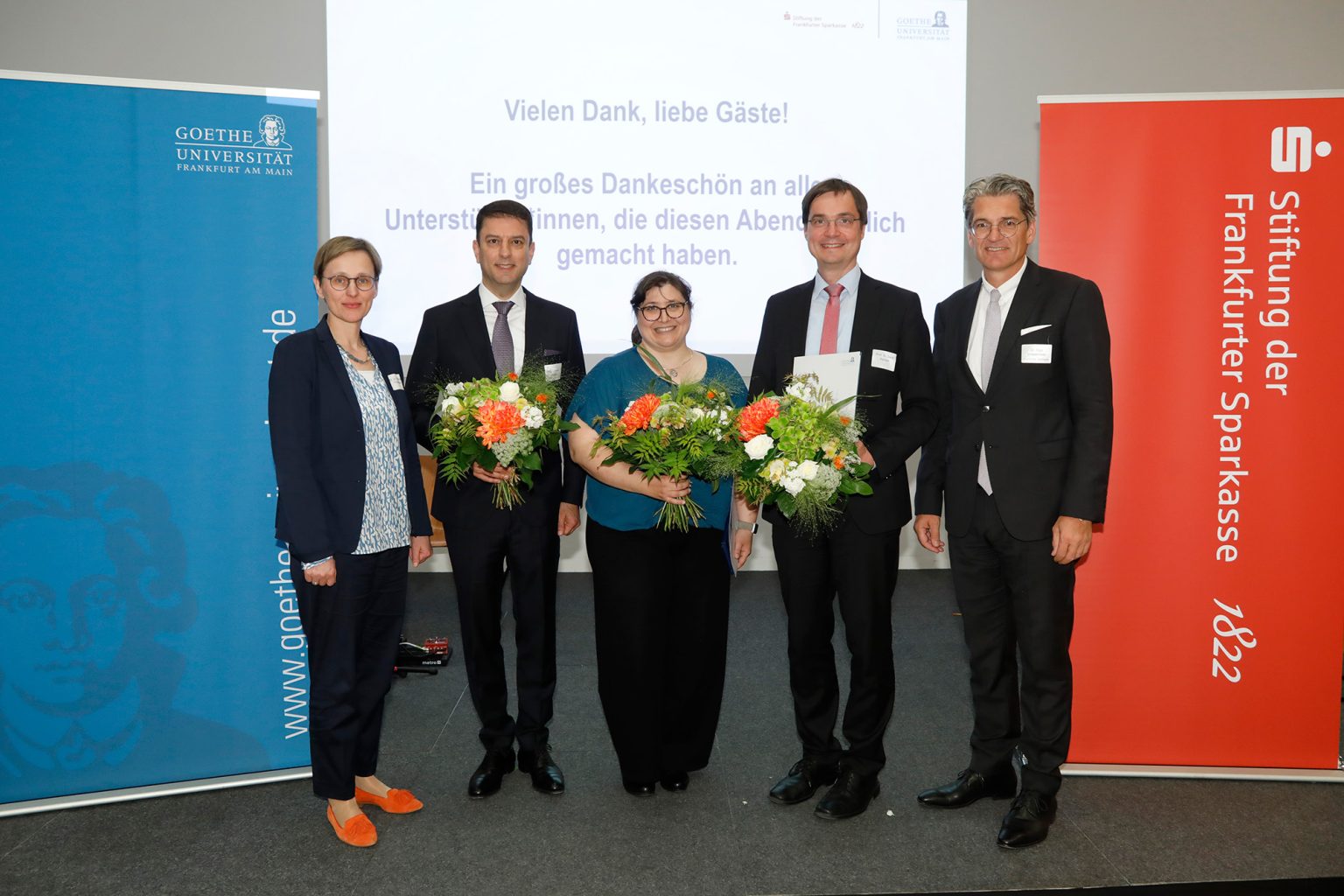
Opportunity for schools
The Frankfurt Campus Schools program is officially launched. The aim is to systematically bring school practice, educational research and teacher training into a constructive and lasting exchange for all sides. The program is supported by the DIPF | Leibniz Institute for Research and Information in Education and the Goethe University Frankfurt.