
Between Subject and Object
Workshop on the Debate Surrounding “Human Remains” A recent workshop held at Goethe University’s Faculty of Medicine tackled a complex


Workshop on the Debate Surrounding “Human Remains” A recent workshop held at Goethe University’s Faculty of Medicine tackled a complex

Medical expert Ferdinand Gerlach contemplates the future of healthcare Hospital reform, electronic patient record, telemedicine: Hardly a day goes by

Both Top-Level Research Proposals from Goethe University Frankfurt Successful in Excellence Competition – RMU to Apply as University Excellence Consortium

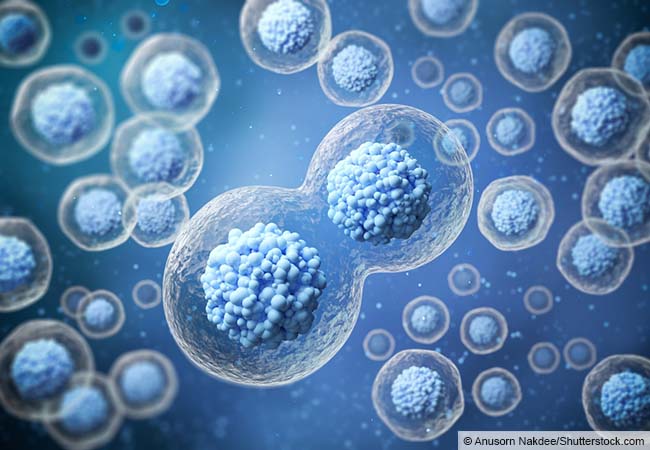
In the hope that they might be used in the future to cure illnesses, stem cells are still being preserved

How health kiosks could fill a gap in the healthcare system Karl Lauterbach, Germany’s Federal Minister of Health, wants to

Ethical considerations for using digital systems in nursing care There is already a shortage of skilled workers in the care

“There is a greater demand for donor blood than is necessary,” according to Professor Kai Zacharowski. Professor Kai Zacharowski, an

The CMD Outpatient Clinic is a port of call for many patients with diagnoses ranging from teeth grinding to complex

Using artificial intelligence to make the correct diagnosis In the SATURN project, physicians and computer scientists are seeking new ways

Exploring the potential of Herbal Medicinal Products Herbal Medicinal Products (HMPs) have nothing to do with homeopathy or food supplements.

Overcoming hurdles and putting research results into practice with the help of Innovectis and Unibator Scientists from Goethe University Frankfurt’s

New strategies for targeted drug delivery Even the best drug in the world is completely useless if the active substance

A new substance library will accelerate drug research and development Many drugs are based on small molecules. They release their

How reprogramming cells can degrade harmful proteins and combat diseases Ubiquitin is a small protein present in the cells of

How “good” intestinal bacteria could fight dangerous pathogens Thanks to antibiotics, bacterial infections have largely lost their threat. However, for

Strategies to stop the return of infectious diseases Worldwide, resistant pathogens are gaining ground. Medical Microbiologist and Infection Control specialist

How to trick cancer cells Oncologist Jan-Henning Klusmann is testing a new type of therapy against AML, a particularly perfidious

What already works against leukemia should soon also help against other tumors Genetically modified immune cells are a powerful weapon

The tumor microenvironment offers new therapeutic targets Cancer is more than just mutated cells that grow uncontrollably. Researchers like Florian

Frankfurt’s Städel Museum and the Department for Geriatric Medicine at Goethe University Frankfurt are developing an app for people with

How traditional EEG is experiencing a renaissance in stroke therapy It’s an exciting time for clinical neurophysiology. New scientific and

How MRI scans can help in the diagnosis and treatment of brain tumors Brain tumors – gliomas – are difficult

How precision medicine can help detect risks and treat heart attacks In 1977, a professor at University Hospital Frankfurt set

How computer-assisted genomic medicine is searching for the causes of cardiovascular diseases Computational biologist Marcel Schulz is working toward the

How non-coding RNAs might revolutionize the treatment of cardiovascular diseases At first glance, non-coding RNAs (ncRNAs) in the cell appear

On the afternoon of April 25, 2025, twenty doctoral candidates and postdocs from the Rhine-Main Universities (RMU) gathered at Frankfurt’s
International research team led by Professor Michael Rieger from Universitätsmedizin Frankfurt analyzes blood stem cell developmental pathways Our blood consists
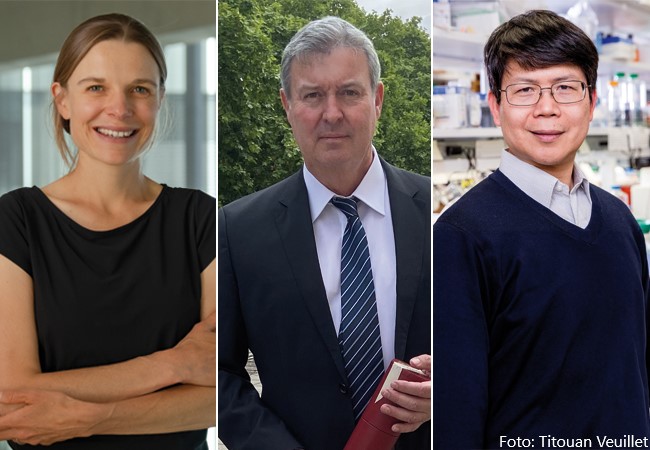
This year’s Paul Ehrlich and Ludwig Darmstaedter Prizes were awarded at Frankfurt’s Paulskirche. In recognition of their discovery of one
You cannot copy content of this page