The Bad Homburg Conference 2025 focused on the topic of law and power in international politics.
Is the international legal order still capable of regulating relations between states and resolving conflicts today? This year’s Bad Homburg Conference deliberately centered its discussions and exchanges on the intentionally ambiguous question of the “constitution of the world.” In light of numerous crises and conflicts, many observers in politics, the media, and academia are deeply concerned. The three major world powers – the United States, China, and Russia – consistently disregard the principles of international law. Even within European states, fundamental pillars of the rule of law are being seriously challenged by new political forces as well as established parties. Against this backdrop, should international law be considered outdated and unnecessary?
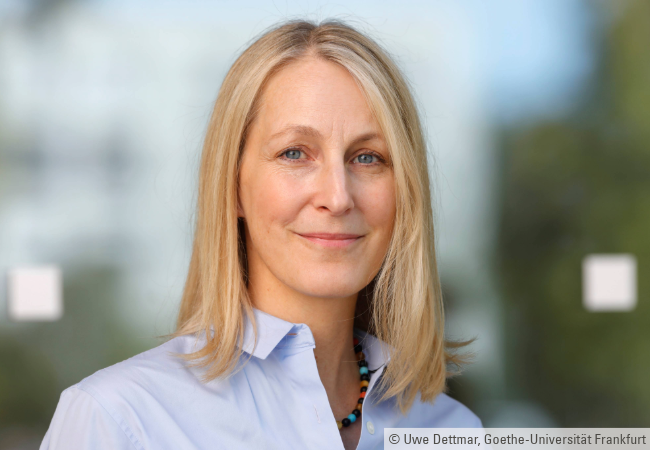
At the conference’s concluding panel discussion, political scientist Prof. Janina Dill (Oxford), international law scholar PD Dr. Isabelle Ley (Jena), and peace and conflict researcher Prof. Nicole Deitelhoff (Frankfurt) discussed the topic of “Power and Powerlessness of International Law.” The debate was moderated by Prof. Christopher Daase (also Frankfurt). Janina Dill emphasized that seeking alternatives to the principle of the rule of law would be a grave mistake, arguing that the crisis in international law calls for the protection and reconstruction of legal principles. Europe must play a central role in this effort, she went on, though she criticized European states like Germany for falling far short of their commitments, particularly regarding the conflict in the Middle East. Isabelle Ley addressed the role of the International Court of Justice (ICJ), noting that it has never had to deal with so many conflicts and pending cases. This demonstrates that, despite the erosion of international law, the ICJ still holds significant importance. Nicole Deitelhoff argued that a long-held assumption no longer holds true, referring to the idea that international law exerts a civilizing influence simply by employing the language of law. Instead, she pointed out that Russia, for example, is actively undermining legal norms while using the language of law. A similar trend can be seen in American foreign policy under Trump, as evidenced by statements regarding Canada and Greenland.
The panel discussion and the three conference lectures by political scientists Prof. Michael Zürn (Berlin) and Prof. Antje Wiener (Hamburg), as well as international law scholar Prof. Thilo Marauhn (Gießen), are available on the YouTube channel of the Forschungskolleg Humanwissenschaften – Institute for Advanced Studies.
Since 2017, the Bad Homburg Conferences have been jointly organized by Goethe University’s Forschungskolleg Humanwissenschaften – Institute of Advanced Studies and the city of Bad Homburg. Held annually in the fall, they provide a public forum for reflecting on pressing societal issues of our time. This year’s Bad Homburg Conference was conducted in cooperation with the Peace Research Institute Frankfurt (PRIF).
More information →