A new test should help accurately assess the language skills of multilingual children
Children who grow up speaking several languages may differ from other children as far as their language development is concerned. Assessing whether such a multilingual child’s language development is age-appropriate can often present a challenge even for well-trained specialists. Contributing to the better detection of developmental languagew disorders (DLD) in the future is the goal of the SPEAK project.
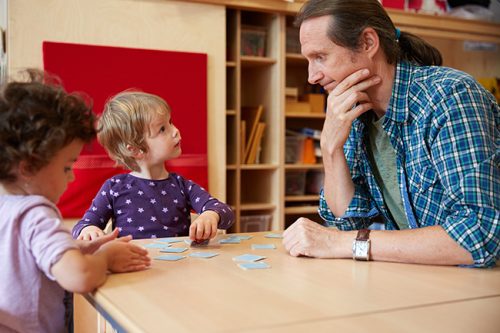
Photo: Fotorismus für IDeA
There are many prejudices about language development in multilingual children: It is often assumed that the early acquisition of two or more languages constitutes a kind of cognitive overload or that multilingual children are unable to distinguish clearly between the languages. Among the common conclusions are that they do not learn any language “properly” and that developmental language disorders (DLD) are more likely than in monolingual children. Such false assumptions are based, for example, on the fact that multilingual individuals switch back and forth between their languages. This phenomenon, known as “code mixing”, is not, however, a sign of linguistic deficits – quite the contrary. It is far more evidence of special linguistic skills, as code mixing takes the grammar of the respective language into account and can even go hand in hand with higher cognitive abilities.
IN A NUTSHELL
- Correctly diagnosing developmental language disorders (DLD) in multilingual children is very challenging. Suitable tests for German and the children’s native languages are still lacking.
- This leads to a high rate of misdiagnosis, which is detrimental to the children and society as a whole.
- With the new TEBIK 4-8 language test developed within the collaborative project “SPEAK”, developmental language disorders in multilingual children can be detected more effectively than in the past. It assesses phonology, vocabulary, grammar and narration.
- The project group at Goethe University Frankfurt is responsible for assessing phonology. An innovative nonword repetition test makes it possible to make a reliable and science-based distinction between multilingual children with developmental language disorders
on the one hand and those developing normally on the other, independently
of their experience with the German language.
Multilingual learning situations
What is true, however, is that multilingual children can differ from monolingual children of the same age as far as their language development is concerned, insofar as language acquisition takes place under different conditions. But there are differences within the group of multilingual children, too: Some children grow up with two languages from birth: acquisition of the two languages is simultaneous. Others, in turn, only come into contact with another language (L2) at kindergarten or school: acquisition of the two languages is successive. Typically, this second language is the ambient language. In Germany that would be German, for example. That the child’s age when they begin learning the second language significantly influences their development in that language is obvious. There are often only slight differences between simultaneous bilingual children and monolingual children. However, if the acquisition of L2 only begins when a child starts kindergarten or school, children appear to lag behind monolingual children due to their lesser experience with the second language. With a little time and regular contact with L2, supported by language training, if necessary, they soon make up for this initial developmental delay. The perceived conspicuities in L2 are temporary and do not pose a risk to the child’s further language development.
Supporting these children is the responsibility of the educational system. Here, a distinction should be made from DLD requiring therapy, which falls within the competence of the healthcare system. These disorders are often due to an underlying problem, such as a hearing impairment or lower intelligence. However, DLD occur in 7 to 10 percent of children in the same age group without them having any recognizable primary impairment. This type of DLD presumably has a genetic cause and is particularly difficult to diagnose. Multilingualism does not cause DLD, nor does it increase the severity of the disorder. Contrary to popular belief, the child does not grow out of the disorder. Instead, their language deficits accumulate over time.
Language development in children with DLD is substantially delayed. Their parents often report a later start to language acquisition and an accumulation of language conspicuities in the family (Grimm & Schulz, 2014). In the further course of language acquisition, these children have difficulty above all with grammar, which can be accompanied by limited vocabulary or phonology and have an impact on their narrative abilities. Since DLD affect the innate ability to learn languages, in multilingual children they manifest in all the languages they learn. That is why it is important to assess the status of a child’s language development in all languages and in this way obtain reliable indicators for subsequent diagnosis: If the child is only conspicuous in one language, it needs support but not therapy; if it is conspicuous in both languages, this points strongly to a developmental language disorder that requires therapy.
The challenge of language assessment in multilingual children
What sounds simple in theory is, in fact, a major challenge for teachers, medical professionals and speech therapists. In practice, the systematic assessment of both languages is virtually impossible, as suitable language tests are only available for a few of the languages spoken in Frankfurt, which according to the city’s Office for Multicultural Affairs (Amt für multikulturelle Angelegenheiten, AmkA) number over 200 in total. In addition, there is a lack of specialists with expertise in the various first languages. This means that a fair assessment of the first language for all children calls for methods other than directly testing the child. However, only a few language tests exist that are suitable for assessing the abilities of multilingual children in L2 German (e .g. LiSe-DaZ Linguistic Language Assessment – German as a Second Language). Specialists often use protocols or observation sheets they have developed themselves, which do not guarantee comparability and are not objective, or they resort to tests developed for monolingual children (Voet Cornelli, 2022). Due to their linguistic and cultural diversity, multilingual children cannot usually meet the standards set for their monolingual peers, even if they do not have a speech or language disorder. The result is twofold: overdiagnosis, which binds resources unnecessarily, and underdiagnosis, which means that the required support or therapy is not provided. For the children affected, however, such misdiagnoses often have repercussions for their mental health, social behavior and educational pathway. This is what makes reliable diagnosis and early intervention so important.
The SPEAK project: A way out of the diagnostic dilemma
It is here that the SPEAK project, which the Federal Ministry of Research, Technology, and Space has funded since October 2023, wants to contribute. Within the project, a new type of “test battery” for multilingual children is to be standardized and subsequently published under the name TEBIK 4-8 (“Test for Bilingual Children Aged 4 to 8”). Partners in the project, alongside the team at Goethe University Frankfurt led by Angela Grimm, are Natalia Gagarina from the Leibniz-Center General Linguistics (ZAS) in Berlin, Anna-Lena Scherger from TU Dortmund University and Tanja Rinker from the Catholic University of Eichstätt-Ingolstadt.
Terminology
Standardized test
This contains precise instructions for conducting and evaluating the test and interpreting the results. Standardized tests must fulfil qualitative test criteria.
Standardization process
A group that is as representative as possible takes a test. From the results, standard values are calculated, which can then be used to compare test persons in the future. This makes it possible, for example, to classify children’s language abilities: Are they developing appropriately for their age and learning conditions, or do they have greater difficulties than children of a comparable age and with comparable learning conditions?
By means of a standardized questionnaire for parents, the test battery indirectly documents children’s abilities in the non-German first language. A delayed start in language acquisition or parental concerns about their child’s age-appropriate development point to difficulties in this language; a family history of language disorders might be an indication of DLD of genetic origin. To assess the first language, these criteria are applied. Children’s skills in the German language, by contrast, are tested directly in the following areas: “phonology”, “vocabulary”, “grammar” and “narration”. The test is based on phenomena that point to developmental language disorders in German. In grammar, these include, for example, delays in the acquisition of subordinate clauses or subject-verb agreement (the children run, Malte runs); in phonology, they include, for example, persistent difficulties in pronouncing consonant combinations such as
/fl/ in “Flasche” (bottle).
The “Phonology” subproject is hosted in Frankfurt and responsible for standardizing the LITMUS-QU-NWR test (“Language Impairment Testing in Multilingual Settings – Quasi-Universal Nonword Repetition Task”).
A nonword repetition test for bilingual children
Nonwords are chains of sounds that would be possible in a language but do not, in fact, exist (such as pilu in German). In speech diagnostics, repeating nonwords is normally used to test the performance of phonological working memory, which is why the number of syllables varies that the test person is asked to repeat. As the number of syllables in the nonwords increases, so do the mistakes the test person makes when repeating them. But the phonological complexity of the nonwords also influences performance: The test person makes more mistakes when nonwords contain consonant combinations such as /∫p/ in “spielen” or /fl/ in “Flasche”. Since children with a developmental language disorder often have particular difficulty in this area, consonant combinations are an effective tool for differentiating between DLD and inconspicuous language development.
To pronounce unfamiliar words or nonwords correctly, children must first know the sounds and sound combinations contained in them. Sound combinations that are unfamiliar for German speakers, such as those found in the Polish word z´dz´bło (“blade of grass”), are a typical source of errors even for children without speech or language difficulties. To avoid misdiagnoses due to a lack of experience with the German sound system, the LITMUS-QU-NWR nonword repetition test uses sounds that occur frequently in languages around the world: the vowels /a/, /i/ and /u/ and the consonants /p/, /k/, /f/ and /l/. Combinations with /s/ and /∫/ (pronounced “sh”) further increase the degree of difficulty. These sounds were combined to form nonwords with one to three syllables, intentionally incorporating consonant combinations such as in piklafu or splukif. Even though the nonwords created in this way sound very unusual, previous studies have proven this approach to be successful. For example, typically developing eight- to ten-year-old multilingual and monolingual children show no differences in the number of nonwords they repeat correctly, while both monolingual and multilingual children with DLD are far less successful in repeating the nonwords correctly (Grimm, 2022). Furthermore, the observation that there is no difference between monolingual and multilingual children with DLD in terms of pthe number of correctly repeated nonwords supports the hypothesis that multilingualism does not exacerbate the severity of DLD. A study with five- to seven-year-old children, which has not yet been published, corroborates these findings (Grimm et al., submitted).
The authors
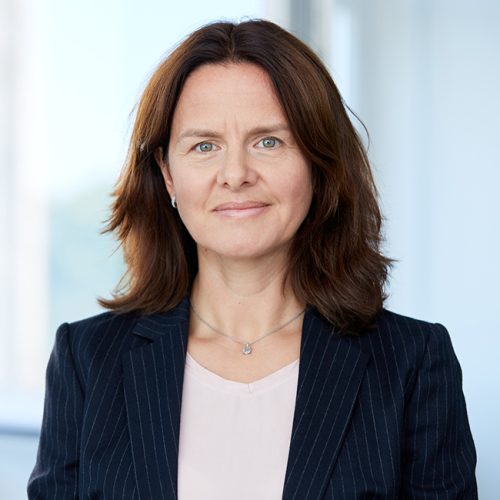
Angela Grimm studied patholinguistics and earned her doctoral degree in general linguistics. Her work focuses on the normal and atypical acquisition of
the first and second language in children, particularly
in the area of phonology, language development diagnostics, and the relationships between spoken and written language acquisition. After career stages in Groningen, Potsdam, Frankfurt and Osnabrück, she was appointed as Professor of Language Didactics and Linguistics of Modern High German at Goethe University Frankfurt in 2018.
a.grimm@em.uni-frankfurt.de
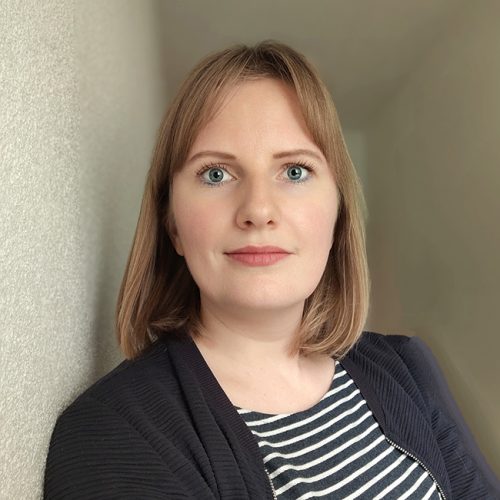
Katharina Bleher is a research associate in the SPEAK project at the Institute of Psycholinguistics and Didactics of German, Goethe University Frankfurt. Her interests include the acquisition and didactics
of pronunciation, German as a foreign and second language, and educational equity.
bleher@em.uni-frankfurt.de

Annika Heitzmann is also a research associate in the SPEAK project at the Institute of Psycholinguistics and Didactics of German, Goethe University Frankfurt. She is interested in language development in children, the diagnosis and therapy of developmental language disorders, and multilingualism.
a.heitzmann@em.uni-frankfurt.de
Are you interested in joining the study?
The project team is still looking for study participants. Parents of multilingual children between four and eight years of age can contact Annika Heitzmann or Katharina Bleher directly.
Contact
Annika Heitzmann:
a.heitzmann@em.uni-frankfurt.de
Katharina Bleher:
bleher@em.uni-frankfurt.de
To the entire issue of Forschung Frankfurt 1/2025: Language. The key to understanding