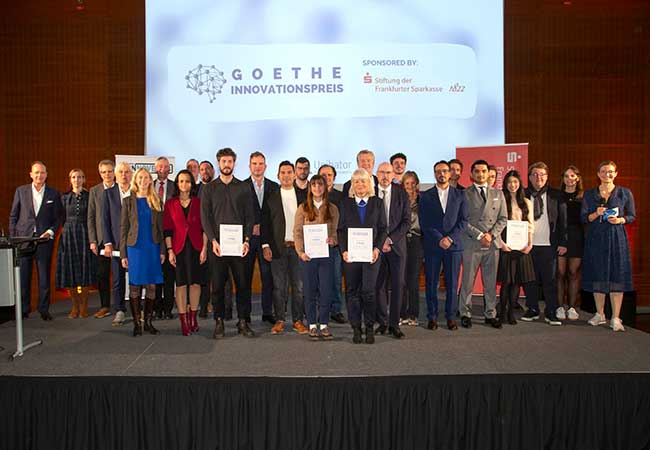
2024 Goethe Innovation Award honors outstanding research projects with start-up potential
Prizes go to research projects on osteoporosis diagnosis, mRNA-based reactivation of tumor suppressor genes in ovarian cancer, and innovative heating


Prizes go to research projects on osteoporosis diagnosis, mRNA-based reactivation of tumor suppressor genes in ovarian cancer, and innovative heating
“To truly arrive means to actively participate as part of the community”Each year, the City of Frankfurt honors outstanding personalities

Every December since 2006, two Goethe University Frankfurt professors – Dieter Steinhilber from the Institute of Pharmaceutical Chemistry and Theo
European Research Council makes available around €5.5 million for basic research For their visionary research projects, three top Goethe University
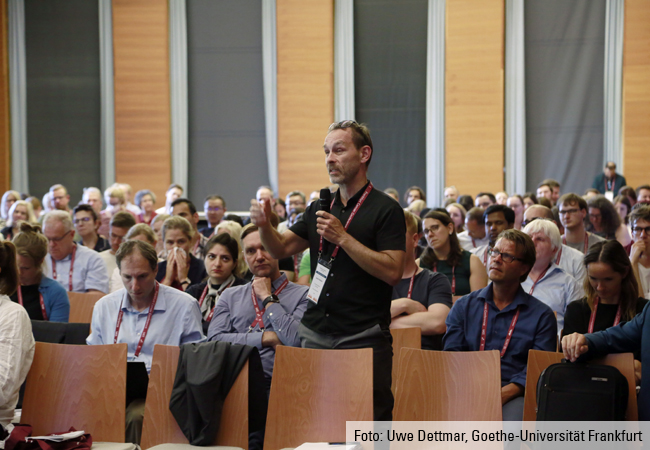
Research oncologists, clinical oncologists and other scientists from all over the world met on the Westend Campus from August 28
Global study’s ranking includes the one percent of scientists cited most frequently in scientific journals Six of the 6,600 most
Dr. Ute Lewitzka has been appointed Germany’s first professor of suicide studies and suicide prevention. Her appointment at Goethe University
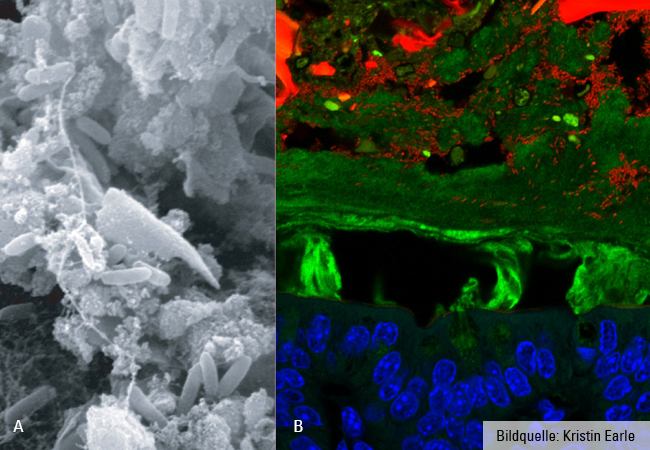
The U.S. scientists Dr. Erica and Prof. Justin Sonnenburg will visit Goethe University in November to take up the Friedrich
Artificial intelligence aids the discovery of new active substances in bacteria Chemical biologist Eric Helfrich, Professor of Natural Substance Genomics
Alleviating the long-term effects of a SARS-CoV-2 infection An innovative study for the treatment of post-COVID syndrome (PCS) is starting
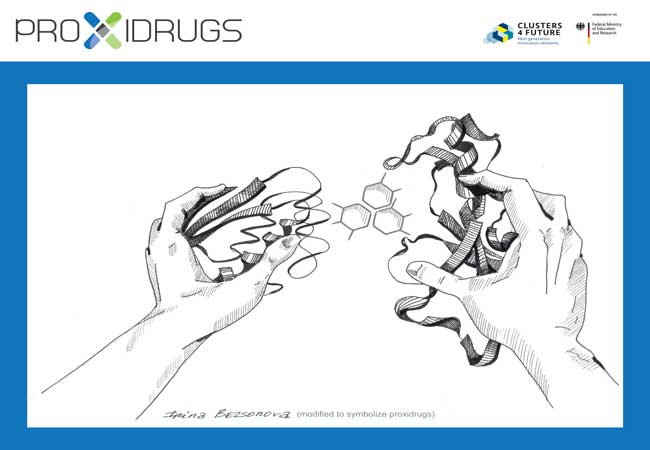
Second implementation phase to start in 2025 – Consortium grows from nine to 21 academic and industry partners – Focus
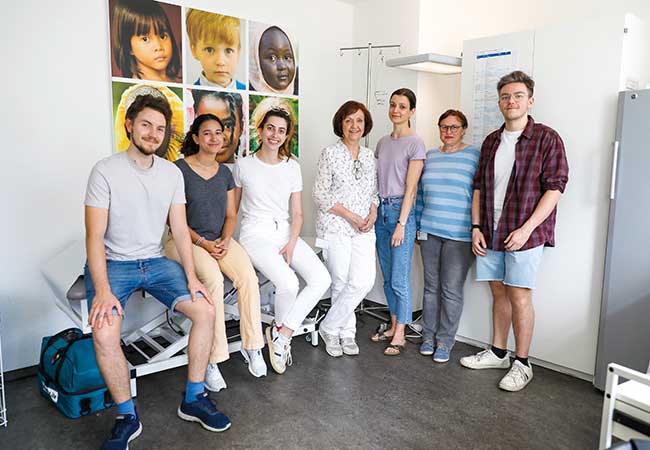
In June, the Student Polyclinic of Goethe University Frankfurt, part of Frankfurt Health Department, celebrated its 10th anniversary. It became
LOEWE, the federal state of Hesse’s research promotion program for the development of scientific and economic excellence, is providing €4.8
Modern methods in artificial intelligence (AI) are becoming increasingly important in science. As part of Goethe University Frankfurt’s “citizens’ university”
On June 3, Goethe University Frankfurt’s Student Polyclinic, part of the Frankfurt Health Department, marked its tenth anniversary. Among the
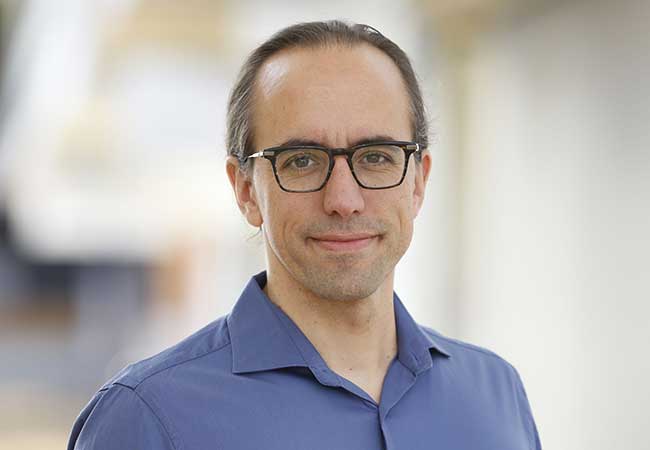
To promote research into new developments in healthcare, Goethe University Frankfurt has set up the Institute for Digital Medicine and
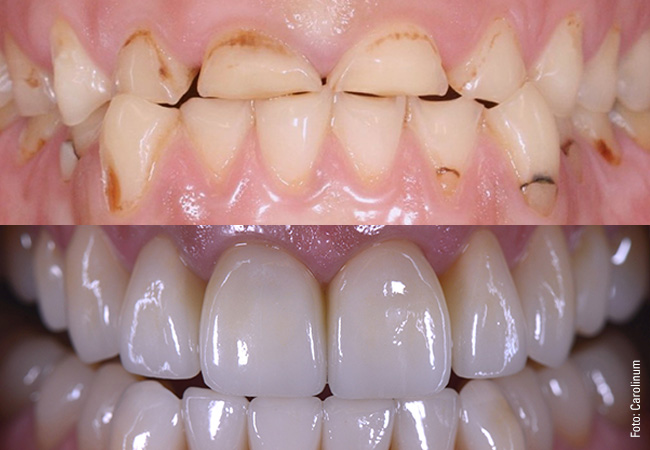
Incidences of eating disorders such as bulimia and anorexia are becoming more common, especially among young people. In addition to
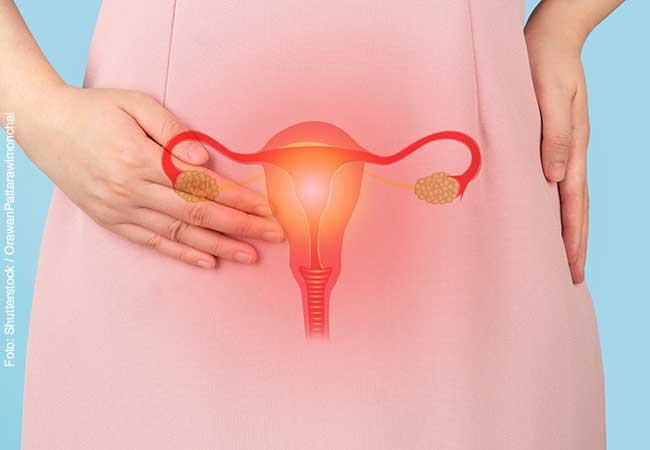
Ovarian cancer is often very aggressive and responds poorly to the therapies currently available. A recent study by Goethe University
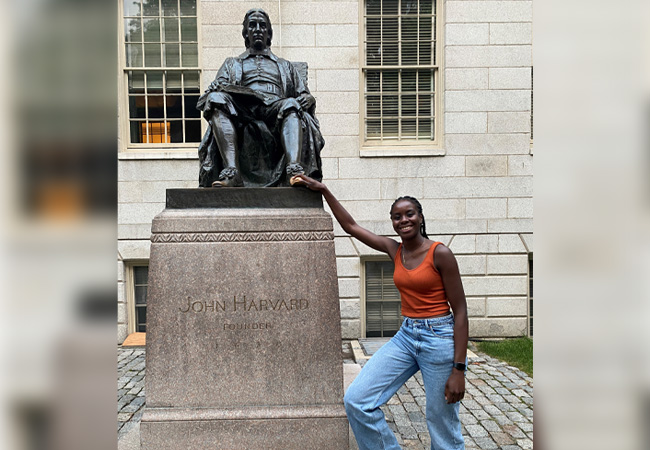
At the tender age of 23, medical student Diana Munteh already has several different strings to her academic bow. She
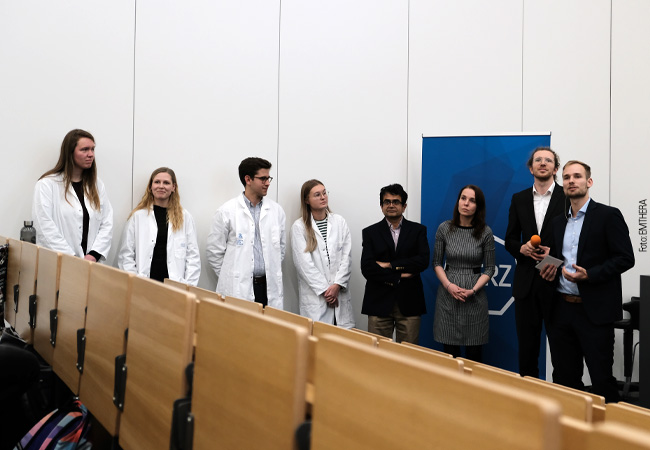
Prof. Samir Mitragotri is this year’s Friedrich Merz Guest Professor Have you ever wondered what it would be like if,
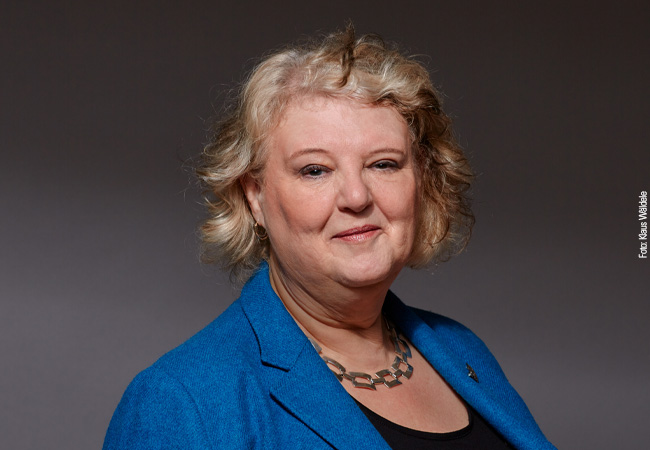
Prof. Ingrid Fleming, Director of Goethe University Frankfurt’s “Institute for Vascular Signalling” and a member of the Cardio-Pulmonary Institute’s (CPI)
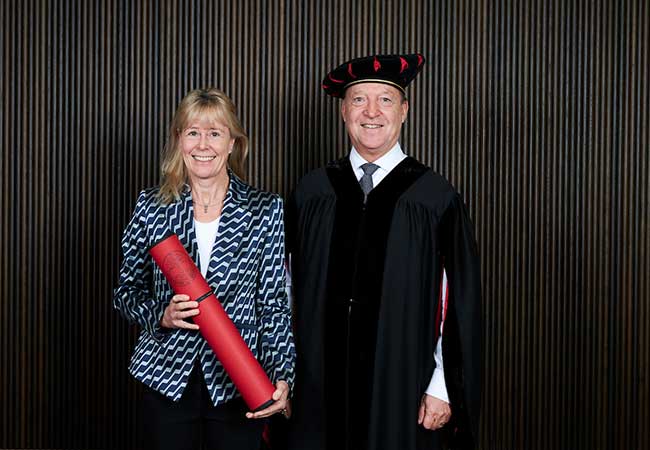
The University of Bern’s Faculty of Medicine has awarded Prof. Dr. Stefanie Dimmeler the honorary title of „Doctor medicinae honoris
We wanted to know: Why did our scientists want to become scientists in the first place? What are they working
How does negation work in language? And how are the relevant linguistic structures connected to perception in the brain? These
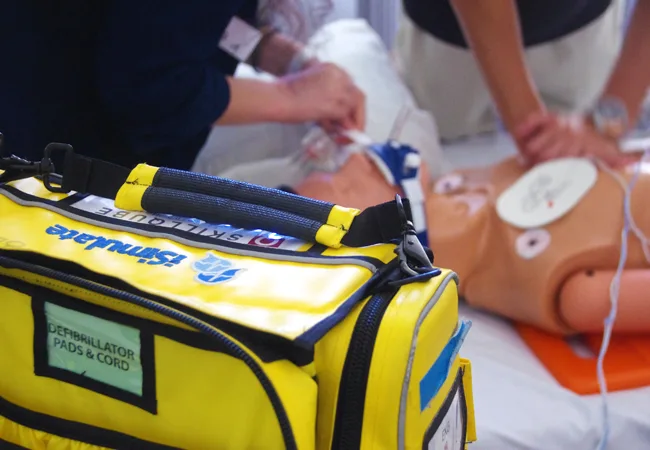
Important practical experience for Ukrainian medical students With huge commitment, and financial support from the Goethe-Ukraine-Fund, Professor Miriam Rüsseler and
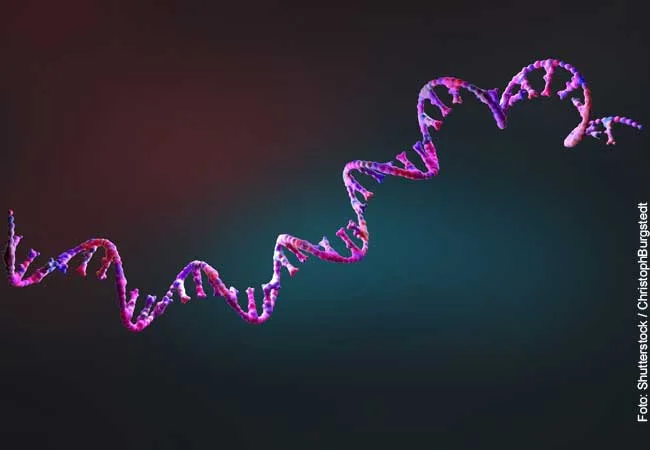
Each year, around 13,000 people in Germany are diagnosed with leukemia, of which up to half die from the disease
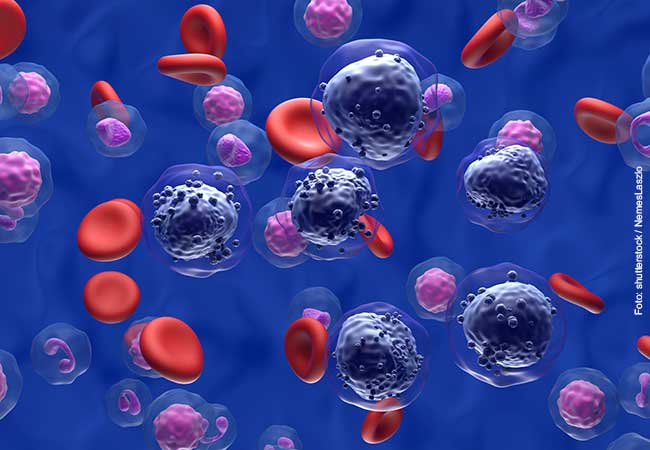
Leukemia is the most common type of cancer in children. Treatment involves intensive chemotherapy, which has severe side effects due
Goethe University Frankfurt is applying for the upcoming round of the Excellence Strategy of the German federal and state governments
You cannot copy content of this page