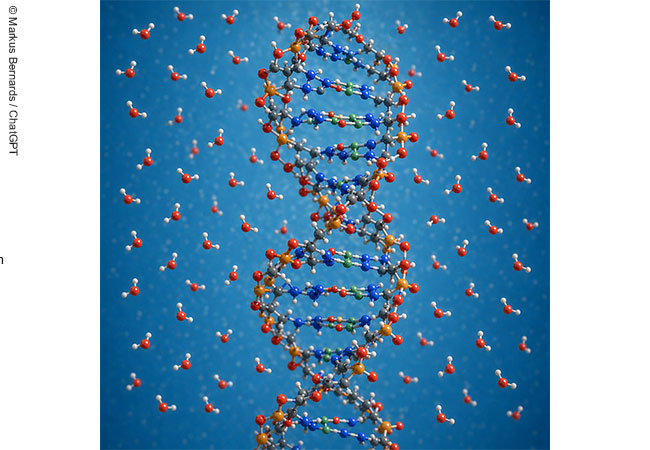
Dr. Christian Münch from Goethe University Frankfurt’s Institute of Biochemistry II has been awarded the European Research Council’s (ERC) prestigious Consolidator Grant to conduct further research into a mechanism he discovered, which the cell uses to operate its recycling system. The research funding consists of two million euros provided over the next five years. The mechanism, which Münch has named „autoxitus“, could serve as a novel communication pathway between neighboring cells and play a role in viral infections and neurodegenerative diseases.
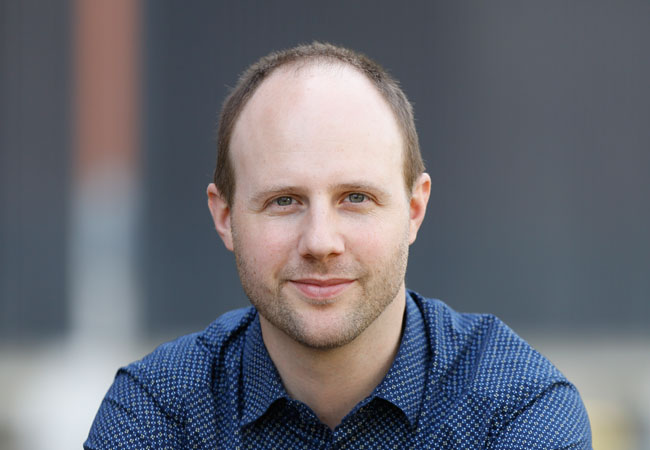
Congratulating the biochemist, Goethe University President Prof. Enrico Schleiff said: „Dr. Christian Münch is an outstanding scientist, who has now succeeded for the second time in asserting himself in the highly competitive ERC grant selection process. As in the past, his research project on ‚autoxitus‘, too, will yield fundamental and groundbreaking insights into the interplay between metabolism and signaling in the cell. That is because with his program, Münch demonstrates the courage to take scientific risks – something we at Goethe University greatly appreciate and encourage, because such projects truly advance our knowledge, and thereby constitute the absolutely necessary prerequisite for innovation and transfer. This ERC grant once again illustrates just how successful we are in attracting excellent young talent to Goethe University.“
As part of his new research project, Dr. Christian Münch is investigating a new type of degradation process through which the cell maintains a finely tuned balance for its constant synthesis of diverse substances and organelles. As part of the so-called autophagy, the cell encloses components that are no longer required with membrane vesicles, within which these components are broken down. However, as part of the „autoxitus“ degradation pathway discovered by Münch, the contents of these membrane vesicles are transported out of the cell. One of Münch’s research questions is whether the cell can use this to signal to its neighbors that it is in a state of stress, caused, for example, by a viral infection or a neurodegenerative disease.
Christian Münch completed his doctorate at the University of Cambridge and worked as a postdoctoral researcher at Harvard Medical School. He has served as head of the Department of Quantitative Proteomics at Goethe University Frankfurt’s Institute of Biochemistry II since 2016. His research focuses on cellular stress responses to misfolded proteins in the cell’s power plants (mitochondria) as well as on infections and diseases, all with a view towards understanding how the entire cell system reacts to stress. For his work, he has already received an ERC Starting Grant, an Emmy Noether grant and a number of awards. Münch is an EMBO Young Investigator and a steering committee member in the Federal Ministry of Education and Research’s Cluster4Future Proxidrugs, the Collaborative Research Center 1177 on selective autophagy, the Fraunhofer High-Performance Center TheraNova, and the Goethe University-led EMTHERA (Emerging Therapeutics) research cluster initiative.
The European Research Council’s ERC Consolidator Grant supports excellent, promising scientists whose working group is in the consolidation phase. The grant is intended to enable them to expand their own field of research and conduct visionary, basic research. With a funding volume of up to two million euros for five years, the Consolidator Grant is one of the most highly endowed individual funding measures in the European Union.
SFB 1177: Molecular and Functional Characterization of Selective Autophagy: https://www.sfb1177.de/
Proxidrugs: Innovative therapies for human diseases: Targeted degradation as a new mode of action for drugs https://www.proxidrugs.de
TheraNova: High-Performance Center Innovative Therapeutics
https://www.fraunhofer.de/en/institutes/cooperation/high-performance-centers/theranova.html
EMTHERA: Emerging Therapeutics https://www.emthera.de/