Federal Ministry Funds Joint Initiative by Goethe University Frankfurt and Universidad de Costa Rica
German and Costa Rican scientists launch a new partnership to explore one of the world’s richest biodiversity hotspots. Prof. Meike Piepenbring, mycologist at Goethe University Frankfurt, has secured funding from the Federal Ministry of Research, Technology, and Space (BMFTR) to establish the German-Costa Rican Network for Tropical Biodiversity Research (GeCoBio). Over the next three years, €450,000 will support the development of this collaboration.
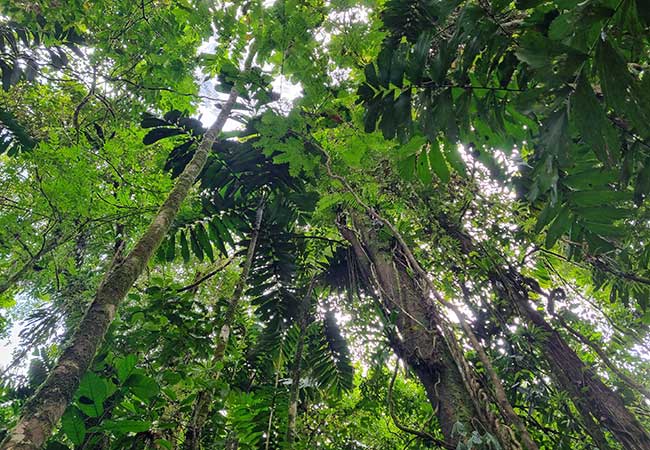
Costa Rica lies within a biodiversity hotspot rich in fungi, plants, and animals that coexist in complex ecosystems. The GeCoBio project seeks to deepen scientific understanding of this diversity as a foundation for effective conservation. The €450,000 in federal funding secured by Professor Meike Piepenbring from the Institute of Ecology, Evolution and Diversity will be used to build a long-term partnership structure between Goethe University and Universidad de Costa Rica (UCR), including formal agreements and research exchanges aimed at bringing together scholars from both countries to develop and implement joint research initiatives.
The loss of biodiversity poses an urgent global challenge to ecosystem stability and long-term societal well-being. At the same time, biodiversity in the region remains insufficiently documented, leaving major knowledge gaps regarding species status and effective conservation strategies. “We urgently need to intensify our efforts in this area,“ says Piepenbring. Although 25 percent of Costa Rica’s land is protected, primary forests continue to decline due to agricultural expansion and settlements.
The newly funded project will explore a broad range of biodiversity and conservation topics through collaboration between Costa Rican and German biologists. Piepenbring is excited about the possibilities offered by Universidad de Costa Rica’s excellent infrastructure, education, and expertise – which provides an outstanding foundation for joint research. An initial rainforest expedition is planned during the first funding phase. “Experiencing biodiversity on site is essential – not only scientifically, but also for building lasting research relationships,“ says Prof. Piepenbring, who first conducted research in Costa Rica as a doctoral student in 1992 and has returned to the country multiple times since. Her Costa Rican partner, Professor Melissa Mardones, is closely connected to Goethe University Frankfurt, where she completed her doctorate and has since returned to repeatedly for research stays. The proposal includes two pilot research projects on fungal diversity in Costa Rica and the establishment of a culture collection of living strains of fungi and other microorganisms. Such a collection ensures compliance with international regulations by retaining strain copies within the country of origin. The project will also assist researchers in navigating permit procedures for collection and export.
As part of its strategy to promote the internationalization of education, science, and research, Germany’s federal government funds projects that foster research and innovation collaboration with Latin America and the Caribbean. The aim is to establish sustainable bilateral research structures over the long term. Eligible topics include resources, biodiversity, and climate. More than 100 proposals were submitted in response to the call; 12 were approved – among them the GeCoBio project submitted by Piepenbring. Biodiversity research at Goethe University Frankfurt has a strong and longstanding foundation in the faculties of Biosciences and Geosciences, as well as in close cooperation with the Senckenberg Society for Nature Research. It is institutionally anchored in the university’s profile area “Biodiversity and Sustainability“, regionally connected through BioFrankfurt e.V., and internationally through the Frankfurt Conservation Center.
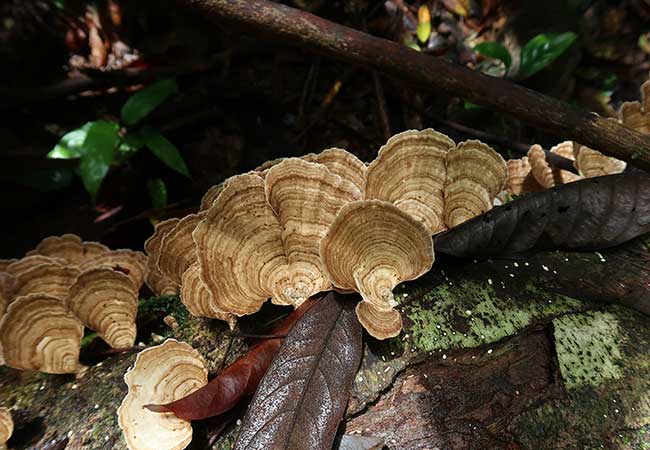
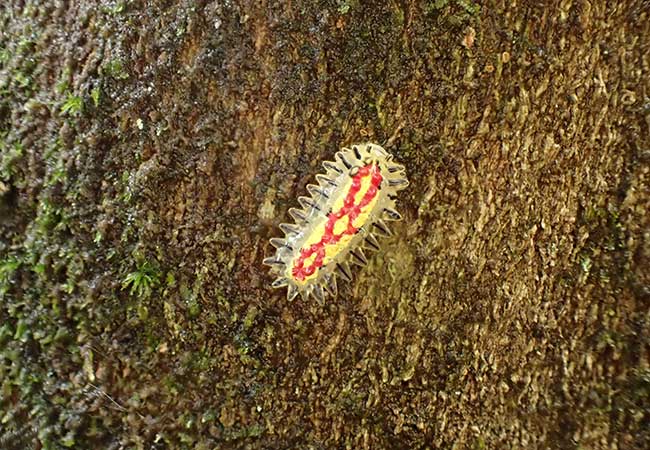
Publication: Mardones M, Umañana Tenorio L, Granados Montero M del M, Mata Hidalgo M, Ruiz-Boyer A, Piepenbring M, Minter D, Coto-López C, Carranza Velásquez J (2024) The first annotated checklist of Costa Rican fungi. Funga Latina 2:V2A7.
Further Information
Prof. Dr. Meike Piepenbring
Institute of Ecology, Evolution and Diversity
Goethe University Frankfurt
Tel. +49 (0)69 798 42222
E-Mail piepenbring@bio.uni-frankfurt.de
https://biofrankfurt.de/
https://frankfurtconservation.org/de/