Interdisciplinary publication including student contributions on ecosystem research in the Nördlinger Ries.
Around 15 million years ago, an asteroid strike created the Nördlinger Ries impact crater in Bavaria, shaping a unique geological landscape. Over millennia, people settled across the region, leaving behind a rich historical record. A newly published interdisciplinary volume by scholars from Goethe University Frankfurt and the University of Tübingen explores this history, presenting archaeological, archaeobotanical and scientific research on the area between the Ipf mountain and the Kartäusertal valley at the western edge of the Ries.
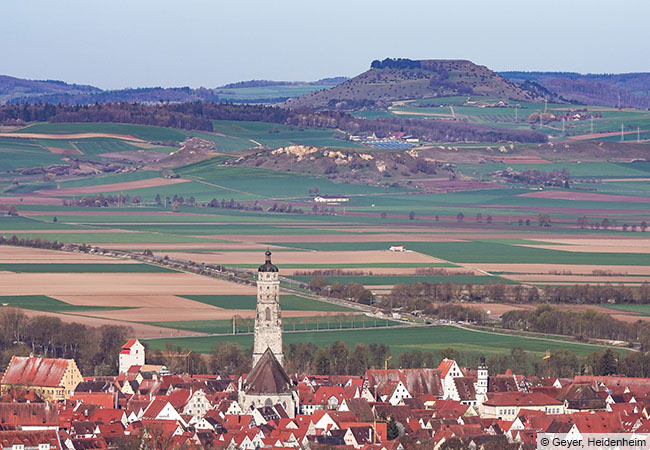
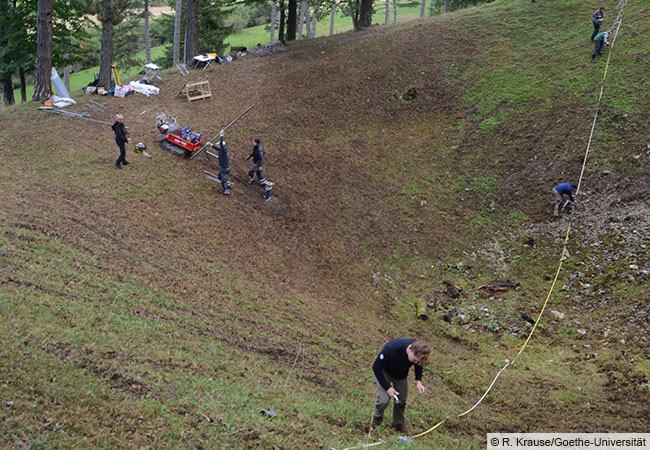
Ecosystem research examines how human activity reshapes landscapes and environments. Students from Goethe University and the University of Tübingen applied this approach to the Nördlinger Ries region. They began with the striking Ipf mountain, home to one of Central Europe’s famous Iron Age princely seats – elite hilltop centers that dominated political and economic networks in the early Iron Age. Supported by a corporate foundation, the project has yielded several studies since 2022 that examine the landscape from the western edge of the Ries – a large asteroid impact crater in southern Germany – to the Kartäusertal valley, known for its unusually high density of medieval castles.
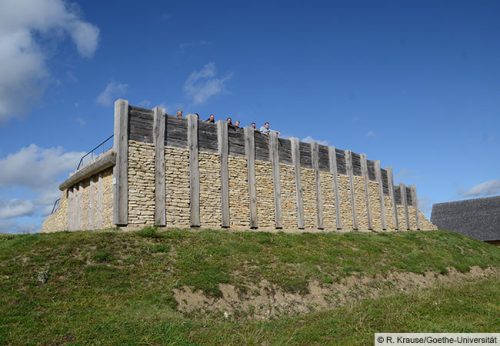
The Ipf, north of Bopfingen, stands out with its distinctive conical shape. A limestone formation from the Late Jurassic period common in southern Germany, this “hard rock” remnant of the White Jura period is unrelated to the asteroid impact and preserves traces of millennia of human settlement. Over time, the hill served as a power center, princely seat, and trade hub, while fertile soils in the surrounding area produced abundant harvests. Humans and their animals have shaped the landscape since the Bronze Age, and intensive forestry and farming have dramatically altered its appearance. Archaeologists and natural scientists have spent years uncovering the past of the Nördlinger Ries. Archaeologist Prof. Rüdiger Krause and archaeobotanist Prof. Astrid Stobbe from Goethe University Frankfurt have made significant contributions to this work.
Data from archaeological, archaeobotanical, and geomorphological projects have emerged from two DFG Collaborative Research Centers and several other individual projects funded by the German Research Foundation. Since 2022, another project has evaluated and consolidated these meta-data and supplemented them with additional research to reconstruct four millennia of cultural history. The first results now appear in an attractively designed publication. The volume brings together numerous contributions, including many student works. It presents the research in a manner accessible to interested lay readers while offering detailed insights into the scholars’ methods. Large-format photographs and graphics illustrate the findings. Both the research project and the publication received funding from the Kessler + Co Corporate Foundation for Education and Culture, headquartered in Abtsgmünd, in the Ostalb district of Baden-Württemberg.
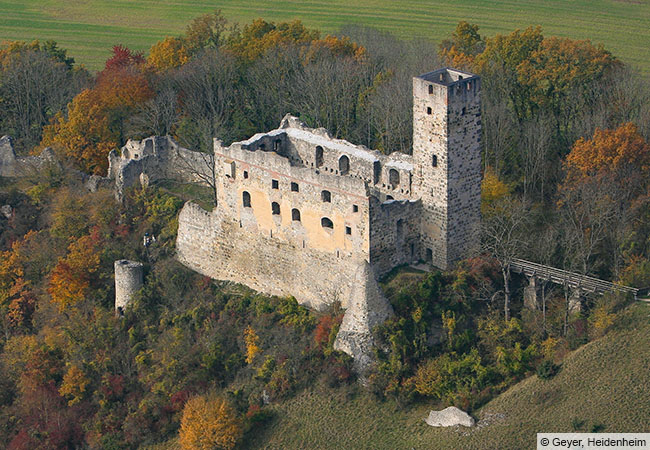
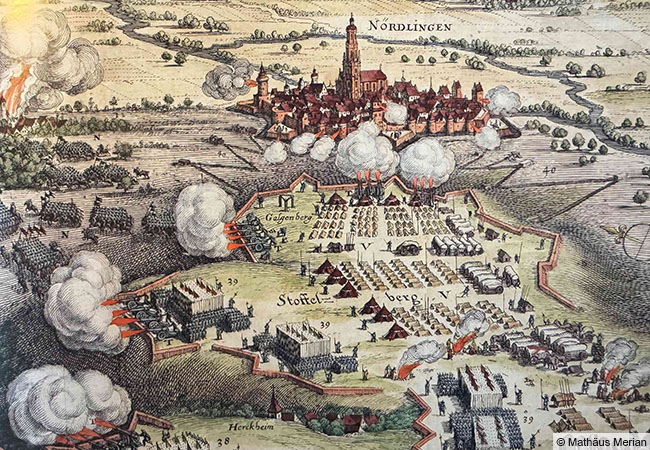
The surroundings of the Ipf include an Iron Age settlement at Ohrenberg, where archaeologists have even uncovered evidence of bronze smelting and the production of numerous items such as fibulae (clothing pins). Another highlight is the discovery of glass processing in Celtic times: The findings show that blue glass was remelted (recycled) here and used to produce new glass artifacts such as beads and arm rings. The landscape offers further material for reconstructing historical living conditions, particularly in the Kartäusertal valley. During the Hungarian invasions of the 10th century AD, attackers struck three small fortifications in the valley, leaving behind hundreds of iron arrowheads. There are also mills and settlements from the Carolingian period, three stone castles from the High Middle Ages, and the Christgarten monastery from the Late Middle Ages. The region later witnessed one of the most dramatic episodes of the Thirty Years’ War: the famous Battle of Nördlingen on the Albuch, where more than 10,000 soldiers were killed in a single day, accompanied by widespread devastation of the surrounding countryside and villages.

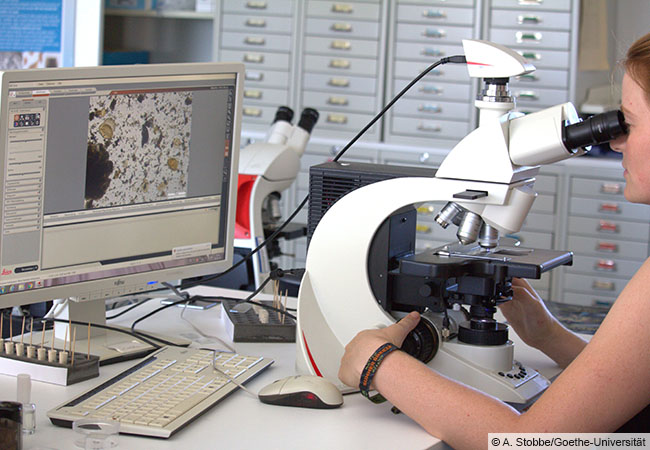
The collection provides a comprehensive overview by bringing together a wide range of research approaches. It demonstrates how pollen analyses from wet archives such as bogs were used to reconstruct past vegetation and to trace how the landscape gradually transformed from dense forest into a cultural landscape shaped by human activity. The volume also presents several student theses. In her master’s thesis, Elaine Schneider conducted strontium analyses on animal teeth to investigate grazing patterns and the mobility of livestock. Strontium accumulates in teeth, and since its ratios vary by region, its presence can reveal where animals once grazed. In her bachelor’s thesis, Elsa Jansen reconstructed the historical topography of the Retzenbach and Kartäusertal valleys. Other contributions focus on craft production and settlement activity. Jonathan Schmidt examined bronze processing in the Iron Age settlement at Ohrenberg, while Simone Pivesan analyzed evidence for glass melting and the large number of glass artifacts discovered there. The book also includes a historical-topographical landscape study by the Nördlingen-based geologist Kurt Kroepelin, as well as the first presentation of investigations into the funnel- or water-pits used to supply water at the Ipf. As part of her doctoral research, Lisa Bringemeier conducted pollen analyses of sediment cores, providing an important foundation for the reconstruction of past vegetation and agricultural practices.
The detailed scientific studies will later appear in the academic publication series Frankfurter Archäologische Schriften issued by Goethe University Frankfurt’s Institute of Archaeological Sciences.