Application for the pre-semester courses is now open to regular Goethe University students interested in enrolling in Frankfurt-focused program for visiting students from partner universities and acquiring CPs for their optional BA module.
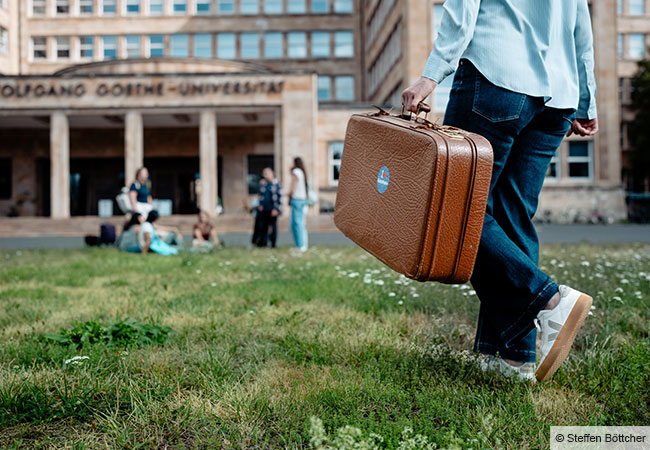
The Goethe Study Experience Program (GStEP) is designed for international students of one of Goethe University’s partner institutions looking for an additional course to take during the upcoming summer semester. It offers two optional short-term study programs that combine Frankfurt-related subjects with the opportunity to meet peers. Participation does not require any previous subject knowledge or German language skills, although English B2 is required. Students can earn up to 30 ECTS credits per semester, and upon completing at least 24 ECTS receive a “Certificate of International Studies at Goethe University”.
The program, which was launched last semester (see here), has already proven both popular and valuable. The first cohort consisted of 50 students – two-thirds of whom participated in the Banking Hub module, with the remainder joining the Critical Theory track – from 18 countries and 40 partner institutions. Six local Goethe University students also joined.
Jule Tuerke, who administers the program, has received a lot of positive feedback. “One participant wrote me that she had a very enjoyable and enriching semester and learned a lot through the courses she took. That is exactly what GStEP sets out to do: provide an opportunity to meet peers and learn all about Frankfurt and what our university has to offer. It is like the icing on the cake, making your semester abroad that much more complete, on both the personal and the academic level.”
The two introductory courses currently available take place in March, before the semester starts, and are open to regular Goethe University students. Registrations close at the end of the month. The courses are:
Critical Theory Past and Present: The “Frankfurt School“ and its legacy
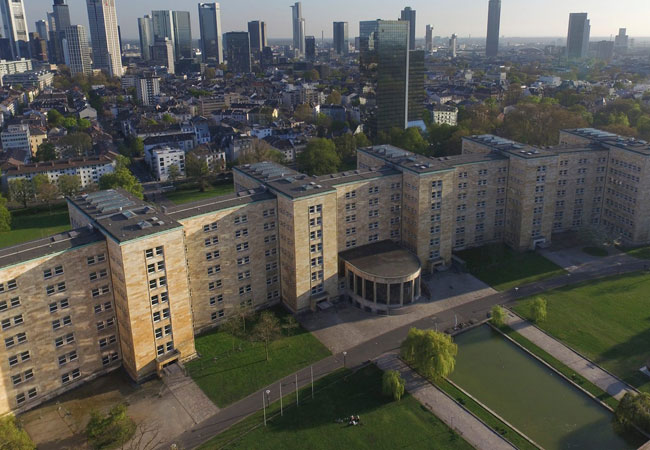
Discover the history and aftermath of the influential group of social scientists gathered around Max Horkheimer and Theodor W. Adorno. Founded in the 1920s in Frankfurt, the Institute for Social Research went into exile after 1933 at Columbia University New York and returned to Frankfurt after World War II. At the forefront of socio-political and socio-cultural debates, the “Frankfurters“ dominated the socio-political discourse during the 1950s and 1960s and inspire social theory and social sciences until today.
A European Banking Hub: Financial and Economic Policies in the EU
The Frankfurt based European Central Bank is just the tip of the iceberg: Frankfurt is a city of Finance. Learn more about the European banking system and its political and historical background as an important asset of the European Union.
More information on the program and the registration process is available on the GStEP website →