

Goethe in progress 2023 – Campus & Leben
Creative Spaces
It is interactive and dynamic: the new Goethe App 2.0 was launched at the beginning of the year, making everyday university life easier and more convenient to organize. In the summer, it was further improved during a student hackathon. Numerous projects were initiated on the way to a university-wide sustainability strategy in 2023 - and the Frankfurt Biodiversity Ideas Competition culminated in a prize being awarded to creative citizen projects. If you want to experience art on campus, you can now also visit a permanent photo exhibition and video installation.
- Goethe-Uni App
"I want to develop Germany's best university app for students"
The Goethe University App 2.0 has been available since January 2023, making everyday university life easier and more convenient to organize.
- Sustainability
Holistically sustainable
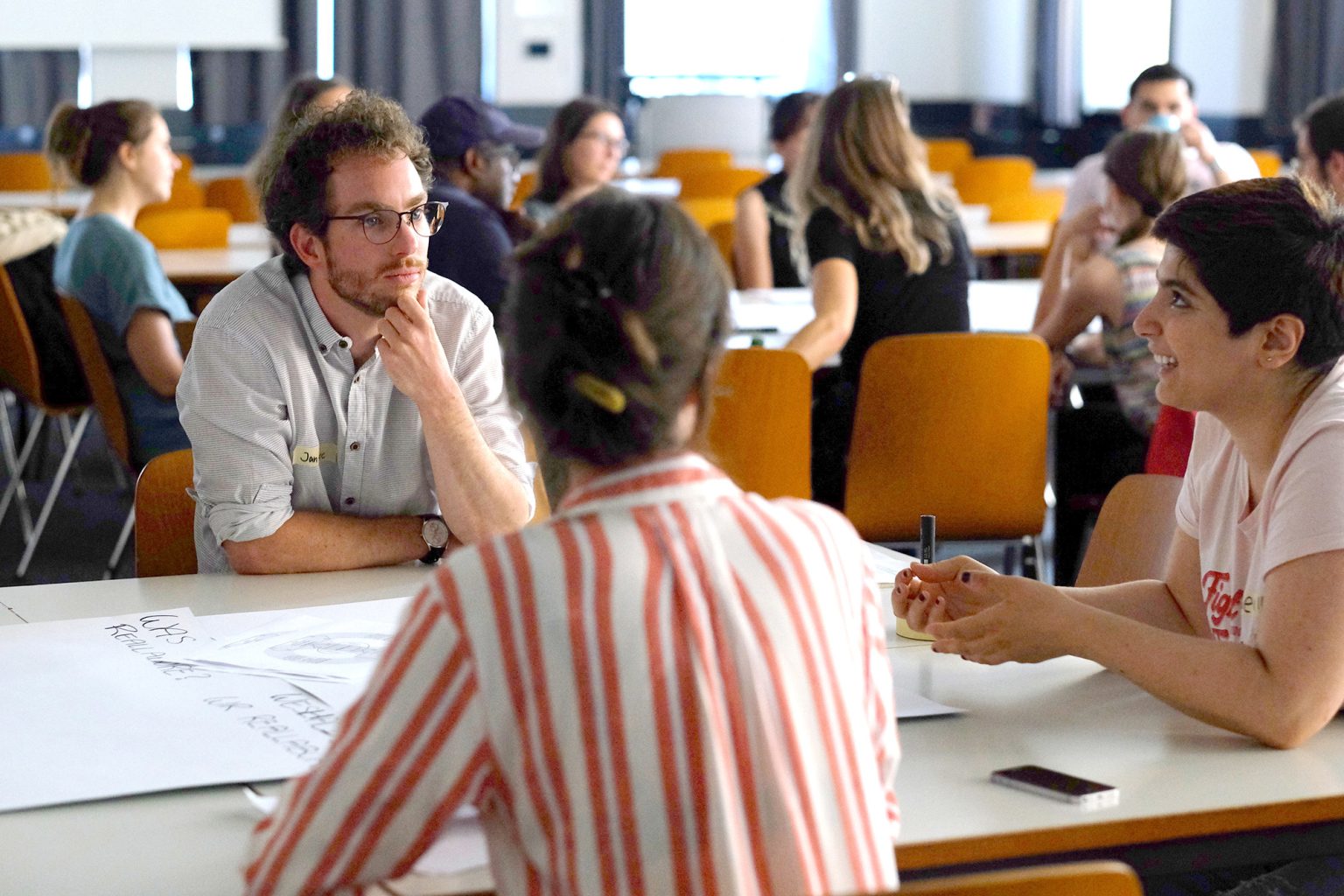
What does sustainability mean at Goethe University? The university assumes social responsibility and anchors sustainability in a holistic approach to research, teaching, transfer, operations and governance. Numerous projects started in 2023.
- Art on the campus
"Sometimes everything is very dense"
The art on the Westend campus ranges from the figure of Empedocles to the bronze sculpture "The Invincible". In 2023, a photo exhibition and a video installation were added.
Short & sweet
- Fixed
Bees, boules and belly dancing
Impressions from the spring and summer festival
Photo: UniReport/Goethe University
- Goethe-Uni App
"I want to develop Germany's best university app for students"
The Goethe University App 2.0 has been available since January 2023, making everyday university life easier and more convenient to organize. Ulrich Schielein, CIO of Goethe University, explains why it's worth keeping storage space on your smartphone free for the new app and why a hackathon isn't just for programmers.

Ulrich Schielein
Chief Information Officer (CIO) and full-time Vice President of Goethe University
Photo: Uwe Dettmar
UniReport: Mr. Schielein, why should I download the new Goethe University app? I can simply access the mobile university homepage while I'm on the move.
Ulrich Schielein: First of all, accessing the content via the app is more convenient than accessing the website via my cell phone browser. I can then configure the app so that the information that interests me the most appears at the top. With the app, I always have my current study information at a glance without having to log in first. But we want even more: the app should become a relevant tool for students that maps their entire daily rhythm and makes their day-to-day studies easier.
Goethe University already had an app before. What is different now than before?
In addition to the more modern look and feel, version 2.0 has two main enhancements: One is the login to our campus management system. After logging in with their HRZ account, students can, for example, create a timetable and view their grades. The second important new function is access to the university library account: I can search the catalog directly via the app, borrow media and keep track of overdue fines.
In other words, different systems had to learn to "talk" to each other?
Exactly. The app consists of interfaces in many places - even if I just want to look at the menus, I need an interface to the Studierendenwerk system to be able to read out the latest information (every 10 minutes).
The target group for the app is primarily students. They can not only download the app, but also contribute to the further development of the app. What is planned?
To coincide with the launch of the new app, we activated a platform have where users can provide feedback and suggest ideas for additional app functions. We want to understand what students need and which functionalities seem most important to them. On this basis, we then want to further develop the app in a targeted and user-friendly way. Involving users at an early stage is a key success factor in agile development. In the next step, we will then organize a hackathon* in the summer semester: This will give interested students the opportunity to independently implement initial functionalities in the form of a click dummy. On the one hand, this will allow us to test the functionalities. On the other hand, the hackathon is also a great opportunity to further develop your own digitalization skills. The hackathon offers a safe space where students from all disciplines - not just STEM subjects - can try something like this out and no one will be embarrassed. We will provide the appropriate rooms and tools, there will be presentations and, of course, plenty of food and drink - it should be a real event! We want to show that app development is not rocket science - it's relatively quick and easy.
What about the staff at Goethe University – will there soon be special app functions for them?
The Goethe University app is already a practical alternative to the mobile website for employees because I can find my university news, contacts or meal plans very quickly. As far as more extensive functions specifically for employees are concerned, however, we are relying more on our planned web relaunch than on an app solution. Among other things, we want to expand the intranet from a pure information channel to a real work and exchange platform. However, this is more complex and will take some time.
"I want to develop Germany's best university app for students"
So after the relaunch is before the relaunch. Do you have any personal expectations of the future Goethe University App 3.0?
Yes, I would like to develop Germany's best and most secure university app for students! If we receive an award for this, that would of course be great. But it's much more important to get closer to our goal of simplifying everyday student life using the app as a central hub with every stage of development. In this context, the exchange between fellow students, between students and their lecturers and between students and the administration should also be simplified: We want to use the app to create secure, GDPR-compliant communication channels that can be used, for example, to communicate information on the relocation of rooms, lecture cancellations and so on at short notice. There should also be the option to systematically develop additional services. For example, one of my wishes would be to provide visually impaired groups with assistance via the app so that they can find buildings and rooms more easily.
With the collection of ideas and the hackathon, students can participate in a digitalization project themselves. Is this a blueprint for other projects?
At least for the app, I can already say this in concrete terms: I would also like to actively involve students in the next phases of app development, get them out of their passive user role and also reduce any possible fear of contact with the topic of digitalization. In this way, they can acquire relevant digital knowledge in a fun way – what is behind an app like this? How is it developed? How do I handle data? The important thing is that we need as many students as possible to download the app and give us their feedback so that the app can become better and more important in everyday university life. Nothing is perfect, but if a bug is reported to us, we can fix it quickly. And with a view to the next steps: The more students who take part, the greater the benefit if we integrate a really good communication platform into the GU app.
Questions: Imke Folkerts
The interview was published in UniReport 1/23.
- Interactive, creative and dynamic: the hackathon for the Goethe University app
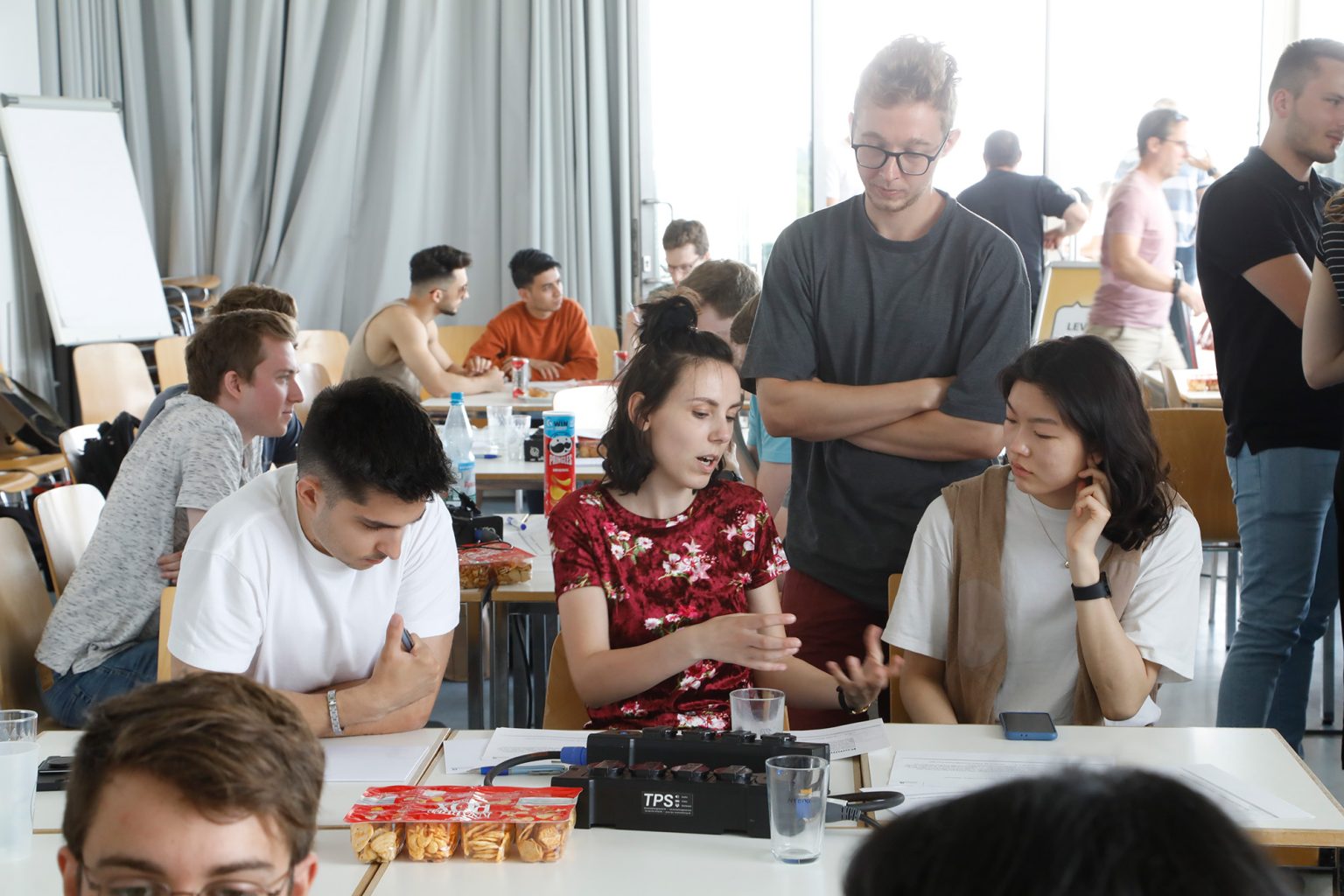
The new version of the Goethe University app has been available since the beginning of 2023. To make it even better – "the best", as CIO of Goethe University Ulrich Schielein enthused – his team organized a hackathon, a joint development and programming event, for all students in June. Eight ambitious student teams from the fields of computer science, economics, humanities, social sciences and natural sciences took part in the two-day design thinking workshop on the university app.
How creative and innovative were the proposals, how technically and organizationally feasible, how qualitatively valuable the prototype and pitch, how high the impact and reach? This was the task of the jury, consisting of Ulrich Schielein, CIO, Kai Philipp, Deputy Head of Department Application University Computing Centre (HRZ), Laura Thompson, HRZ Project Manager Software Asset Management (SAM), Paula Paschke, Course Coordinator and Equal Opportunities Officer of the Department of Catholic Theology and Kai Brobeil, DigitalChangeMaker at Hochschulforum Digitalisierung, Adornis Ventures GmbH and Unibator. The jury awarded first place to the "Everyday Nina" project because it addressed aspects of everyday student life and the technical feasibility. Second place went to the team of international students who presented an idea for Study and Social Buddies. Third place went to the Goethe Board. The expert jury was impressed by the impact beyond Goethe University.
The prizes, worth a total of 3,000 euros, came from the main Frankfurt Foundation, which supports social, ecological and cultural projects in Frankfurt.
Dr. Simone Beetz, University Computing Center (abridged web article)
"It was great to pitch at the hackathon, test our own digital skills and take part in something that is close to the students. We were also able to ask participants at the Night of Science about the Goethe University app and test our prototype."
Moritz Schwerdt
"It was nice to work in mixed teams and not just code the whole time. I would recommend the event to any student and am already looking forward to the further results and the impact."
Tilo Flasche
Moritz Schwerdt and Tilo Flasche are members of the winning team and active in the TechAcademy
"We have seen a wide range of exciting ideas from very talented, creative and committed participants. Now we have to evaluate the ideas and see which ones can be turned into technical and organizational features."
Jovan Krunic, one of the software developers of the Goethe University app in HRZ Web Administration
Foto: Lilly Gothe
- Sustainability
Holistically sustainable
What does sustainability mean at Goethe University? The university assumes social responsibility and anchors sustainability in a holistic approach to research, teaching, transfer, operations and governance. Numerous projects started in 2023.
- Sustainability
Sustainable out of responsibility
How can Goethe University improve its carbon footprint and raise awareness of sustainability across the university? There were numerous initiatives in 2023. The Frankfurt Biodiversity Ideas Competition was concluded by awarding prizes to three projects from citizens' initiatives in the city.
"Goethe University understands sustainability as a process of searching, learning and shaping, with the aim of enabling a dignified life for present and future generations while respecting planetary boundaries ..." This is stated in the introduction to Goethe University's understanding of sustainability, which was adopted in 2023. Some steps towards a sustainable university take a lot of time – for research and joint design. Others, such as the development of the sustainability concept, have already been taken by the university. Launched in April and developed through workshops and other discourse formats, it was approved by the Senate in November. The guidelines for Goethe University have now been formulated and serve as orientation for the development of a sustainability strategy in five fields of action: Research, Studies and Teaching, Transfer, Governance and Operations.
More long-term is the process initiated in 2023 to create a university-wide greenhouse gas balance sheet and a climate protection concept. Together with the environmental agency Arqum and stakeholders at Goethe University, this balance sheet is to be drawn up in accordance with the globally established standard of the Greenhouse Gas Protocol in Scopes 1-3. The first step was to collect data, which will then serve as the basis for a climate protection concept to be developed at Goethe University.
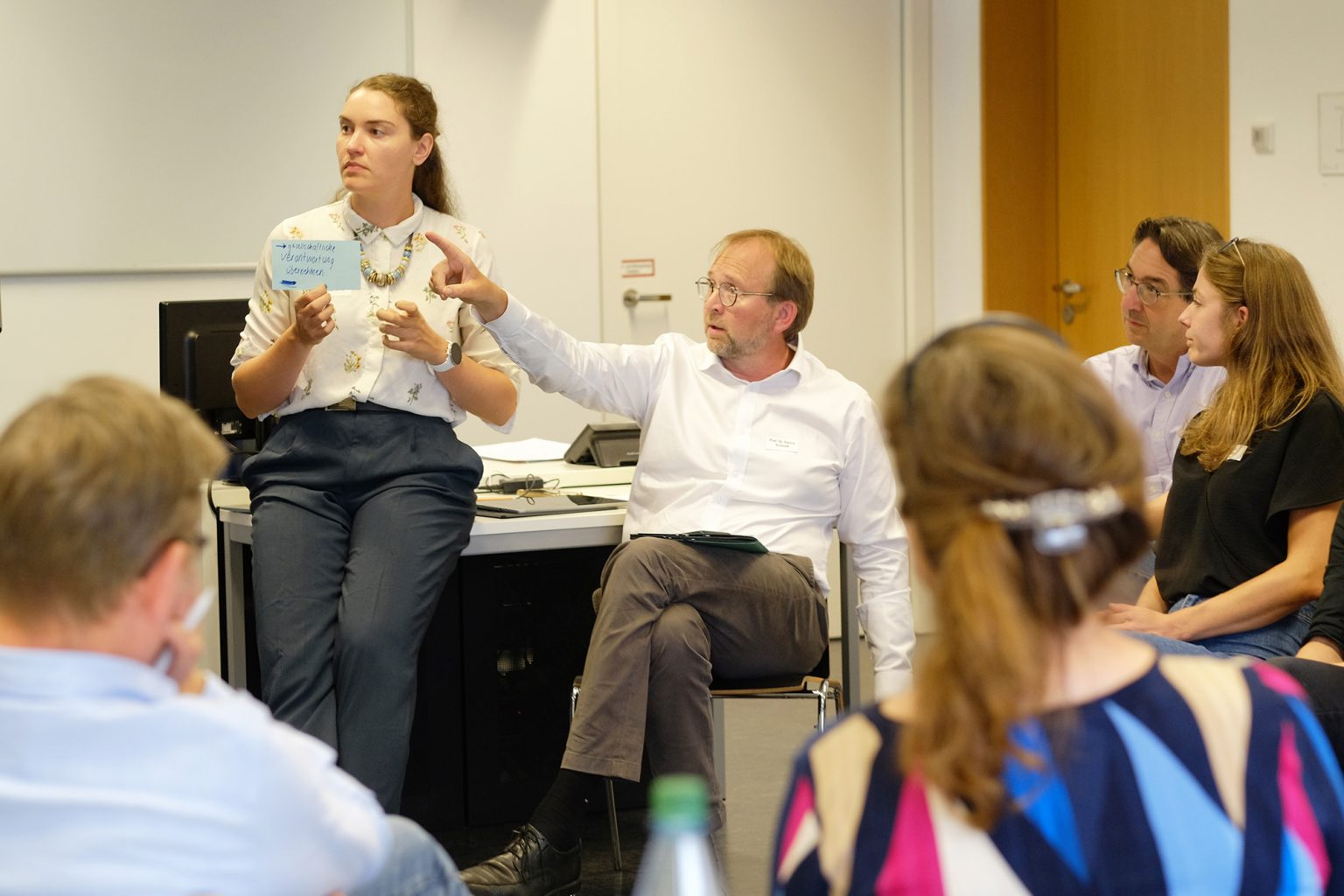
Mobility: sustainable thinking
The development of a sustainable mobility plan has also begun: Together with the Gesellschaft für Integriertes Verkehrs– und Mobilitätsmanagement (ivm) and coordinated by the Sustainability Office, the aim is to determine the commuting mobility of all employees and students. Proposals for measures to achieve climate neutrality will then be developed on the basis of a survey of university members and further analyses.
The long-term project "Goethe Teaches Sustainability" (financed by QSL funds from the state) was also launched, which aims to develop a "Sustainability Certificate" with an integrated lecture series and transdisciplinary courses by 2026. The project is coordinated by a project position in the Department of Educational Sciences and supported by researchers and teaching staff. The Sustainability Office is a sparring partner. The area of sustainability in studies and teaching also includes the e-learning module on sustainability and digitalization, which will be launched in 2023; this will enable interested parties at the university to further their education on "Education for sustainable development and digitalization thought together".
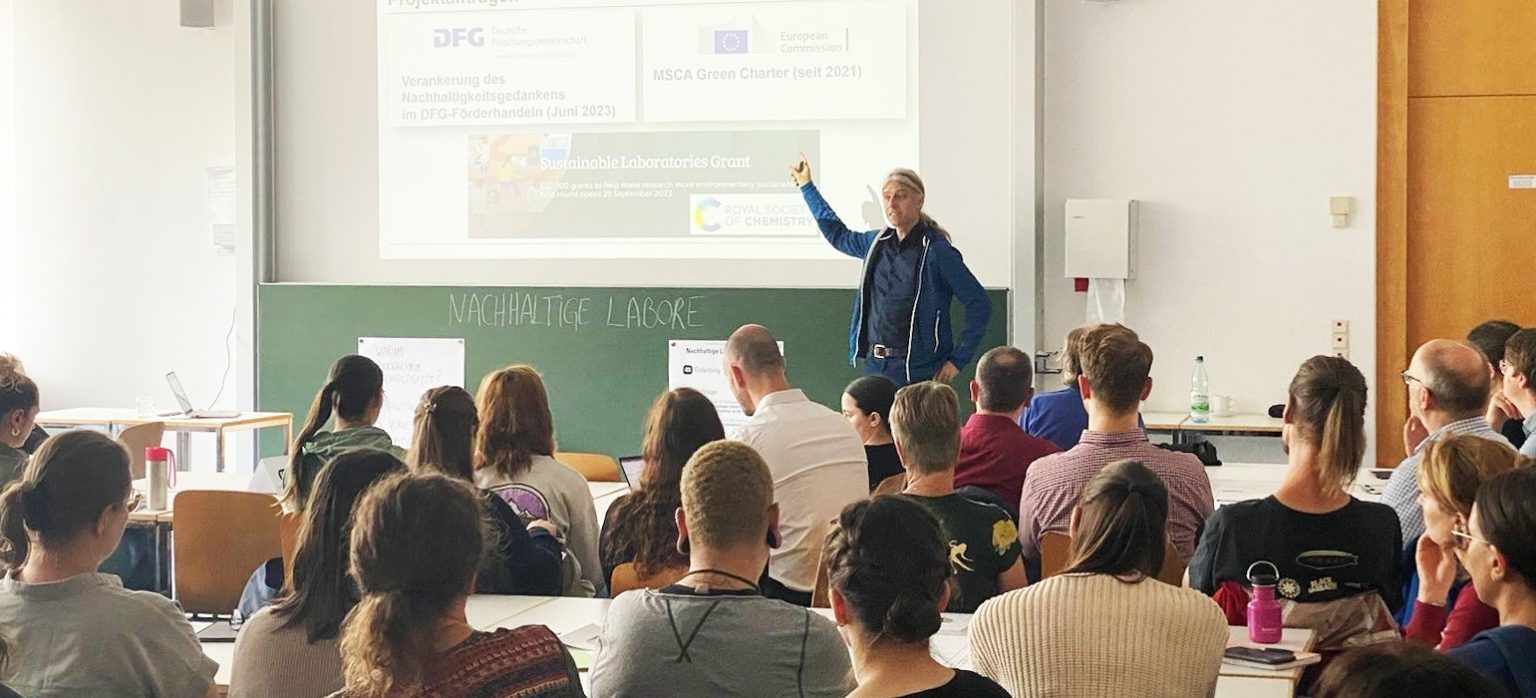
A forum for exchange
The new University Sustainability Forum format, which has started with two events, contributes to the understanding of all stakeholders: It is intended to continuously promote university exchange on topics – in July, for example, the topics were sustainable and transdisciplinary research and sustainable laboratories.
Where are there projects and people on campus and in the city who are developing ideas for sustainable learning, teaching, research and cooperation? In 2023, the new CAMPUS WANDELN format invited interested parties to take walks and meet with sustainability experts: The "Herb Show on Campus Westend" was intended to raise awareness of the presence of wild plants in urban areas and the importance of nature in cities. And at the "Permaculture garden on the Riedberg campus" event, interested parties were able to find out how permaculture combines traditional methods with the latest scientific findings.
The Biodiversity Frankfurt ideas competition initiated in 2022, with which Goethe University aims to bring the topic of sustainability to the city and initiate a learning process between citizens and scientists through sponsorships, came to a spectacular conclusion. The award ceremony of the ideas competition – a cooperation between Goethe University, Palmengarten, Senckenberg Gesellschaft für Naturforschung, the city's environmental department and Frankfurter Sparkasse 1822 – awarded a total of 30,000 euros to three biodiversity projects from citizens' initiatives. At the beginning of December, Frankfurt's first Tiny Forest of the award-winning project "MainWäldchen" was planted in the Eckenheim green corridor.
pb
- "Frankfurt Biodiversity Ideas Competition" honors creative concepts
A better habitat for many animal and plant species in the city – that is the aim of the first joint ideas competition organized by Goethe University, Palmengarten, Senckenberg Gesellschaft für Naturforschung, the Environment Department of the City of Frankfurt and Frankfurter Sparkasse. Coordinated by Goethe University's Sustainability Office, the initiative was launched in summer 2022 and the first winners were recognized in March 2023.
The model for the project of the 1st prize winner "MainWäldchen – the Tiny Forest in Frankfurt a.M." of the "Frankfurt Biodiversity Ideas Competition" is the planting method of the Japanese Akira Miyawaki. In this method, the regeneration of the soil and dense, site-adapted planting with native trees and shrubs transforms a previously ecologically worthless area into a highly diverse forest system for numerous insect and bird species in a short space of time. For their project – the first Tiny Forest in Frankfurt – the Citizen Science Project "MainStadtBaum" initiative and Greenpeace Frankfurt received prize money of 15,000 euros.
The jury awarded second place, endowed with 10,000 euros, to the "Nectar bar for night owls" project by Christoph Schuch and Monika Peukert. The pilot project envisages small wild plant biotopes of nocturnal flora in the city – they are intended to serve as a standard model for biotopes that increase the population of important pollinating insects such as moths and bats.
The 3rd prize, endowed with 5,000 euros, went to the project "Is this habitat or can it go? Deadwood for a living Frankfurt" by Tim Milz and Aaron Kauffeldt. The concept of the two students from Goethe University envisages deadwood islands in the city that promote the habitat for a variety of organisms.
- Sustainability
A hotspot of biodiversity
"Is this habitat or can it be thrown away?" Goethe University students Aaron Kauffeldt and Tim Milz were awarded third place in the biodiversity ideas competition for their idea of creating deadwood islands in Frankfurt's urban area.
It was an excursion to the Bavarian Forest that first made Aaron Kauffeldt and Tim Milz aware of the importance of deadwood. There they saw how a natural forest can become a habitat for a variety of animals, plants and fungi. Both have completed a Master's degree in Ecology and Evolution at Goethe University. Tim Milz is writing his master's thesis in the field of conservation biology – about insects that live in dead wood. With the knowledge of the importance of deadwood and the desire to contribute to the preservation of biodiversity in the city, Aaron and Tim applied for the "Frankfurt Biodiversity Ideas Competition". The prize was announced for the first time in 2022 by Goethe University, Palmengarten, the Senckenberg Society for Nature Research, the Department for Climate, Environment and Women of the City of Frankfurt and Frankfurter Sparkasse. "Is this habitat or can it go?" – Aaron and Tim deliberately gave their biodiversity project this somewhat provocative name. They want to draw more attention to the biodiversity hotspot of deadwood. The two graduates' project plan convinced the jury: with the 5,000 euros in prize money for 3rd place, they can start implementing the project.
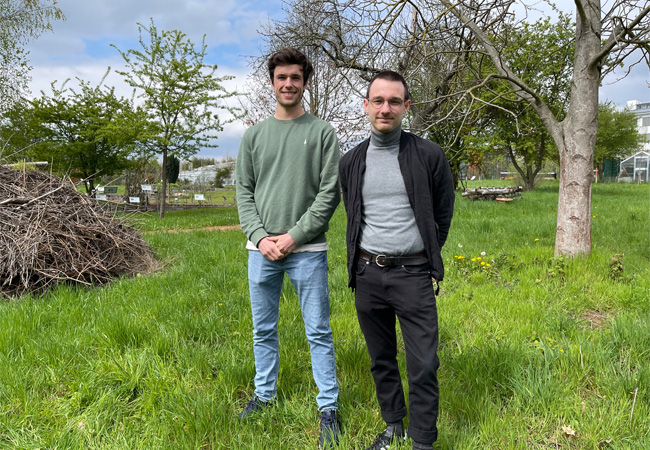
A forgotten habitat
Your project sponsor Claus Bässler, Professor at the Institute for Ecology, Evolution and Diversity at Goethe University, once described deadwood as a "forgotten habitat". And indeed, when it comes to the global biodiversity crisis, deadwood tends to receive little attention, especially in urban areas. Deadwood has disappeared from the landscape in recent years. "Thanks to modern forestry, trees nowadays don't even grow old enough to produce deadwood," says Tim Milz. Trees are planted and soon felled to be used as a raw material, for example for timber production. As a result, they no longer reach the appropriate age to accumulate deadwood.
Another reason is the assumption that forests need to be tidy, adds Aaron Kauffeldt. Dead trees are quickly cleared away – for safety reasons, but also for aesthetic reasons. "Many forest visitors perceive a tidy forest without dead trees as a beautiful, healthy forest. Conservationists and biologists, on the other hand, have a completely different idea." Incidentally, the tendency to tidy up does not only exist in our forests, but also in urban areas, parks and private gardens. With her project "Is this habitat or can it go? Deadwood for a living Frankfurt", Aaron Kauffeldt and Tim Milz therefore want one thing above all: to bring the forgotten habitat of deadwood back into the urban space.
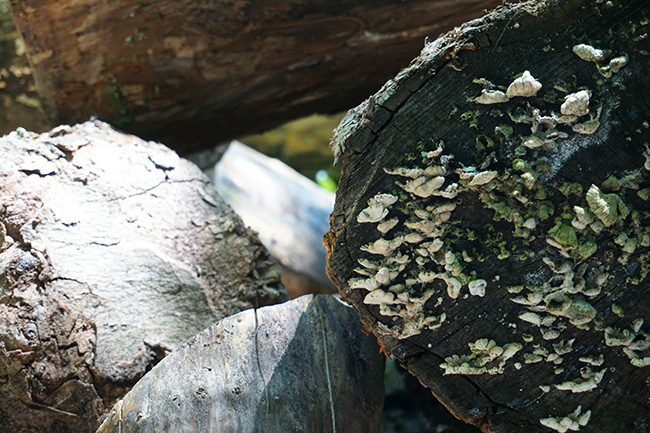
Deadwood biodiversity hotspot
The two ecologists are convinced that deadwood has been unjustly forgotten. In fact, it can be described as a kind of biodiversity hotspot. This is because deadwood provides a habitat for animals and other organisms. For example, beetle species such as the rhinoceros beetle use deadwood as a nursery for their larvae. The boreholes that these deadwood-dwelling beetles then leave in the wood are used by wild bees for nesting. Numerous plants and fungi also grow in or next to deadwood accumulations. Behind the supposed waste product is a complex system that includes numerous organisms.
"Around 20 percent of all beetles living in Germany depend on deadwood. Deadwood is therefore by no means a niche habitat that can be neglected," emphasizes Tim Milz. The fact that around half of the beetles living in deadwood are endangered once again highlights its importance. "It has been known for decades that deadwood is important. But its enormous importance for the ecosystem has not yet reached the general public." The situation is different when it comes to insect mortality, for example, which has long been anchored in people's minds as a symbol of the biodiversity crisis. With their project, Aaron Kauffeldt and Tim Milz therefore also want to make it clear that the loss of deadwood is directly linked to the decline in biodiversity.
In addition to its function as a habitat, deadwood also has many other advantages: it improves the water retention capacity of ecosystems, has an enormous influence on material cycles and contributes to soil formation and the long-term storage of carbon. According to ecologists, the ability to store water in particular can have a positive influence on the microclimate – and thus counteract overheating in cities.
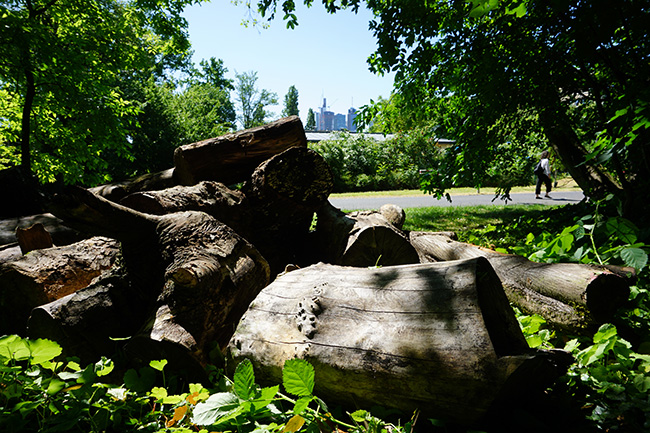
Deadwood islands in urban areas
In order to bring the deadwood habitat back into the city, Aaron Kauffeldt and Tim Milz have already exchanged ideas with stakeholders from the environmental and green space authorities. They are dependent on cooperation with the city, as their project plan explicitly includes urban areas. Initially, ten so-called deadwood islands are to be created in the Frankfurt city area – i.e. accumulations of deadwood at defined locations. To determine the locations, the pair consulted a species and biotope protection concept from the city of Frankfurt and ultimately decided on a route across the city. Starting in Niddapark, deadwood is to be accumulated in various green spaces in future, including at Campus Ginnheim, in Günthersburgpark and in Holzhausenpark. "This axis from east to west should enable living creatures, for example from the neighboring Wetterau region, to find their way into the city," explains Aaron Kauffeldt.
The first deadwood island was only recently created at Campus Westend. It is located, well protected in the shade of the trees, not far from the Nina-Rubinstein-Weg. Aaron Kauffeldt and Tim Milz were assisted in its implementation by Robert Anton, who is responsible for the university's outdoor facilities.
"The great thing about the project is its simplicity: deadwood accumulates anyway, can in principle simply be discarded and thus already contributes to the preservation of biodiversity," says Tim Milz. Above all, the two hope that their project will be more widely accepted by the public. For this reason, they are planning a publicity concept to accompany the deadwood islands. Based on the "Meadow for bees" boards, they want to provide information in the immediate vicinity of the storage locations to give park visitors an overview of the value of deadwood for urban biodiversity – and ideally encourage them to copy it in their own gardens.
Isabelle Hammerschmiedt
Photo: Jens Gerber
- Art on the campus
"Sometimes everything is very dense"
The art on the Westend campus ranges from the figure of Empedocles to the bronze sculpture "The Invincible". In 2023, a photo exhibition and a video installation were added.
Adorno occupying the Rectorate, dancers at an open-air festival, scenes from Frankfurt's Bahnhofsviertel – 32 photographs by the long-time F.A.Z. photographer on motifs of student life, moments in German history, the city of Frankfurt and the university were acquired for Goethe University in 2018 by Dr. Rebekka Göhring, Head of International Student Affairs. Since April 2023, a further 44 pictures have been on display in the permanent exhibition in the International Studies Department (SLI) on the Westend campus.
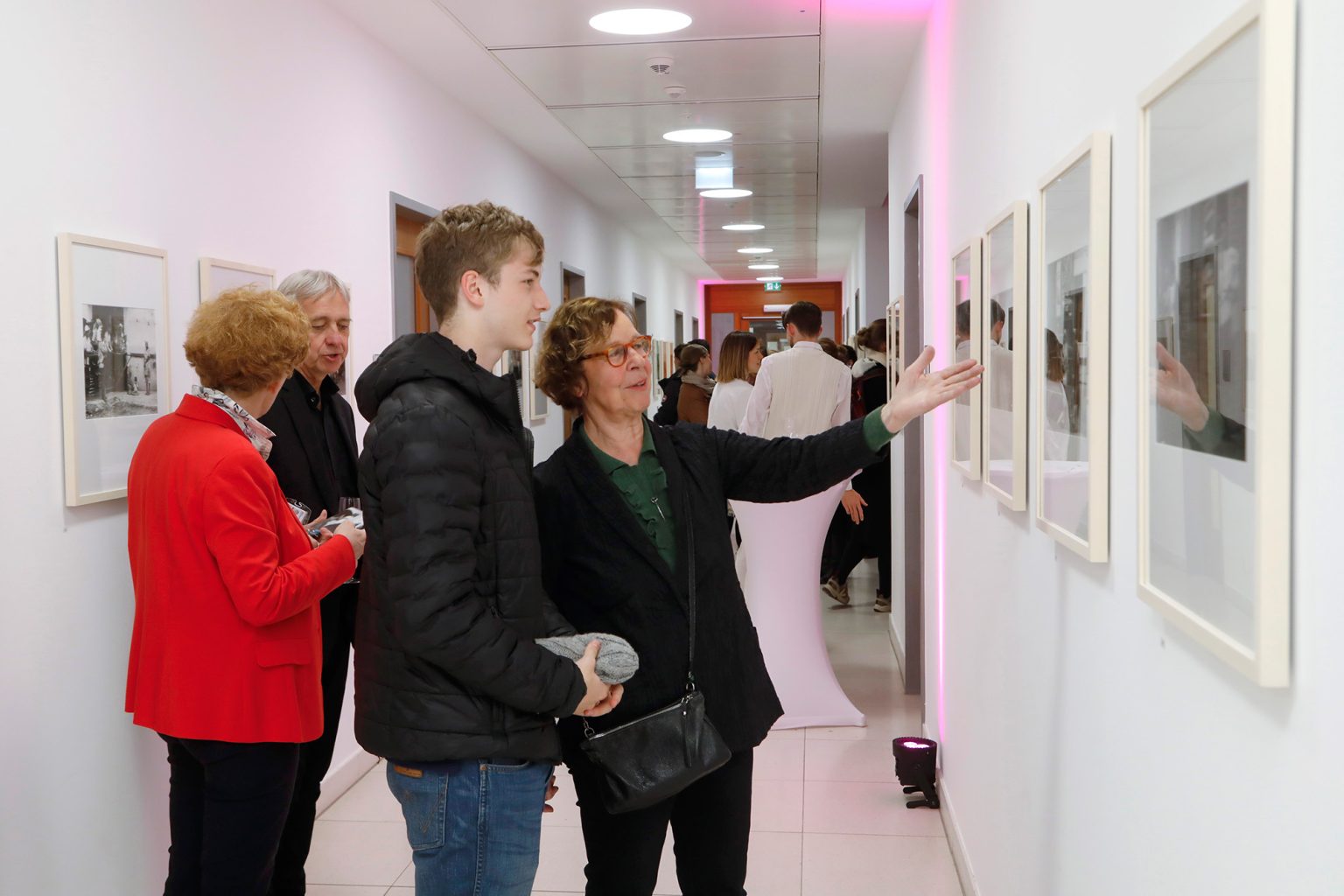
"For breakfast... I had already done my work"
The photos were taken on trips since the 1970s, which Barbara Klemm undertook together with editors of the F.A.Z. – for example to Poland, Romania and Chechnya, to Moscow and Kiev, to Cuba, Brazil and India. The pictures shown were taken beyond the official main and state files. Early in the morning, Klemm told Rebekka Göhring at the exhibition opening, she often steals out of the hotel to escape possible guards: "I was back for breakfast and had already done my work." This resulted in pictures such as the one of farmers' wives cooking and celebrating instead of the commissioned shots of tractors. "As a photographer, you always have to keep moving and remain highly focused. Sometimes you can't see anything, sometimes everything is very close," said Klemm. In his accompanying text to the exhibition, film scholar Prof. Vinzenz Hediger describes Barbara Klemm's art as "an art of the fruitful, decisive historical moment: the kairós of history." Sometimes images are created that capture "tipping points and turning points" and are therefore "anticipations of coming events".
According to Hediger, the public exhibition shows "that art and socio-political commitment are not separate spheres and that their separation would be artificial. The exhibition should also be one of the places where the city and the university can continue their conversation." Located in the advisory rooms for students – including international students – at Goethe University, the exhibition is also a place that makes clear what internationality also means, emphasized Vice President Prof. Christiane Thompson at the opening: namely "to show different cultural reference systems and bring them into conversation with each other".
The 76 black and white photographs (b/w, 30 x 40 cm, silver gelatine on baryta paper) can be seen in the "International Studies" (SLI) area on the second floor of the PEG building.
pb
- Art in public space
Video sculpture on the limits and possibilities of language
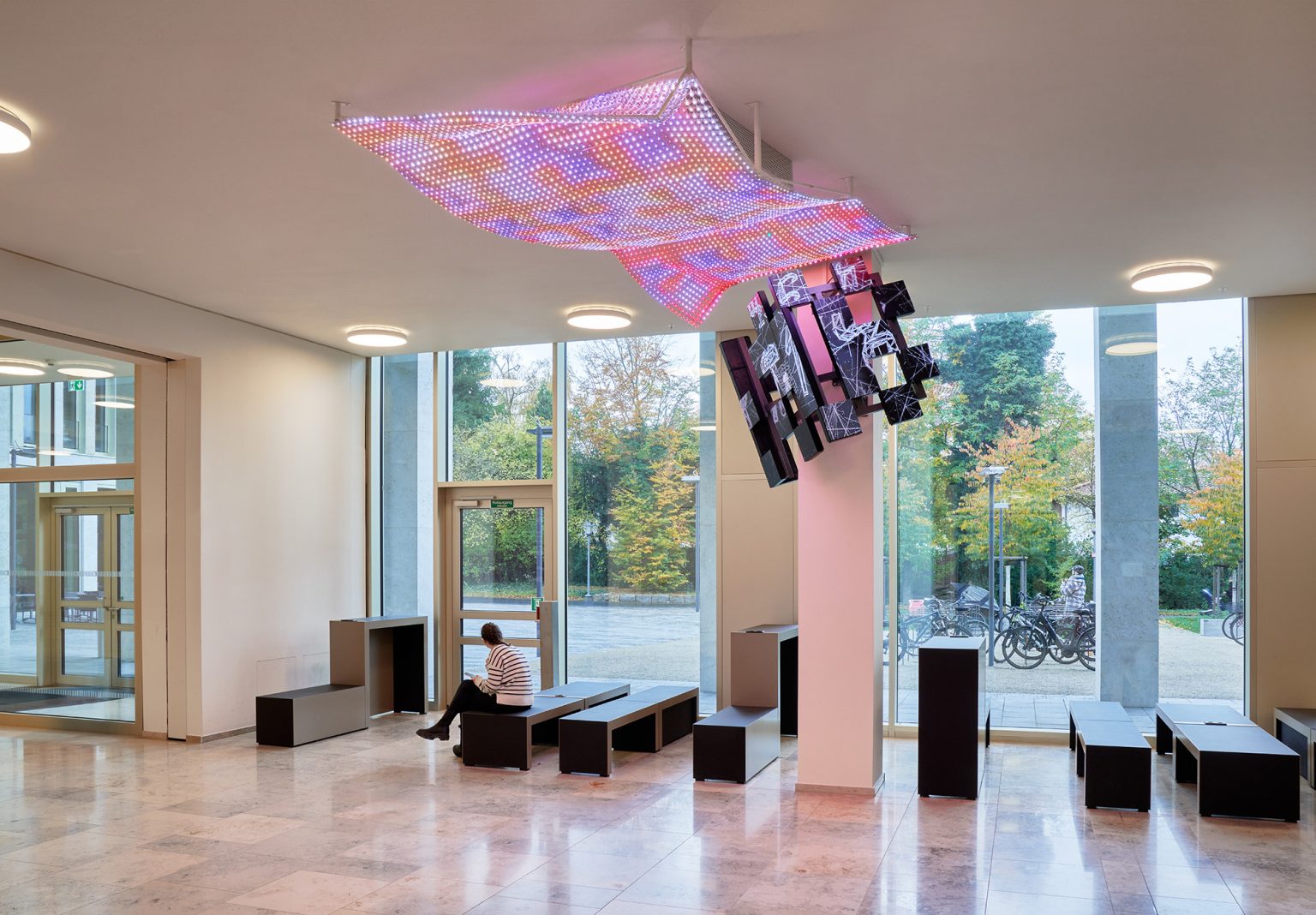
A three-part video sculpture by Raqs Media Collective will be installed in the new building for linguistics and cultural studies at Goethe University. The internationally renowned collective won the Kunst am Bau competition organized by the state of Hesse with its design All, Humans.
His works have been shown at Documenta 15 and at biennials in Venice, Istanbul, Taipei, Liverpool, Shanghai, Sydney and Sao Paulo, and are represented in many collections, including the Museum MMK für Moderne Kunst Frankfurt and the Kunstsammlung Nordrhein-Westfalen. Now the prominent Raqs Media Collective has created an installation that is open to the Frankfurt public in the Goethe University's Linguistics and Cultural Studies building. The three large-format installations were inaugurated in the presence of the collective's artists Monica Narula, Jeebesh Bagchi and Shuddhabrata Sengupta, and the artist talk was moderated by students from the Curatorial Studies master's program.
Since its foundation in 1991, the Raqs Media Collective has attracted worldwide attention with its work. The artists take an interdisciplinary approach to socio-political and philosophical issues and attach great importance to working site-specifically. This approach also serves as the starting point for the three-part video sculpture All, Humans: In the Linguistics and Cultural Studies Building, the focus is on the limits and possibilities of language at a university characterized by Western standards.
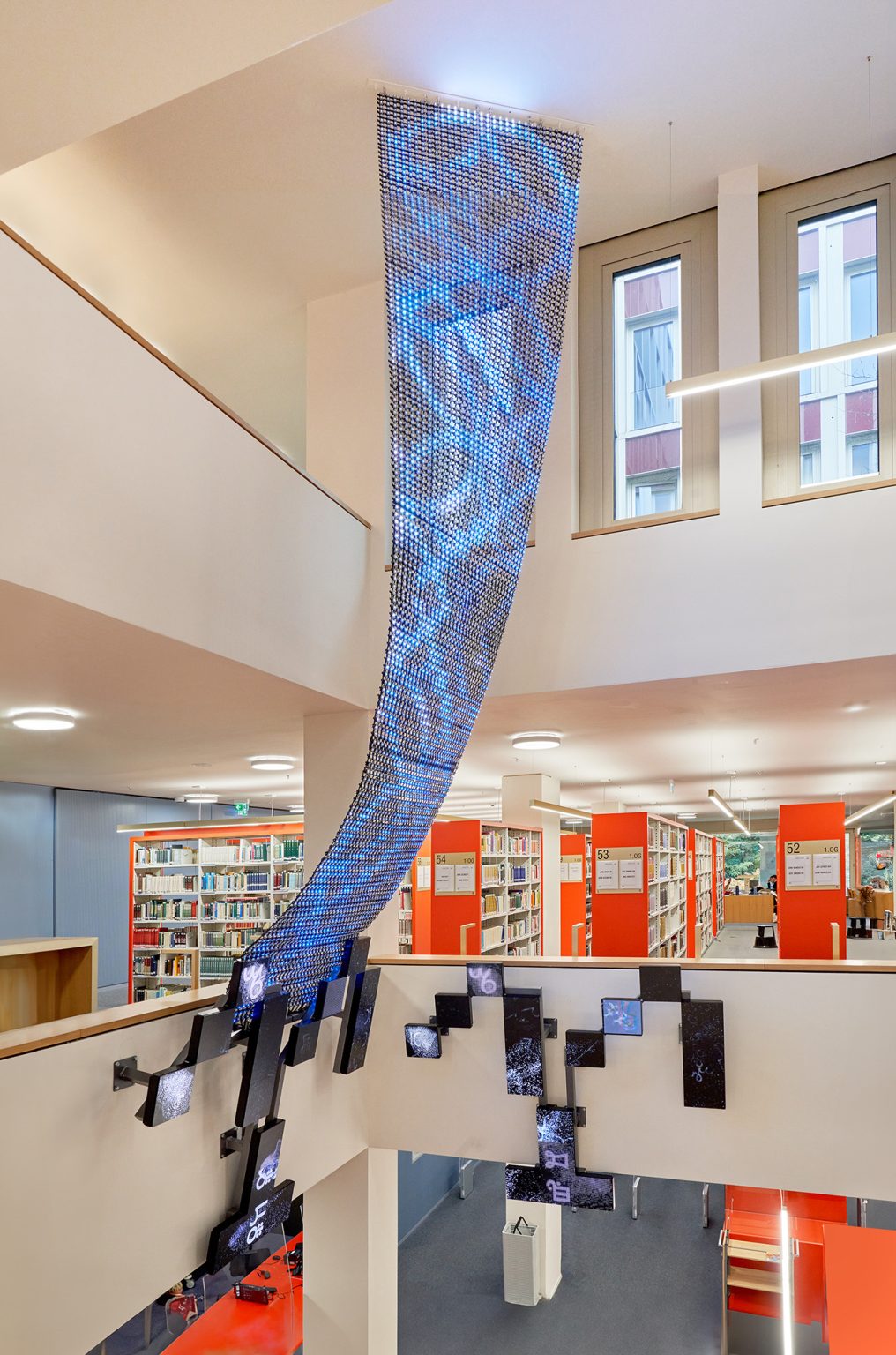
Fragments of the human rights convention
The three installations, some of which are several square meters in size, consist of LED modules attached to steel structures and mounted on the ceilings in the entrance area, in front of the lecture hall and in the library. The LED modules, which at first glance appear to be randomly arranged, together form characters, words and sentence fragments from the first article of the Human Rights Convention in the West African Mande language Vai – the collective was fascinated by the fact that this writing system, which was developed in the early 19th century, originated from conversations and dreams. Moving images, which run as videos on the modules, show gouache drawings and glass sculptures that also depict characters in Vai.
Students of the Curatorial Studies master's program presented the artistic work of the Raqs Media Collective to the public – for example through talks, a panel discussion and a booklet. The cooperative study program, founded in 2010, is run by Goethe University and the Hochschule für Bildende Künste-Städelschule in collaboration with several Frankfurt museums: the Museum MMK für Moderne Kunst, Städel Museum and Liebieghaus, the Historisches Museum Frankfurt, Weltkulturen Museum and Portikus.
The educational program and the publication were supported by the Dr. Hans Feith and Dr. Elisabeth Feith Foundation as well as by state funds.
pb
- Short & sweet
New chancellor
The chemist is leaving, the physicist is coming: Dr. Ulrich Breuer (right) is the new chancellor of Goethe University. He succeeds Dr. Albrecht Fester, who is retiring after more than five years as Chancellor. Ulrich Breuer was previously Administrative Director of the GSI Helmholtz Center for Heavy Ion Research and the Facility for Antiproton and Ion Research in Europe (FAIR) in Darmstadt.
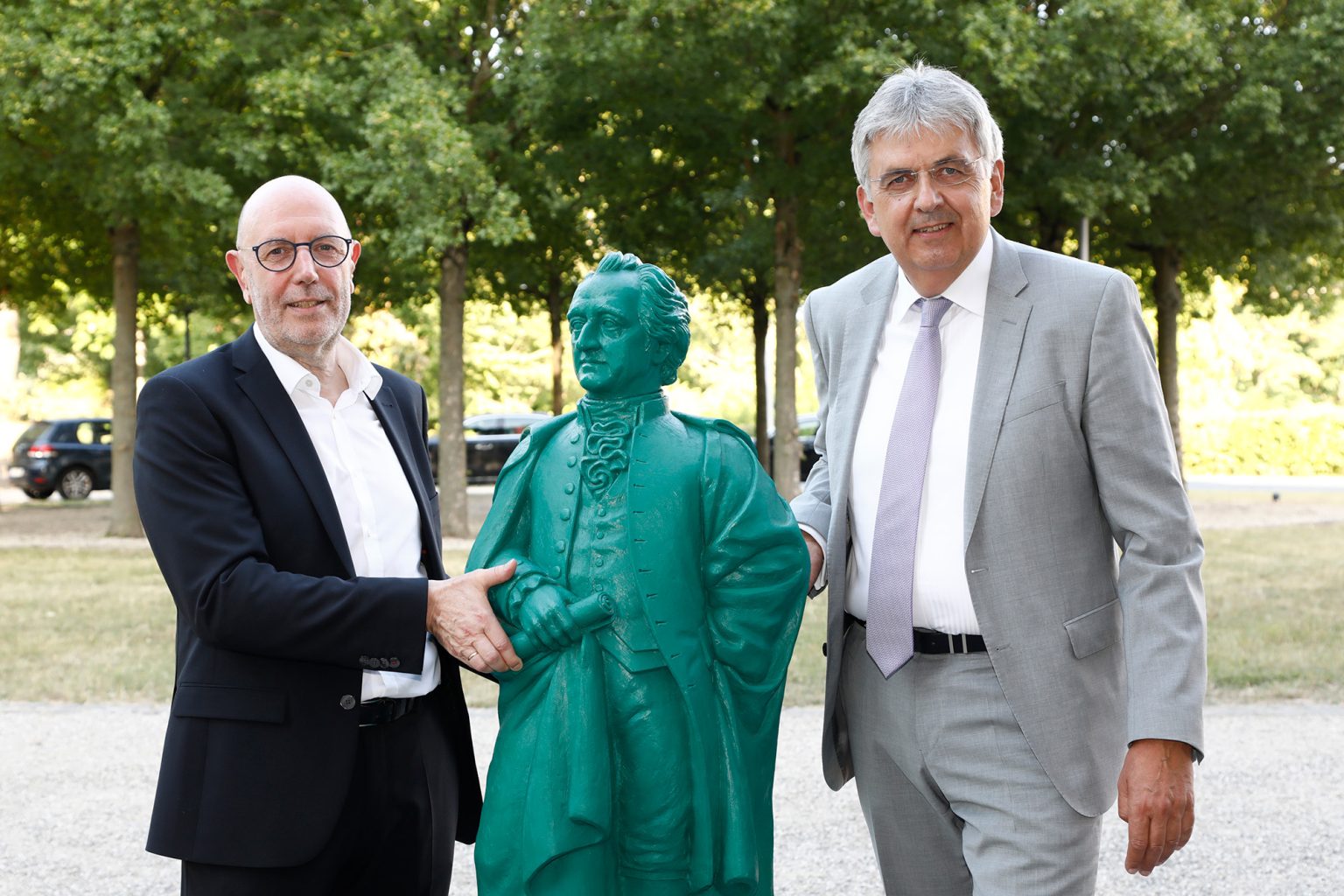
(Photo: Uwe Dettmar)
Chaincourt Theatre Company
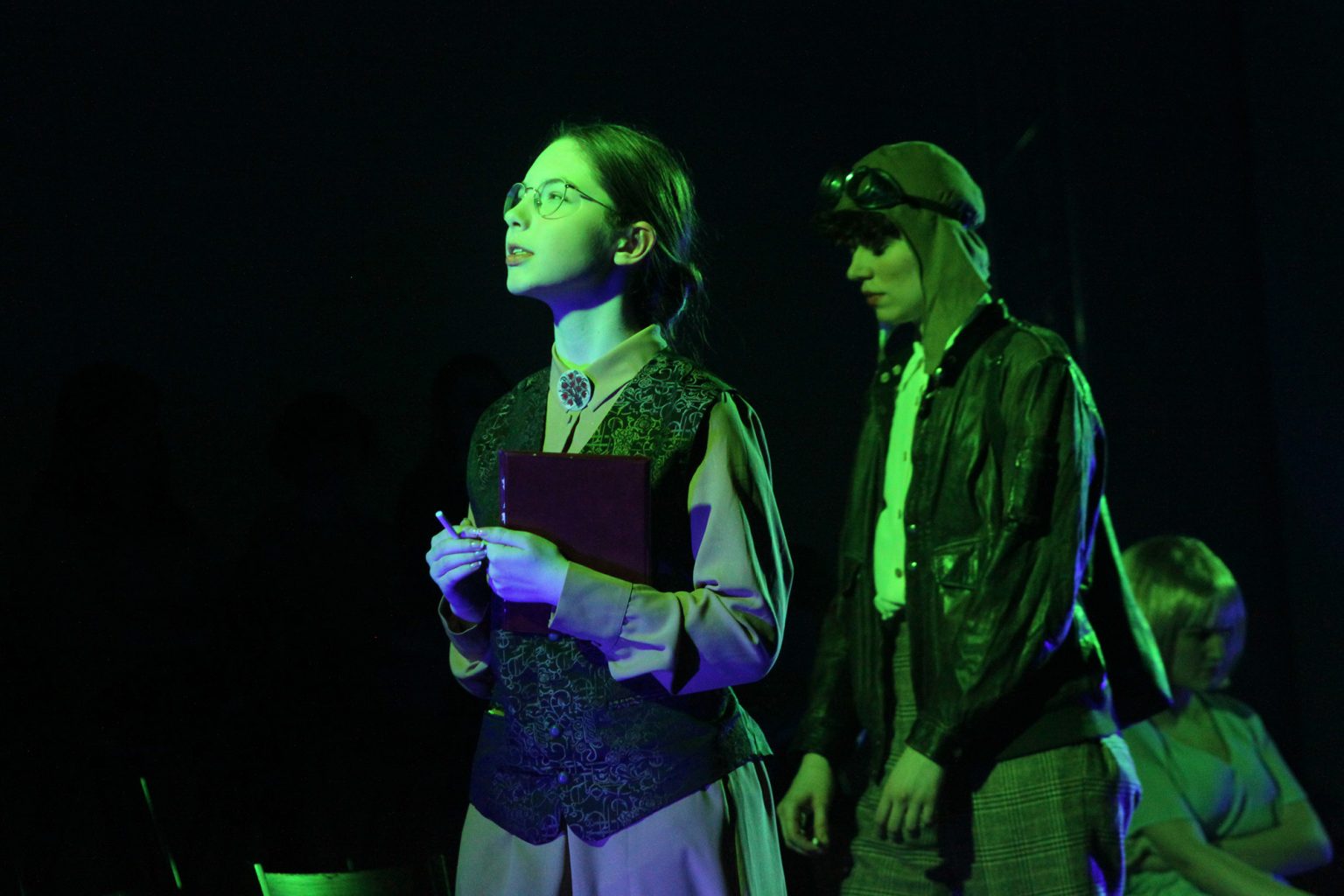
In January 2023, the Chaincourt Theatre Company will be back: on their home stage at Goethe University, they will perform the two one-act plays "Chamber Music" by Arthur Kopit and "The Dumb Waiter" by Harold Pinter.
100 years of the student house
The Student House at Frankfurt University is 100 years old. An exhibition with various events pays tribute to the history of the building, which is known far beyond Frankfurt.
First-year students welcomed
At UNISTART, more than 2,000 first-semester students are welcomed by the University President Prof. Enrico Schleiff, the Head of Cultural Affairs Dr. Ina Hartwig and the AStA Executive Board in the lecture hall center on the Westend campus.
Off to the summer semester: Goethe University looks forward to welcoming new students
Goethe University digital
The consultation days of the Hochschulforum Digitalisierung take place on the Westend campus. Goethe University successfully applied for this peer-to-peer consultation on digital teaching. Participants from all status groups want to initiate strategic processes for digitalization in studies and teaching through lectures, discussions and workshops.
Labeled
Since the beginning of May, Studierendenwerk Frankfurt am Main has been awarding an environmental score to all its menus.
Studierendenwerk turns 100
Studierendenwerk Frankfurt am Main is celebrating its 100th anniversary with a chronicle, a blog and campaign days in the canteens.
Diversity
At Diversity Day 2023, experts from science and culture will discuss the "Racism-critical university" as part of a panel discussion organized by the Goethe University's Equal Opportunities Office.
Digital trade fair
At the invitation of CIO and Vice President Ulrich Schielein, a digital fair for the central IT and digital projects at Goethe University will take place on the Westend campus as part of the nationwide Digital Day. On the one hand, the fair is an exchange forum for the IT and digitization projects of Goethe University, while at the same time offering the opportunity to present your own projects.
Research in the dark
After a three-year break, Frankfurt's Riedberg will once again be home to the Night of Science: students from Goethe University have organized a brilliant programme of lectures, guided tours and hands-on experiments for schoolchildren, students and interested members of the public.
"Night of Science" at the Goethe University
Uni-Music
The ensembles of the Collegium Musicum of Goethe University present the results of their semester rehearsals in three final concerts: Works on the theme of "Water Worlds" and world premieres by composer Christian Ridil (University Music Director at Goethe University 1984 – 2009) will be presented.
Equal opportunities put to the test
For the first time, Goethe University's equal opportunities work will be evaluated externally. In consultation with the Executive Board, an agency was commissioned to carry out the project for the period from July 2023 to February 2024.
Netiquette
Goethe University has a new netiquette that replaces the previous "Netiquette – Rules of conduct in the social networks of Goethe University" from 2018. The netiquette contains rules of conduct for good and respectful behavior in all areas of digital communication.
The netiquette of the Goethe University
Main-Study
Thousands of high school graduates, students from upper secondary schools and technical colleges get to know Goethe University on site during the "MainStudy".
Get a taste of university life
Environmental Award
This year, the "Frankfurt Prize for Environment and Sustainability 2023" goes to four young researchers at Goethe University. The prize is awarded for qualification work in the field of environmental and socio-ecological sustainability research.
Apprentices
In the 2023 training year, a total of ten new trainees and one trainee inspector started their careers at Goethe University.
Goethe runs
The Goethe Run has become a favorite event of the Goethe community: 471 people celebrated together on the Sportcampus after the 5.8 km run between the Sportcampus and Campus Westend.
New computer science and mathematics building
With the ground-breaking ceremony for the new Computer Science and Mathematics building on the Riedberg campus, the relocation of the department of the same name at Goethe University from the Bockenheim campus to the Riedberg campus is now within reach.
New computer science and math building
Environmental Award
The Bruno H. Schubert Foundation is awarding one of the most highly endowed German environmental prizes, the Frankfurt Conservation Award 2023 (Bruno H. Schubert Prize) in the three categories of teaching, research and applied nature conservation to Prof. Meike Piepenbring (Goethe University Frankfurt), Prof. Beth Kaplin (University of Rwanda) and José Carlos Nieto Navarrete (Servicio Nacional de Áreas Naturales Protegidas por el Estado – SERNANP, Peru).
Pupil
The exhibition "Throwing Pictures" in the Schopenhauer Studio of the University Library explores the history of student film culture at Goethe University from the founding of the "Film Studio" in 1951 to the current Pupille-Kino. The exhibition is the result of the research seminar of the Master's course "Film Culture: Archiving, Programming, Presentation".
Throwing pictures: Excavation work on student film culture in Frankfurt
Photo: Uwe Dettmar
- Fixed
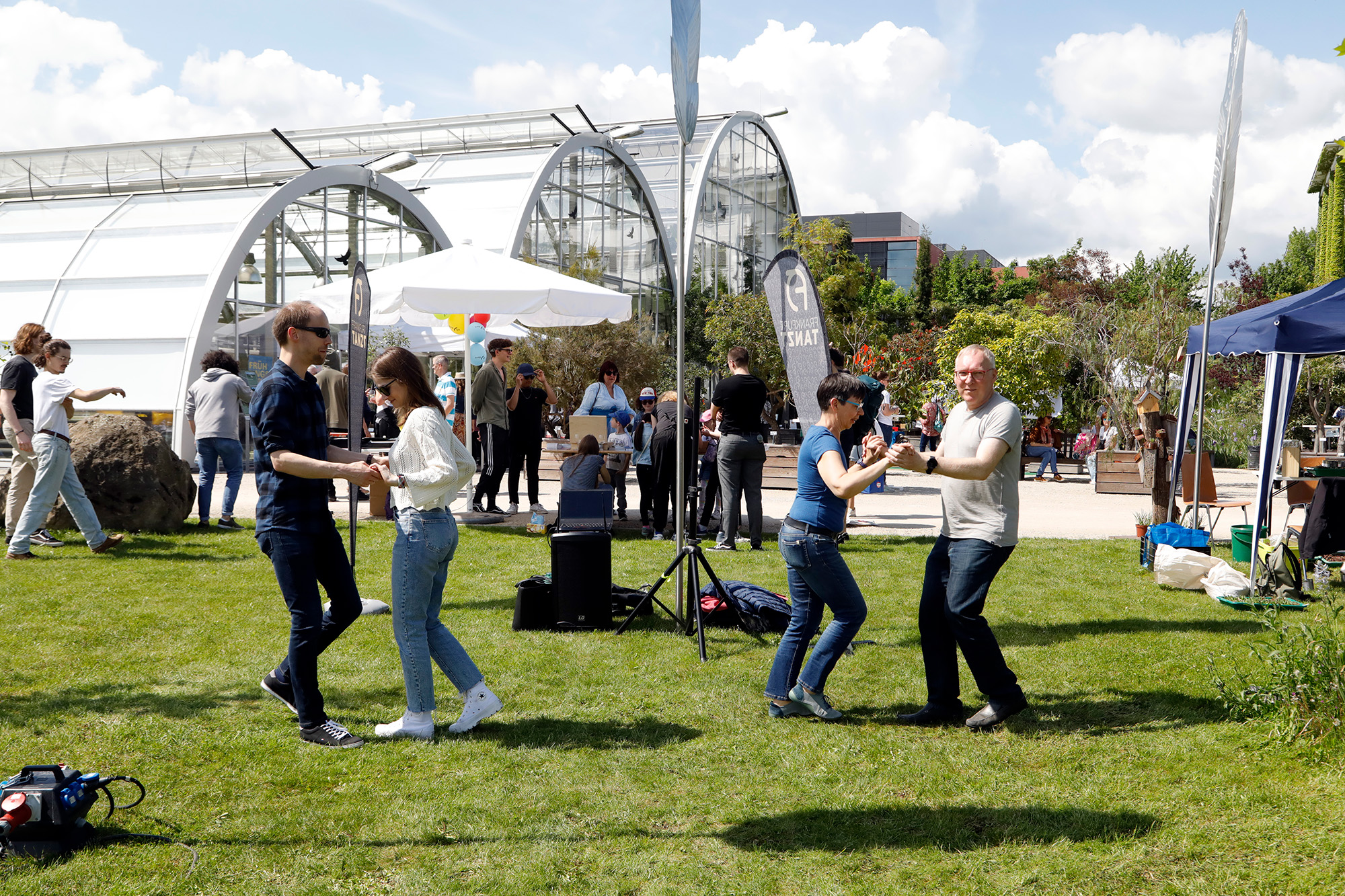
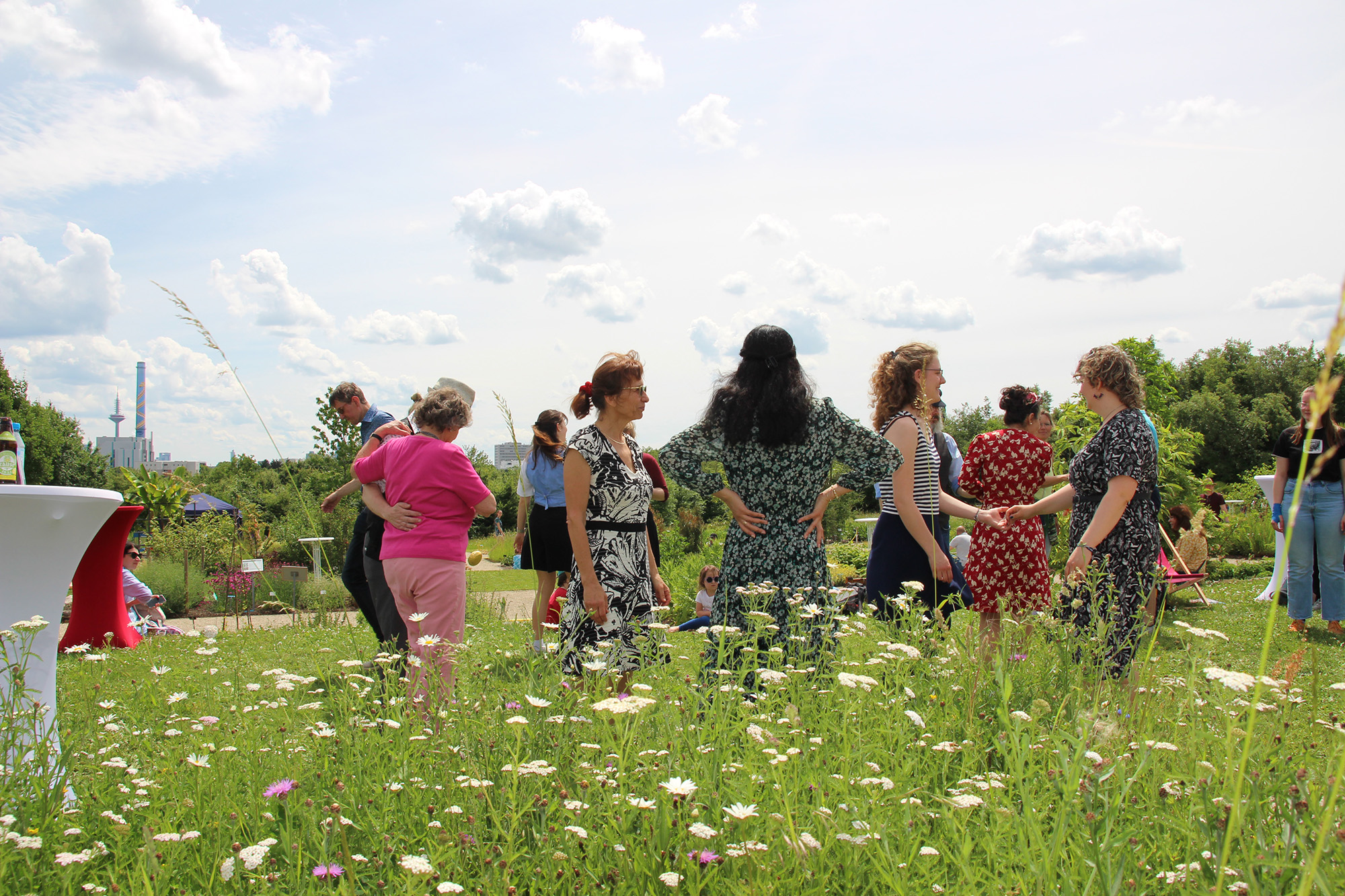
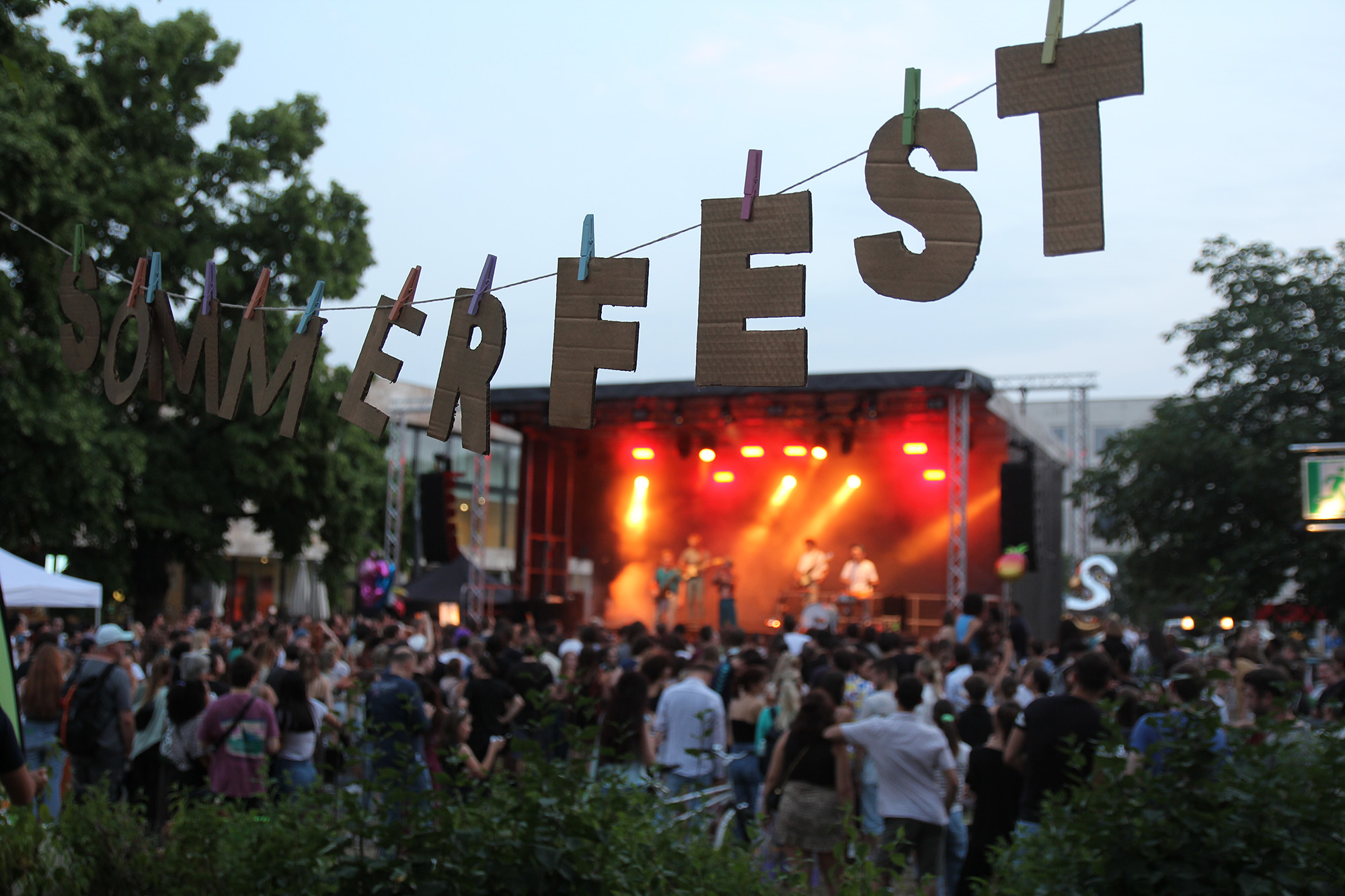
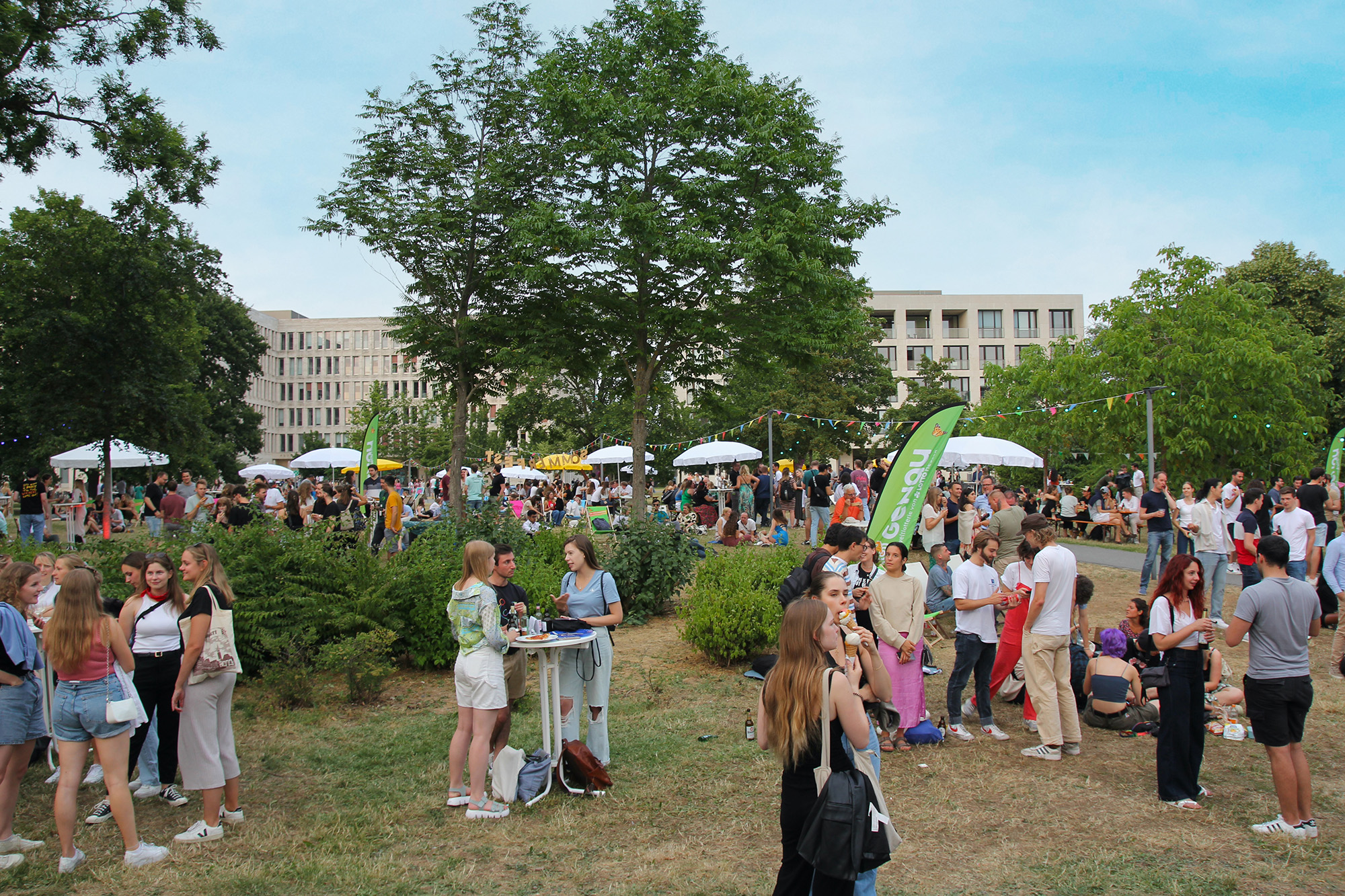
Bees, boules and belly dancing
Impressions from the spring and summer festival
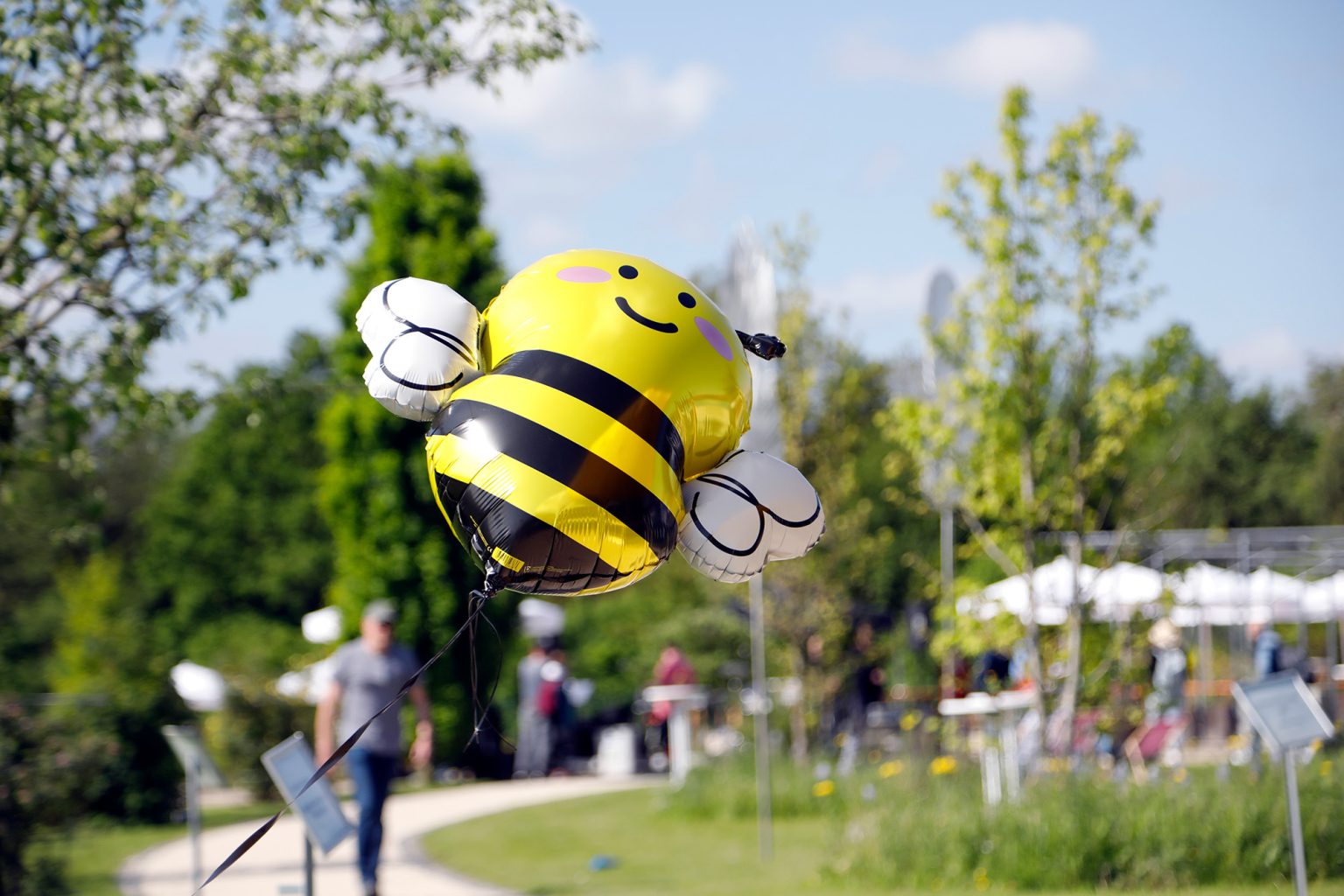
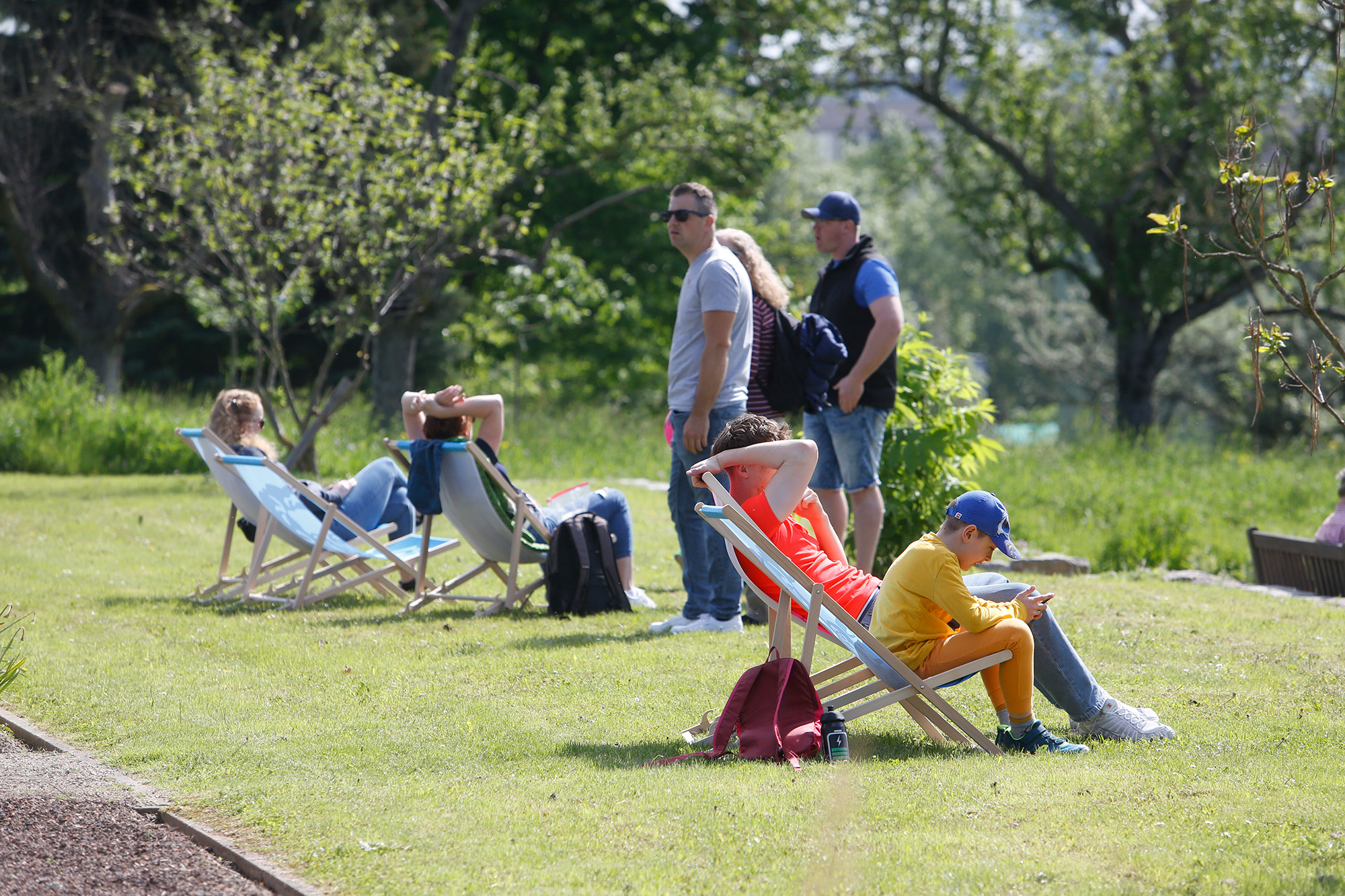
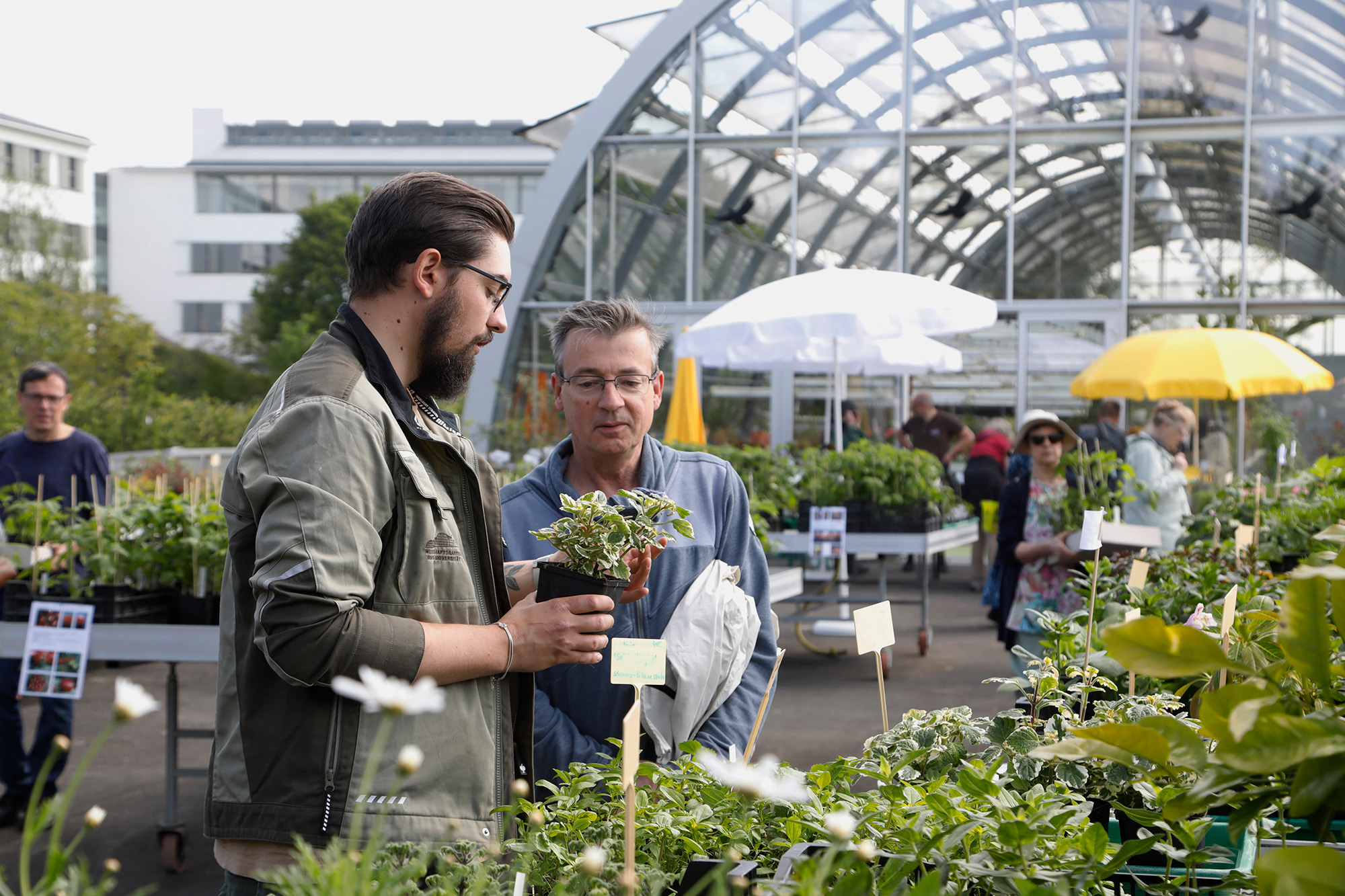
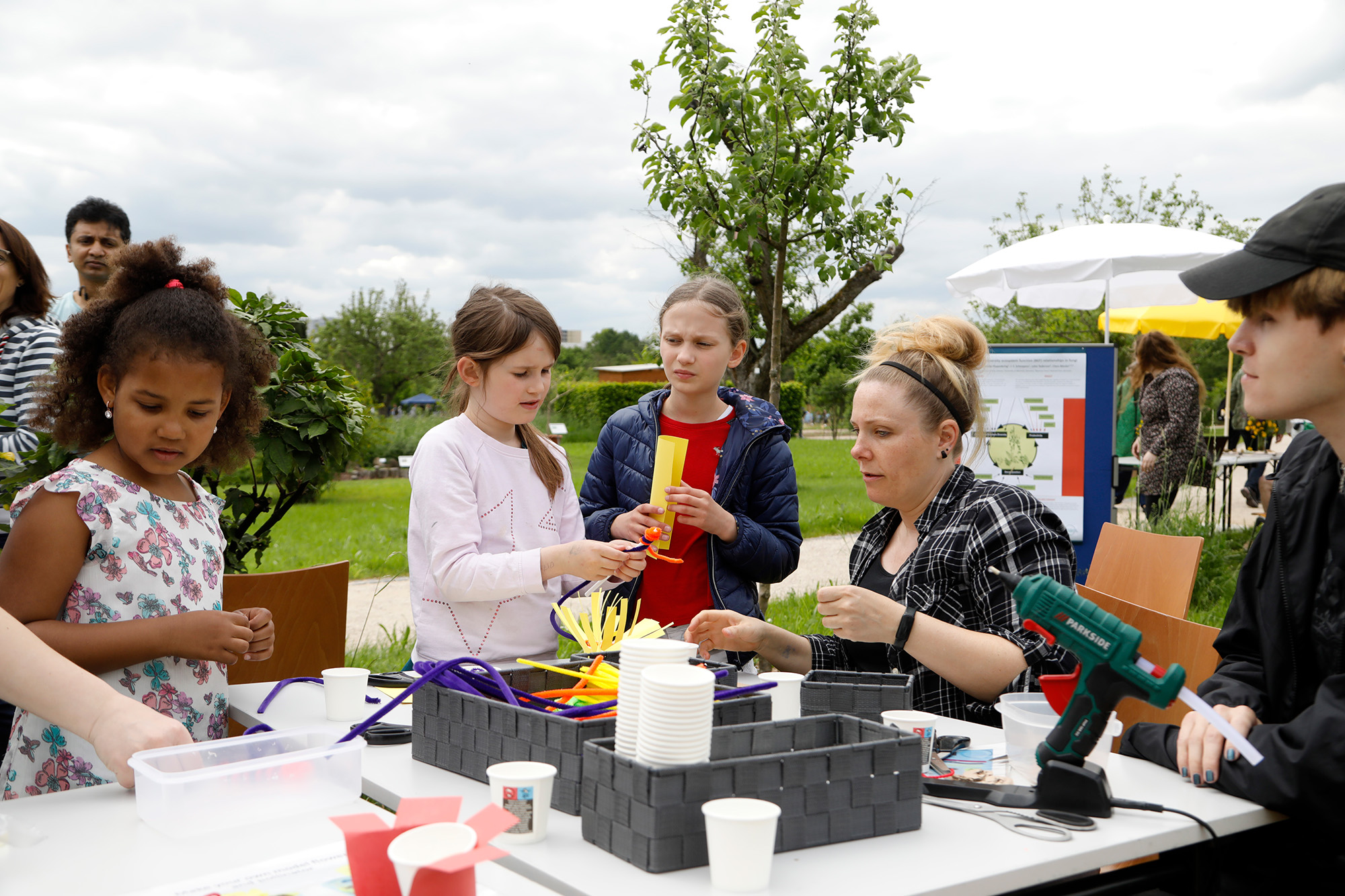
Fragrant lemon trees, meadows dotted with wildflowers and greenhouses full of exotic plants: The Science Garden is a small paradise in the middle of the Riedberg campus. Once a year, the Goethe University Spring Festival takes place here. The garden, which is normally used for scientific teaching and research, is then opened up for live music and dancing, guided tours and workshops, plant fairs and food trucks. Around 2,000 guests attended on May 14.
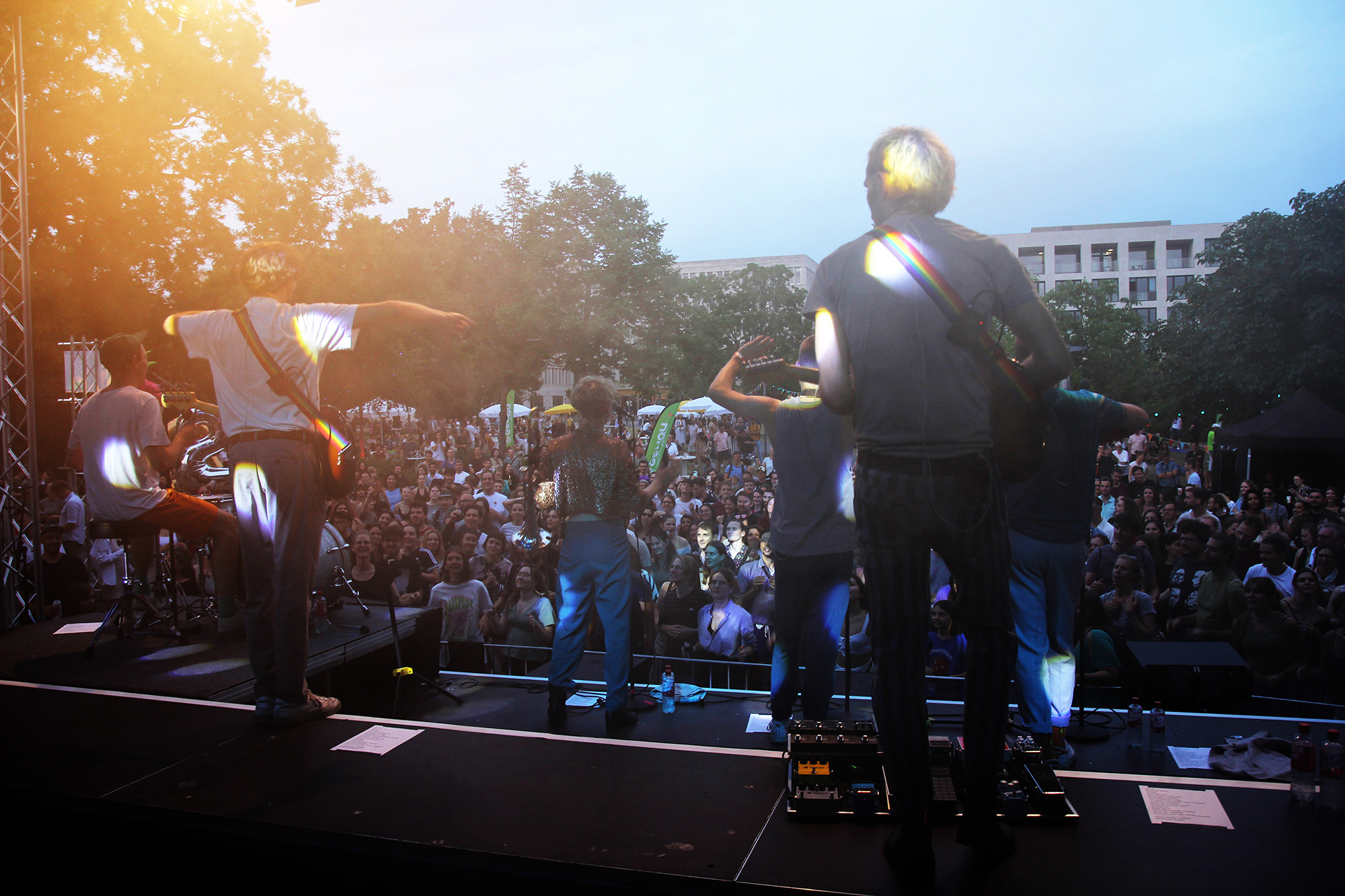
On June 29, students, staff and alumni of Goethe University as well as many citizens of Frankfurt celebrated the Goethe University summer party on the Westend campus. University President Prof. Enrico Schleiff personally opened the summer party at 4 pm. A top-class music program, including local hero KASI, ensured a chilled, groovy atmosphere throughout. The supporting program was wide-ranging and included boules, belly dancing and yoga, the "Pictures for the Human Rights" exhibition, creative writing with the student literary magazine Johnny, escape adventures and stand-up comedy, as well as discussions about the "Future Dialogue on Teaching".
Photos: Uwe Dettmar