People with a healthy thymus gland live longer and are less likely to fall ill. In addition, immunotherapies are more often successful in patients with a healthy thymus. This is shown by two international studies involving Universitätsmedizin Frankfurt. The results, now published in the journal Nature, open up new approaches to maintaining health during the aging process.
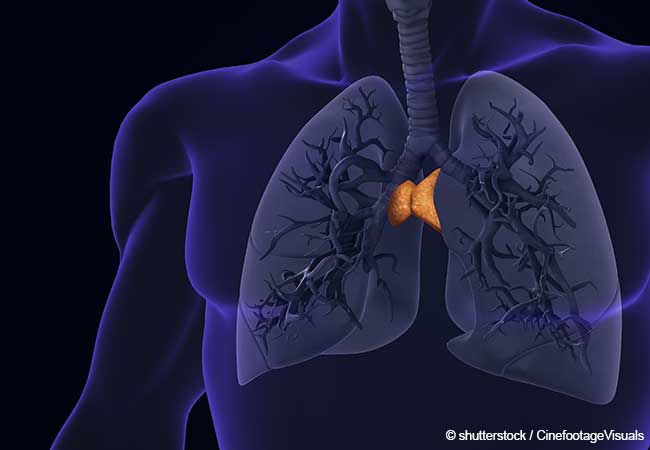
The thymus is a small organ located in the upper chest that plays a central role in the immune system: it produces T cells – specialized immune cells that recognize and fight pathogens. For a long time, the thymus was considered a “childhood organ” with little relevance in adulthood, as it shrinks and becomes fatty over the course of life. New studies fundamentally challenge this assumption.
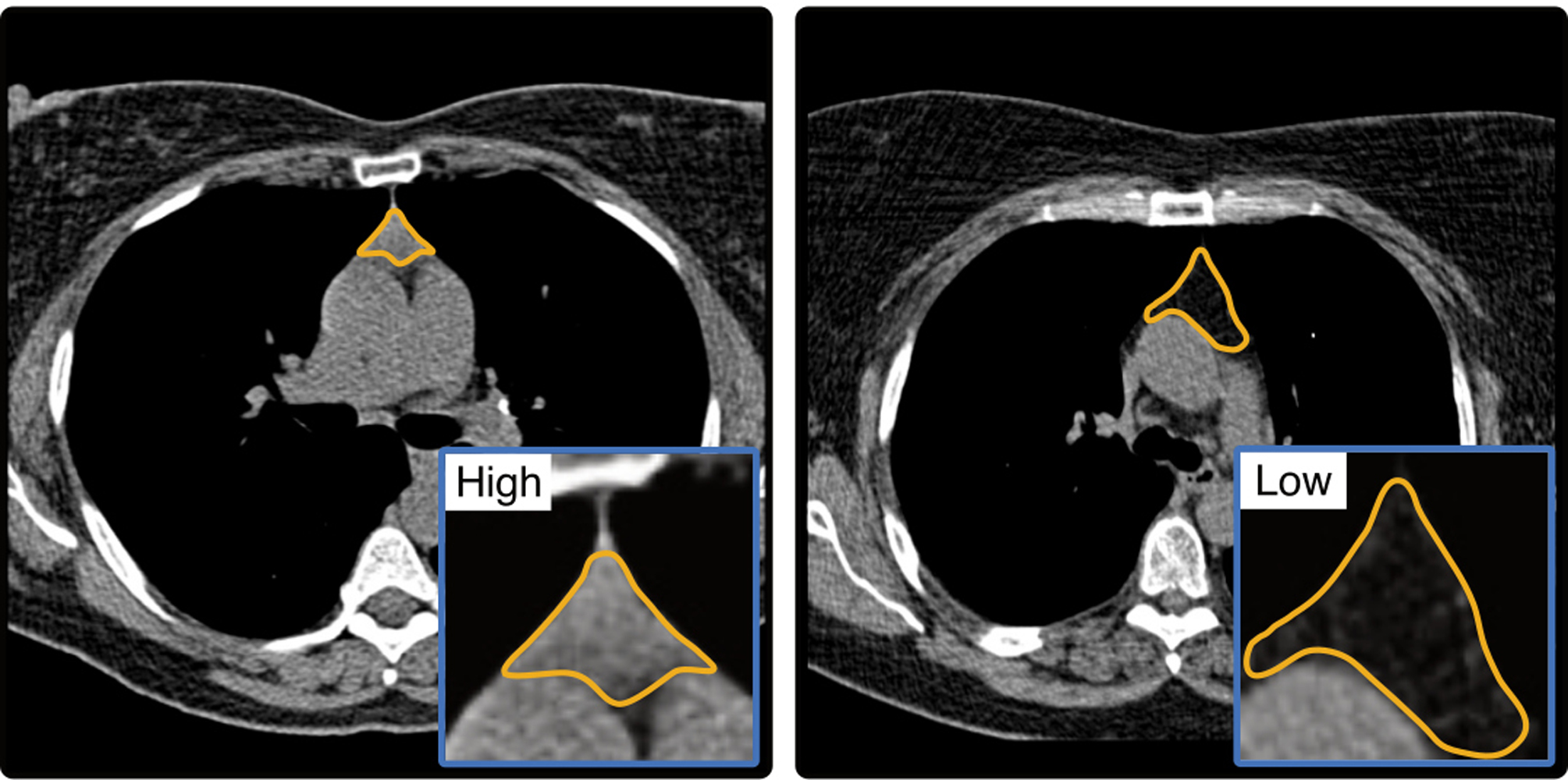
“The publications in Nature underscore the extraordinary scientific and clinical relevance of this work. They impressively demonstrate the contribution modern imaging can make in revealing previously underestimated biological connections,” says Professor Thomas Vogl, Director of the Clinic for Radiology and Nuclear Medicine at Universitätsmedizin Frankfurt. “If it becomes possible to analyze thymus health early and reliably, individual disease risks can be identified much earlier and counteracted in a targeted way – long before clinical symptoms appear.” Thymus health, as determined using routinely collected computed tomography imaging data, could therefore offer a new approach to identifying disease risks at an early stage and initiating targeted preventive measures. In imaging, thymus health can be assessed based on the degree of fatty degeneration. Lower levels of fat infiltration generally indicate better immune function.
Groundbreaking insights from long-term studies
Two international studies led by Harvard University (Boston) and research partners in Maastricht, Aarhus, London, and Frankfurt support this hypothesis. Dr. Simon Bernatz, first author of the publication, physician and research associate at the Clinic for Radiology and Nuclear Medicine at Universitätsmedizin Frankfurt, explains: “Our analyses show for the first time that thymus health seems to be an independent predictor of survival and disease risks. Particularly noteworthy is that we were able to obtain this information from routine computer tomography (CT) scans.”
The researchers developed a deep learning framework – an artificial intelligence system – to quantify CT images. They analyzed more than 27,000 CT scans collected as part of two major U.S. long-term studies: the National Lung Screening Trial (NLST), which examined lung health in current and former smokers over twelve years, and the Framingham Heart Study (FHS), one of the most well-known and enduring studies on cardiovascular health.
In both independent cohorts, good thymus health was closely linked to better health outcomes. In the NLST study, it was associated with lower overall mortality (50 percent), reduced lung cancer incidence (36 percent), and decreased cardiovascular mortality (63 to 92 percent). The FHS cohort confirmed the association with lower mortality from cardiovascular disease – independent of age, sex, and smoking status.
New perspectives in cancer medicine: the thymus as a biomarker
A second recent study by the same authors significantly expands these findings and suggests that thymus health may also predict the success of modern cancer immunotherapies. The study analyzed more than 3,400 cancer patients treated with immune checkpoint inhibitors. It found that patients with high thymus health had significantly better treatment outcomes. This was particularly true for lung cancer and melanoma, but also for breast and kidney cancer.
Remarkably, this association was independent of established tumor-based biomarkers such as PD-L1 or tumor mutational burden (TMB). Thymus health therefore provides additional information, as it reflects not the tumor itself but the performance of the immune system. At the same time, it was shown that good thymus function is associated with greater diversity of T-cell receptors and an overall stronger immune response.
“Our results suggest that thymus health is also a decisive and previously underestimated factor in the success of immunotherapies. In the future, it could help to select therapies more precisely and tailor them more individually to patients,” says Dr. Simon Bernatz.
The thymus as a key organ for healthy aging
The findings provide comprehensive evidence for the first time that the thymus remains active and plays a crucial role even in adulthood. A healthy thymus appears to help maintain long-term immune stability, better control inflammatory processes, and protect the body more effectively against age-related diseases. This places the thymus at the center as a key regulator of immune-mediated aging and general disease susceptibility in adulthood.
Another key insight: thymus health is closely linked to modifiable lifestyle factors. Negative influences may arise particularly from smoking, obesity, and lack of physical activity, as well as from chronic inflammatory processes promoted by unhealthy diets or prolonged stress. Conversely, the findings suggest that a healthy lifestyle can positively influence thymus function and thereby improve overall health and potentially the success of medical treatments.
Implications for research and therapy
These results fundamentally change the perception of the thymus—from a neglected organ of childhood to a central regulator of immune aging and disease susceptibility in adulthood. As a biomarker, it could in the future improve early detection of at-risk patients, guide the selection of appropriate immunotherapies, and optimize the timing of treatment. In addition, targeted strategies to strengthen or regenerate the thymus are becoming a focus of research. The health of this small organ may have a decisive impact on quality of life, life expectancy, and treatment success.
Publications:
(1) Simon Bernatz, Vasco Prudente, Suraj Pai, Asbjørn K. Attermann, Yumeng Cao, Jiachen Chen, Asya Lyass, Borek Foldyna, Leonard Nürnberg, Keno Bressem, Christopher Abbosh, Charles Swanton, Mariam Jamal-Hanjani, Michael T. Lu, Joanne M. Murabito, Kathryn L. Lunetta, Nicolai J. Birkbak, Hugo J. W. L. Aerts.Thymic health consequences in adults. Nature (2026) https://doi.org/10.1038/s41586-026-10242-y
(2) Simon Bernatz, Vasco Prudente, Suraj Pai, Asbjørn K. Attermann, Alessandro Di Federico, Andrew Rowan, Selvaraju Veeriah, Lars Dyrskjøt, Leonard Nürnberg, Joao V. Alessi, Patrick A. Ott, Elad Sharon, Allan Hackshaw, Nicholas McGranahan, Christopher Abbosh, Raymond H. Mak, Danielle Bitterman, Mark Awad, Biagio Ricciuti, Charles Swanton, Mariam Jamal-Hanjani, Nicolai J. Birkbak, Hugo J. W. L. Aerts. Thymic health and immunotherapy outcomes in patients with cancer. Nature (2026) https://www.nature.com/articles/s41586-026-10243-x