As democratic norms face growing strain, a new interdisciplinary series in Frankfurt – part of the DemoReg research network – brings together social research and music theater to explore the emotional and political dynamics of regression, and the possibilities of renewal.
How can democracy be strengthened amid mounting internal and external pressures? The new event series “Fractures – Democracy in Times of Regression” seeks to open fresh perspectives. A collaboration between Goethe University Frankfurt, the Institute for Social Research, the Sigmund Freud Institute, and Frankfurt Opera, the initiative forms part of the Frankfurt branch of the DemoReg research network.
The Hessian research alliance “Challenges to Democracy in Times of Its Regression – Times, Spaces, and Discourses” (DemoReg) investigates the causes and consequences of developments that threaten democracy. Funded by the Hessian Ministry of Science and Research, Arts and Culture, the alliance combines foundational research with empirical analysis and practice-oriented knowledge production, with particular attention to strategies for strengthening democracy.
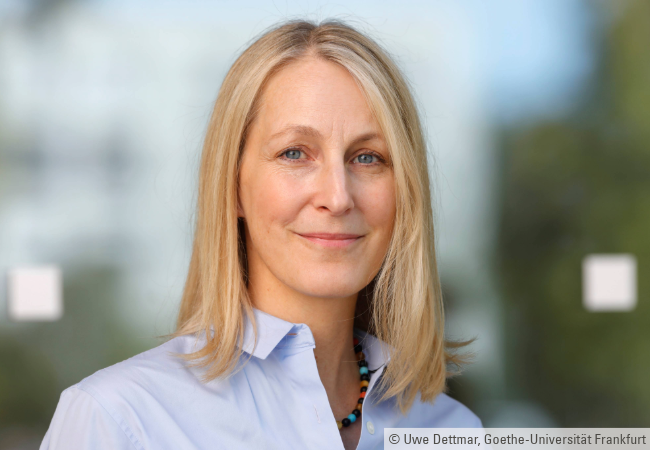
“We expect that this interdisciplinary academic alliance, in dialogue with the opera, will generate new perspectives on the topic,” says Vera King, Professor of Sociology and Psychoanalytic Social Psychology at Goethe University Frankfurt and Director of the Sigmund Freud Institute. A first collaboration during last year’s conference “After Us, the Deluge” demonstrated the potential of this partnership. Music theater, she notes, carries particular emotional force through sound and staging. “Art illuminates the affective dimensions of communal life in ways that are indispensable for understanding social and political dynamics,” King adds.
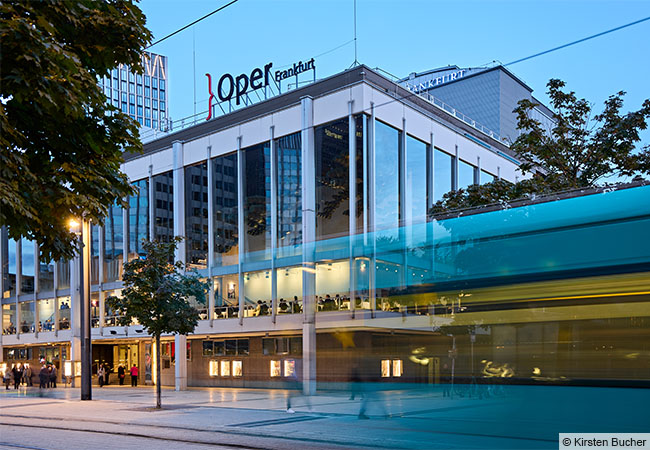
The series opens on June 20 with a public panel at Frankfurt Opera titled “Anti-Democratic Mobilization and the Power of Emotions.” Held in conjunction with the new production of Gioachino Rossini’s Tancredi, the discussion brings together opera director Manuel Schmitt, social psychologist Vera King, and sociologist Stephan Lessenich, moderated by dramaturg Konrad Kuhn. The opera’s narrative – depicting a community threatened by internal and external dangers, social exclusion, and radicalization as regressive response – resonates strongly with contemporary debates. Following the panel, audiences can continue the exchange in the “Opera in Dialogue” format.
“Music theater is a multifaceted art form whose strength often lies in connecting works of the past with the present,” says Konrad Kuhn. “For Frankfurt Opera, it is a privilege when performances enter into dialogue with academic discourse – especially with renowned partners such as the Institute for Social Research and the Sigmund Freud Institute.”
On December 10, a full-day interdisciplinary symposium, “Images of the Future – Democracy After Its Regression,” will take place at the former Dondorf printing house, with participation from the opera. “At a time when the future appears blocked, expanding the horizon of imagination is essential to revitalizing democracy,” says Stephan Lessenich, Professor of Social Theory and Social Research at Goethe University Frankfurt and Director of the Institute for Social Research. The symposium will feature contributions from political and social sciences, philosophy, psychoanalysis, social psychology, and the arts. The specific opera to be discussed will be announced in late April.
Further Information
Prof. Dr. Vera King
Professur für Soziologie und Psychoanalytische Sozialpsychologie
Goethe University Frankfurt
Tel. +49 (0)69 798 36531
E-Mail king@soz.uni-frankfurt.de