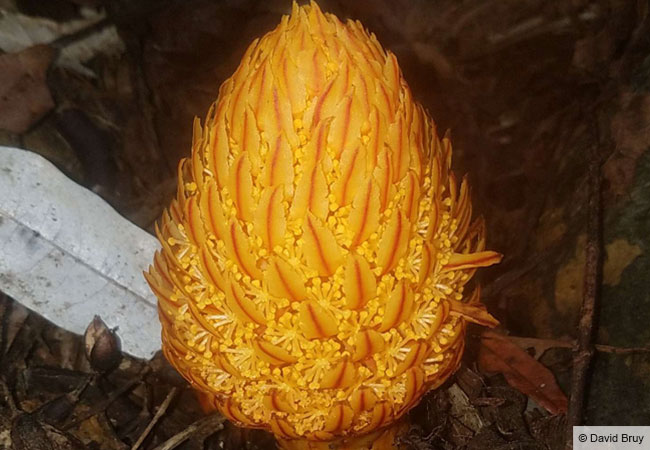
It is considered unshakeable textbook knowledge: All plants possess small cellular organelles called plastids—including chloroplasts, which are responsible for photosynthesis. “But—as is so often the case in nature—there are exceptions: the broomrapes (Orobanche), for example, as well as the genus Cuscuta from the morning glory family, have completely given up the ability to photosynthesize and live as clever parasites. These holoparasites tap into other plants to obtain nutrients instead of producing their own energy,” explains Prof. Stefan Wanke from the Senckenberg Research Institute and Natural History Museum Frankfurt and Goethe University Frankfurt. His colleague and lead author of the study, Dr. Matthias Jost, adds: “With modern DNA sequencing methods, it has been discovered in recent years that some of these holoparasites have pushed their reduction process even further—to the point of completely losing their plastid genome. Until now, this was known in only two groups: the Rafflesiaceae, which include the spectacular corpse flower (Rafflesia arnoldii), and the green alga Polytomella.”
Jost and Wanke, together with an international research team, have now demonstrated for the first time that there is a second plant family among flowering plants—the Mystropetalaceae—that has completely lost its plastid genome. All three are holoparasitic plants and therefore entirely dependent on a host plant. “This is only the second known case of a complete loss of the plastid genome in higher plants. Our results also show that the loss of the plastid genome in the Mystropetalaceae did not occur recently, but already in the common ancestor of the entire family,” says Wanke. According to the study, this ancestor diverged from photosynthetic plants about 80 to 100 million years ago—at a time when many modern flowering plant families first appear in the fossil record.