Political philosopher Rainer Forst on the mechanisms of democracy
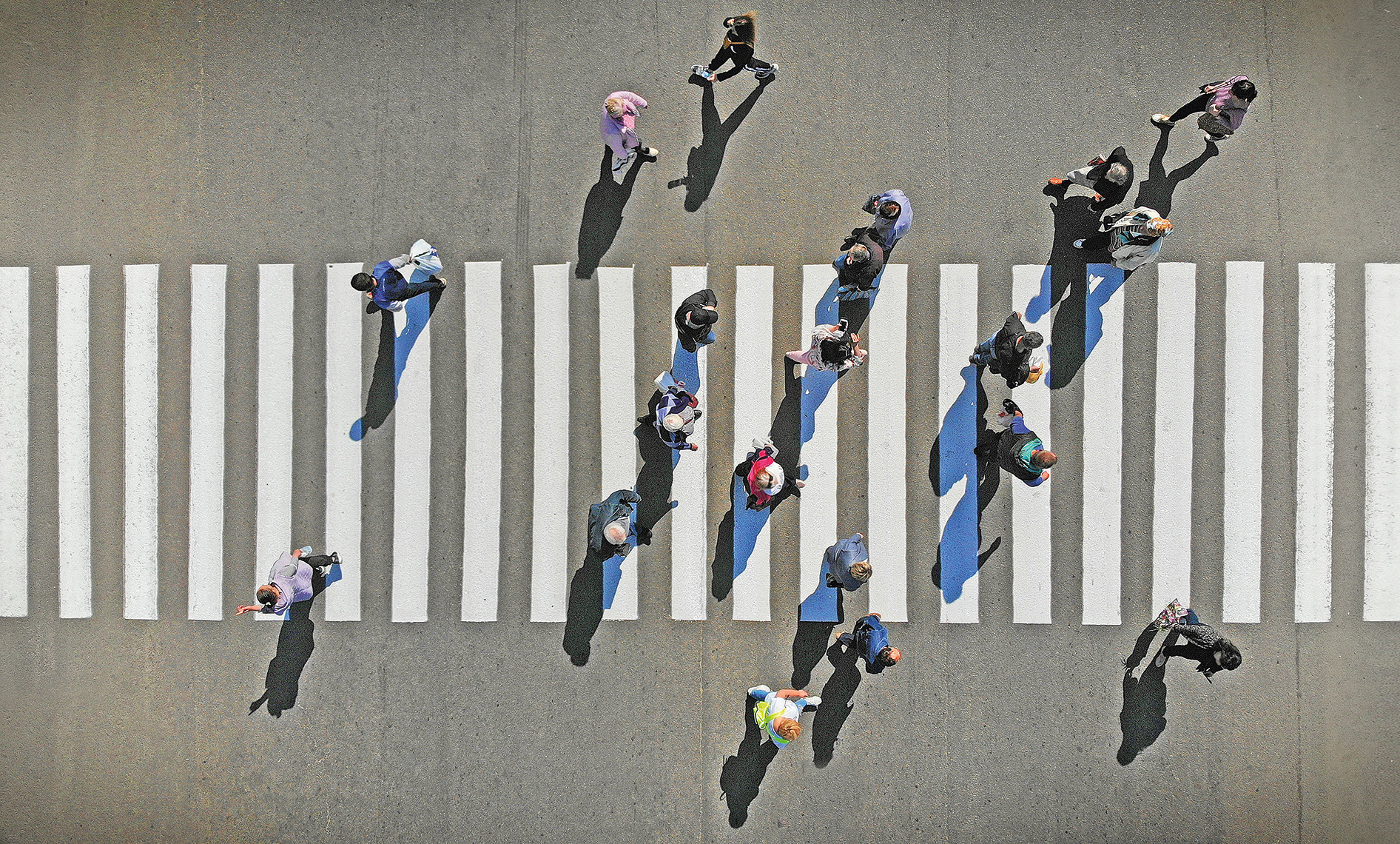
Photo:Varavin88/Shutterstock
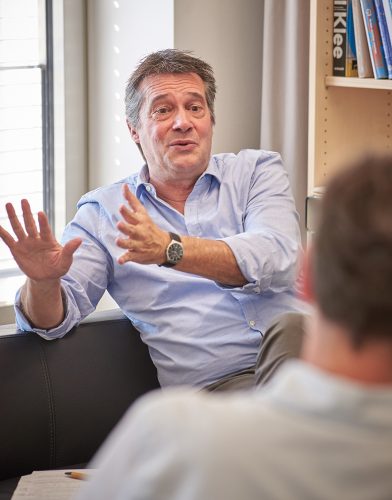
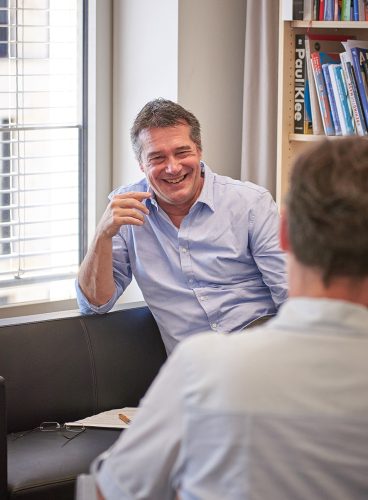
Normative orders form the basis of our social cooperation. Democracy, too, is such an order. Its rules are not static; they can be changed or adjusted. But what if people no longer trust in democracy? “Forschung Frankfurt” discussed this issue with Rainer Forst, Professor of Political Theory and Philosophy at Goethe University Frankfurt.
Forschung Frankfurt: Professor Forst, you are the Director of the Research Center Normative Orders, the former Cluster of Excellence. Together with Professor Fuchs-Schündeln, you are the spokesperson for the university’s “Orders and Transformations” profile area. Are you yourself an orderly person?
Rainer Forst (laughs and points to his desk): In fact, I’m not an orderly person at all, even though orders have been my special topic and area of responsibility for years. When an article was published about me recently that all too generously called me the “Messi of Philosophy” because I stayed in Frankfurt despite tempting offers from universities elsewhere, my family and friends teased me that it might have been referring to something else, just with a slightly different spelling.
Our discussion is about order in our society. The liberal democratic form of government is under threat in many places – at least, that’s what we hear everywhere. Is democracy experiencing a crisis?
There is no general, easy answer to this question. We are living in a time of many crises within democracy, and it could come to a real crisis of democracy if these cannot be resolved or mitigated. After all, a crisis is the moment when the question of whether and how things will continue hangs in the balance, which is why we should use the term cautiously. There are undoubtedly real processes of alienation from the existing system of democracy with many different causes, but two in particular: cultural reservations about the changes that especially migration brings with it, and the experience of social disadvantage and a corresponding lack of prospects. Unfortunately, these are often amalgamated into a dangerous mixture of resentment, but they must be kept separate. The first stance is xenophobic and therefore anti-democratic; regarding the second problem, grievances are sometimes attributed to democracy which, in fact, stem from the economic imperatives of a capitalist order. Some dissatisfaction with the existing democracy actually feeds off a democratic spirit, some other, in turn, off the opposite.
Are people turning away from democracy out of economic hardship?
The deeper problem with the loss of trust in politics is that part of the population has the impression that, whatever the outcome of the political game, there is little in it for them. And then they stop voting or vote for a far-right party out of protest – and not just in Eastern Germany. How the distribution of income and wealth in our country (and elsewhere) is developing is alarming. Responsible politics cannot not react to this but must instead effectively make life easier for people with low incomes through structural policy change.
It’s often said that the ongoing dispute in Germany’s “traffic-light” coalition is contributing to political apathy. Do you agree?
A lot of people certainly find it very annoying when a government takes a long time to reach decisions and argues over its differences in public. For me, however, it is not the fact that there is arguing which is leading to a loss of trust and to disappointment, but what the argument is about.
Can and should we not argue about everything in a democracy?
The fact that parts of a basic child allowance are being called into question is leading to a loss of trust among those people who are dependent on such funds. They don’t understand why cutbacks are made precisely here.
More and more people are voting for the AfD – the Alternative for Germany party – even though everyone ought to know by now that in doing so they are voting for an anti-democratic party.
Of course, anyone who votes for the AfD ought to know that it is a right-wing extremist party with inhumane aims. But many people perceive the existing system as hostile towards them and imagine themselves to be in self-defense mode when they vote for the AfD. Many feel “over-foreignized” (überfremdet), even colonized in their lifeworlds. Authoritarian, racist and anti-Muslim attitudes play a key role in this. With slogans such as “The people must defend itself and make its voice heard again!”, the AfD unfortunately scores rhetorical points. This is regressive, the denial of essential standards of democratic coexistence.
»Many people see themselves in a situation of cultural, economic and social uncertainty.«
From where does the loss of trust of those people stem who are not affected by economic hardship?
Many people see themselves in a situation of cultural, economic and social uncertainty, even if they are not affected by material hardship. They are very open to someone like Trump who says: I know what you need, and I have the political solutions to improve your situation, both economically and in terms of your social status. This works above all with people who hold very conservative views and think they embody a “leading culture”. Until the end of the 20th century, they set the tone in society. Cultural changes make them feel seriously challenged; the debate about gender-equitable language is one example, the migration debate another. And a certain radicalism as well as brutality in the rhetoric comes from these groups now feeling on the defensive and fearing that they can no longer dictate how the game is played.
Does this mean the conflicts that threaten democracies are not specific to democracy?
The economic upheavals since the 1990s, exacerbated by the financial crisis at the beginning of the 21st century, have triggered political and economic changes on a major scale. Societies have reacted to this in different ways. As you can read in Thomas Piketty’s work: Income levels, but especially wealth, have changed considerably and not only in Western societies because we are, among other things, embedded in a global economic system whose rules can hardly be governed by politics anymore – at least not within the given framework. Many conflicts, including those brought about by climate change or digital transformation, are not inherent to democracy. Still, they are played out in a particularly forceful and visible way in democratic societies. If democracies are unable to deal with conflicts productively, if they fail to show that democratic political power can still be effective with regard to these central issues in our lives, then groups come along and promise that they can “Take Back Control” or “Make America Great Again”. They win votes and elections and count it as a democratic success.
You have already mentioned the term “trust” several times during our conversation, a term that also plays an important role in the “ConTrust” cluster project. How exactly is trust created?
In the “ConTrust” research initiative, we assume that people who want to understand the dynamics of trust in modern societies have often been looking in the wrong place. In various disciplines, trust was thought to be based on familiarity: The less social plurality, difference and conflict there are, the more trust is possible. To us, however, it seems that the dynamics of modern societies, as well as those of international relations, function differently. Heterogeneity and conflict are not incompatible with trust – what matters is how conflicts are structured and carried out.
»Democracies depend on us understanding that underlying conflicts do not simply disappear«
Is trust in politics dwindling because conflicts are not being played out?
Democracies, as well as other political systems beyond the state, depend on us understanding that deep-seated conflicts do not simply disappear; rather, they characterize political life. But conflicts can develop and be experienced in a way that generates trust. If this were not possible, modern democratic systems and states governed by the rule of law could not exist. We investigate this not only in politics and the media but also in the economy. The modern economy is a competitive system, but there must nevertheless be opportunities to build trust; otherwise, it would not work.
We can therefore conclude that arguing over differences in public is not at all harmful to democracy.
Exactly. We assume that complex political systems are only conceivable as systems of conflict in the first place. And we are looking at the conditions under which dynamics that generate trust can develop in conflict-ridden societies. Our understanding of trust is thus related to successful processes of conflict: Important interests are denied, whereas others are respected, and perhaps those involved have so far not seen this second category of interests. They only become visible in conflict. This does not mean that there are no forms of trust that develop apart from conflict. Nor does it imply that every conflict creates trust.
»Trust is not desirable as such«
It is also important to remember – after all, we are in Frankfurt, the home of Critical Theory – that trust is not desirable as such. For if it has no sound justification, then it is of no value. Especially not if it draws on traditional ideas of what is good and right, and if this socially ingrained conventional force infiltrates the legal system, for instance. For example, some argue that Muslim women who wear headscarves are unsuitable as judges because people might have less trust in the legal system – which must of course be “neutral” – if a judge wears a Muslim headscarf. But this is a false and only partial understanding of neutrality because it disadvantages a group whose religion is “visible” according to conventional standards, while that of others remains invisible, although it nevertheless exists and influences judges who have such beliefs. In a state governed by the rule of law, however, it is only concrete, well-founded objections against specific individuals that can lead to the suspicion that they are not good judges or public prosecutors, and not a general prejudice. Such trust is the result of a learning process that we should deem possible and work towards in a democracy. In the words of Adorno, it is about everyone being able to “be different without fear.”
But how do you distinguish between desirable and undesirable trust?
We are interested in where a culture of communication, of justification, of eye to eye exists in conflicts that does not resolve these conflicts but is nevertheless of such a kind that it can generate trust. The benchmark for justified trust must be examined within specific contexts, but a certain form of recognition, which signals that people regard each other not just as an instrument but instead as interacting partners in a cooperative relationship, plays a role in every context. In this relationship, disputes are used to determine what one can and cannot rely on.
We spoke earlier about possible causes for the loss of trust. Can we say that certain groups are no longer able to trust at all?
Democracy is a demanding model for organizing social and political life. It is not simply a matter of changing majorities deciding which way things go. Those who are legitimized to rule for a certain period are bound to regard all others as equals to whom they must justify what they consider to be right for everyone. Government responsibility includes having to justify especially to those who are particularly disadvantaged why their situation cannot be improved through political measures. This is why a claim to justice is inscribed in democracy. If parts of society with limited resources and poor status are marginalized, no justified trust can be expected from these groups.
Meaning that a positive dispute is based on a few premises.
Correct. A democratic debate can only be productive if it is based on the premise that it is a dispute between equals. This does not mean that everyone also equally wins. But they must have the impression that their basic status of being equal democratic subjects is not being violated.
On what, then, does the trust of those groups rest who go to elections and do not question the system?
This shows the need to differentiate between trust that is generally justified, only partially justified or not at all. The trust of a predominant social group can rest on the fact that they know they will come off well – at the expense of others. From their perspective, their trust is then well justified, but not from a general democratic perspective because it might be the case that they want to deprive others of their basic rights. Democracies, however, are not instruments of self-assertion and enrichment for majorities. Instead, democracies are (ideally) forms of organization in which that which should apply to all is fought over at a level at which the best justifications that can be given towards everyone are incorporated into the law. Democratic trust, properly understood, necessitates at least a serious attempt to do this.
But am I also obliged to grapple with people who see that differently?
Yes, but making clear that an attitude is racist is not a form of disrespect but of respect. The real crisis of democracy looms at the point where people no longer know or want to know that democracy is a lived form of respect and the sharing of power.
Where are the justifications embedded? In the Basic Law?
The Basic Law, too, rests on certain fundamental norms. What does human dignity actually mean? Human dignity is actually (and you can hear the Kantian in me now) the idea that in the realm of norms that should apply to all of us, we are equals to the extent that if I believe that our common life ought to be organized in such and such a way, I must be able to justify this to you not just by flinging a few reasons at you, which you can then accept or not. Rather, I am obliged to give you reasons as a person with an equal right to justification.
»When democracy goes awry, systems of privilege become entrenched«
And that applies to all issues negotiated in democracy?
When things go well, the justification of that which applies to all extends further and further in democracy, and the political community – that is, those who are socially and politically equal but at the same time allowed to remain culturally different – is defined in an egalitarian sense. When democracy goes awry, systems of privilege become entrenched – whether cultural, religious, social or economic. Democracy remains precarious if it is not spelt out in terms of the principles of justice and equal respect.
This means that in a democratic society everyone must remain in constant dialogue with everyone else, especially, of course, in a multicultural society.
We must assume that collectives can be self-reflective learning entities that are able to show a certain form of equal respect. If this were not the case, attempts to overcome barriers, for example, between Blacks and Whites in the US, would be hopeless. A struggle that has not been won, as we can see. Not in our country either, as far as racial discrimination is concerned.
But not lost either.
It is neither lost nor won nor pointless. Just like the struggle of women for emancipation, the struggle of same-sex lifestyles for equality, the struggle for social betterment – nothing is won once and for all. And there are setbacks – even regression, that is, the fight against emancipation. We have just celebrated the 175th anniversary of the first national, (mostly) democratic parliament in St. Paul’s Church in Frankfurt, and in conjunction with this, we need to remember the complex history of the struggles for as well as against democracy in Germany. Today, too, we must ask: At what point does an economic order based on inequality undermine a democratic order? This question posed by the “old” Frankfurt scholars is still pressing. As is another one that once occupied the Frankfurt School: How do cultural stereotypes and even grave forms of racism find their way into social structures? Sometimes, I think, this also happens via ideological uses of the word “trust”.
Hasn’t society changed since the 1960s?
Of course. The way people think about equality in some areas today, also about political participation, has changed a lot. Just look at the greater social acceptance of homosexuality (despite many misgivings that continue to exist). But it would be over-optimistic to believe that we are on a steady path towards perfecting democratic orders. We never were. Struggles have always been necessary. And there are always setbacks. The fact that the first Black president in the US was succeeded by a racist populist like Trump is appalling, but can unfortunately be explained critically from a sociological perspective.
If there are so many setbacks, where does this “advancement” of trust in democracy come from again and again?
Trust is always something like an “advance payment”. Whether in relation to a person or an institution: You never know and you cannot fully control what the other person will do or how an institution will develop. Trust is always associated with uncertainty, a risk, an investment in the motivation and competence of others, as Luhmann says. But there are prerequisites, of course: I call this, in keeping with Habermas, a culture of communication at eye level. Trust is essentially about being taken seriously, about being respected despite and precisely in conflict. The days of homogeneous societies are over, and, on closer inspection, they never even existed.
The interview was conducted by Pia Barth and Anke Sauter.
About Rainer Forst
Rainer Forst ist Professor für Politische Theorie und Philosophie an der Goethe-Universität, Direktor des Forschungszentrums »Normative Ordnungen« sowie Co-Sprecher der Forschungsinitiative »ConTrust – Vertrauen im Konflikt«. Er leitet außerdem weitere wichtige Drittmittelprojekte. Im Zentrum seiner Forschung stehen Fragen von Gerechtigkeit, Demokratie und Toleranz. Er befasst sich zudem mit der Fortentwicklung Kritischer Theorie und der Philosophie Kants. 2012 hat ihn die Deutsche Forschungsgemeinschaft als wichtigsten politischen Philosophen seiner Generation mit dem Leibniz-Preis ausgezeichnet. Er ist Mitglied der Berlin-Brandenburgischen Akademie der Wissenschaften und der British Academy. Forst hatte renommierte Gastprofessuren in den USA inne (unter anderem an der New School for Social Research in New York und der University of Michigan) und lehnte mehrere Rufe aus den USA und von deutschen Universitäten ab. 2021 war er Fellow am Thomas-Mann-Haus in Los Angeles.
Forsts wichtigste Publikationen (alle bei Suhrkamp und in viele Sprachen übersetzt): »Kontexte der Gerechtigkeit« (1994), »Toleranz im Konflikt« (2003), »Das Recht auf Rechtfertigung« (2007), »Kritik der Rechtfertigungsverhältnisse« (2011), »Normativität und Macht« (2015), »Die noumenale Republik« (2021). Sein Werk wird international breit rezipiert, sowohl auf Symposien als auch in Zeitschriften wie »Political Theory« und »Philosophy and Social Criticism«.