What career opportunities are available to doctoral candidates and postdocs in ministries and affiliated agencies, media, and civil society organizations? What is required for a successful start, and through which channels and formats can academic expertise reach practical application? Early career researchers at the Rhine-Main Universities had the opportunity to discuss these questions with practitioners on January 30,2026 at an event organized by the Goethe Research Academy for Early Career Researchers (GRADE), in cooperation with the Erasmus+ ENGAGEgreeen project and the RMU Mercator Science Policy Fellowship Program.
GRADE supports doctoral candidates and postdocs in preparing for both academic and non-academic career paths. Although the vast majority eventually leave academia, they devote themselves fully to research during their doctorate and postdoc phases and often require guidance in exploring other professional fields. The Mercator Science Policy Fellowships and ENGAGEgreen regularly bring experts from non-academic career paths to the Rhine-Main Universities. In addition to ministries and subordinate authorities, these experts work in international organizations, civil society associations, and science-related journalism. As part of a tailored discussion program, they engage with RMU scholars on topics relevant to their work. At the same time, they offer ECRs insights into how they, as professionals in politics, administration, associations, and media, contribute to integrating scientific findings into political discussions and decision-making processes.
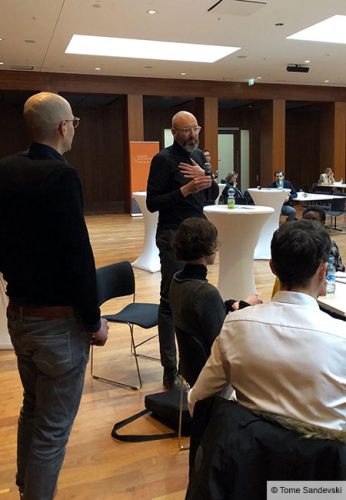
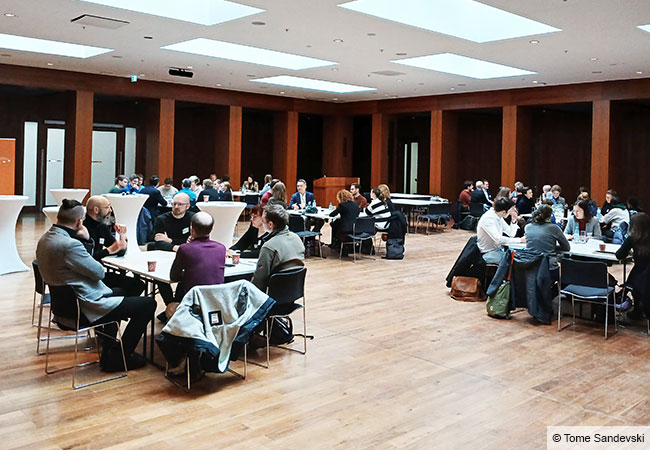
As part of a World Café held on January 30, early career researchers and practitioners discussed the demand for academic expertise in practice, differences in working methods between academia and practice, the skills and experience required for entry into various professional fields, and the challenges of transitioning between them. The good news is that researchers already possess many of the qualifications needed for a successful career outside of academia, including subject-specific expertise – for example in regulating hazardous substances at the Hessian Ministry for the Environment. Even more important are the interdisciplinary skills they developed during doctoral and postdoctoral phases, such as self-organization and the ability to process large amounts of information quickly and effectively.
A growing number of entry pathways in ministries and subordinate authorities are now open to candidates who have not completed the traditional legal Staatsexamen, once mandatory for such positions. Work in these and other practical fields is, of course, not purely academic. Often, it is more important to deliver a concise result quickly than to provide a definitive answer – for example, when preparing a briefing for the Minister-President in the State Chancellery of Rhineland-Palatinate or analyzing a current issue in the editorial office of the MDR. Thoroughly researched academic findings can influence political action and public discourse, but only in combination with other factors. In ministries, leadership directives and parliamentary majority dynamics also play a significant role. Both can shift suddenly, with tangible effects on daily work – as practitioners emphasized.
Participants left with many new impressions, insights, and connections. They particularly appreciated the diversity of perspectives and the open, honest atmosphere of the discussions. The next meeting is scheduled for early 2027.
Author: Dr. Matthias Köhler (GRADE)