Career mentoring program enters its fifth year with rising demand
Goethe University Frankfurt’s mentoring program GROW@Goethe has launched its fifth cohort with record participation: 340 students and 230 mentors are taking part this year. Since its inception in 2022, more than 1,100 students have been matched with around 800 mentors from a wide range of professional fields. Demand continues to grow steadily. The program is coordinated by Goethe University’s CareerService.
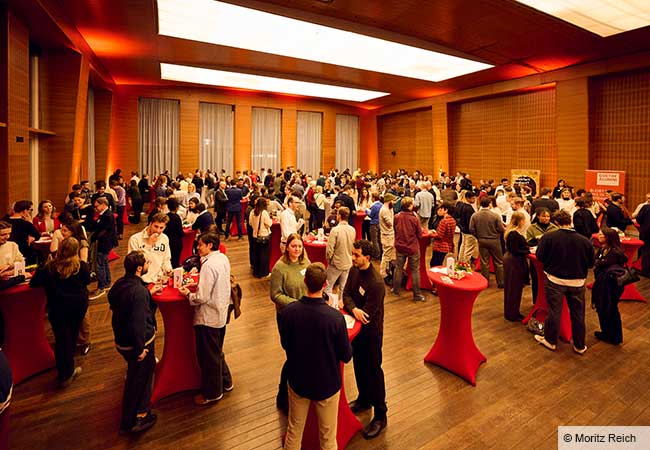
The kickoff event in the university’s ceremonial hall drew a large audience. Designed as the starting point of the ten-month program, the event focused on connection and exchange – not only within mentor-mentee tandems, but also among the students themselves. To make networking easier, the organizing team introduced rotating discussion rounds. “Approaching strangers can feel daunting. The structured rounds help everyone speak with everyone else – and participants respond very positively,” says program coordinator Dorothee Schneiders.
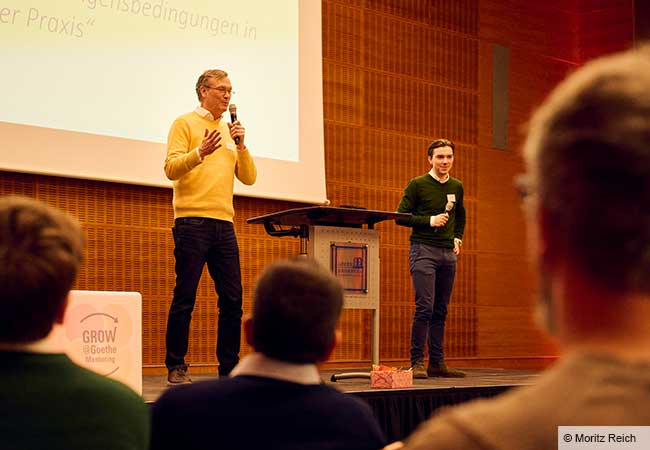
An inspiring example of successful mentoring came from business coach Andreas Bley and his mentee Finn Gröbel, a master’s student in business administration. Reflecting on their experience, they described mentoring as “honest work on oneself.” When empathy meets precise questions and assumptions are openly examined, they explained, clarity emerges. GROW@Goethe creates the framework for less overthinking, more focus, constructive feedback, and the confidence to accept rejection as part of professional growth, the two summarized their personal experiences.
Students join GROW@Goethe with clear goals: stronger career orientation, greater self-confidence, improved decision-making during their studies, polished application documents, and better interview skills. Many also seek practical guidance – whether in securing internships, student assistant positions, employment opportunities, or deciding on further academic pathways such as a PhD. Students may apply from their third semester onward. Participants come from all faculties, and a significant proportion are international students navigating the German academic and employment landscape. For them, the program provides an important bridge between university studies, professional life, and long-term career planning, explains Jenni Werner, who supports international participants.
Interest among mentors is equally high, says Dorothee Schneiders. Some have been involved since the program began. They come from diverse sectors including business, academia, culture, and public service, and range in age from 30 to 78. Most support one or two mentees; one retired mentor currently advises five. The recommended format is two one-to-one meetings per month, in person or online. Most mentors are alumni of Goethe University and contribute extensive professional experience. Students select their mentors from a curated pool based on profiles rather than names, ensuring the focus remains on expertise and fit.
At its core, GROW@Goethe centers on individual 1:1 mentoring tandems. This is complemented by a structured framework program that strengthens professional skills and peer networks. It includes preparatory workshops, a formal opening event, thematic sessions on personal branding, networking, and peer counseling, and tailored offerings for first-generation students and international participants. Company partnerships provide additional insights into professional practice. The program concludes with a celebratory closing event.
Schneiders emphasizes that developing a realistic understanding of professional life before graduation can significantly reduce academic stress. Speaking with a judge or legal counsel before taking a state exam, for example, can clarify career decisions. Internships and student employment similarly help students assess potential career paths. Employers increasingly expect practical experience – without it, applications are often less competitive.