
Meet the scientists researching at Goethe University: Infectiologist Maria Vehreschild

We wanted to know: Why did our scientists want to become scientists in the first place? What are they working on, and what do they still want to discover? You can read their answers to these questions and more – including how they motivate their working groups and what they could really do without – as part of this series, which successively introduces some of the people behind the research conducted at Goethe University.
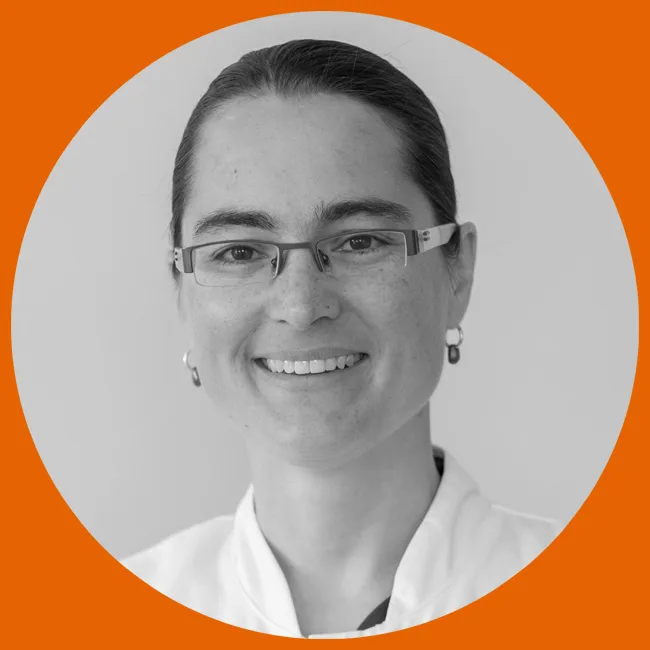
Name: Maria Vehreschild
Profession: Infectiologist
Place of work: Infectiology and Clinical Microbiome Research

Why did you become a scientist?

As a clinician scientist – a role that combines physician and scientist in one person – I wanted to optimize patientcare based on the most important medical needs.

What are you currently working on?

On developing drugs that are based on the effects of microorganisms.

What do you still want to find out?

I would like to identify a group of microorganisms capable of ridding people of multidrug-resistant bacteria that can cause serious infections.

What does your ideal workday look like?

As a clinician scientist, I like to divide my day into a clinical and a scientific component.

What could you easily do without in your daily work?

Bureaucracy.

What I like about my job is…

… its versatility.

How do you motivate your working group?

I try to get my team excited about the things that interest me in research. I also believe in flat hierarchies and participative leadership.

To me, Goethe University Frankfurt is….

… a place where I can be scientifically creative.

What should society know about your research? Are there common misconceptions, and if so, which?

Colonization with bacteria does not always have to be dangerous. Many of the bacteria that colonize us are very useful. But there are also dangerous bacteria that can cause diseases. It is important to precisely distinguish between the two.

How do you get your mind off research?

Spending time with my family or doing sports.

Prof. Dr. med. Maria Vehreschild is a member of the EMTHERA cluster project. The research network investigates the processes that underlie systemic diseases at the interface of infection, inflammation and immunity.

More information
on Prof. Vehreschild’s research topics is available here.

Relevante Artikel

Das Team des DFG-Projekts: Prof. Dr. Jonas Hagedorn (Lehrstuhlinhaber für Christliche Gesellschaftslehre an der Theologischen Fakultät Paderborn), Moritz Broghammer, M.A., B.A. (Wissenschaftlicher Mitarbeiter in der Arbeitsstelle „Sozialethik im Gesundheitswesen“ der Goethe-Universität Frankfurt/Main), Prof. Dr. Bernhard Emunds (Leiter des Nell-Breuning-Instituts der Phil.-Theol. Hochschule Sankt Georgen in Frankfurt/Main), Dipl.-Jur. Leonie Uliczka (Wissenschaftliche Mitarbeiterin am Lehrstuhl für Christliche Gesellschaftslehre an der Theologischen Fakultät Paderborn), Mag. theol. Lisa Neubauer (Wissenschaftliche Mitarbeiterin am Nell-Breuning-Institut der Phil.-Theol. Hochschule Sankt Georgen in Frankfurt/Main) und Prof. Dr. Christof Mandry (Leiter der Arbeitsstelle Sozialethik im Gesundheitswesen an der Goethe-Universität Frankfurt/Main). © Hagedorn/ThF-PB

Off to a Strong Start

Kick-off Meeting for the DFG-Funded Research Project “Social Ethics of International Recruitment of Healthcare Professionals” A kick-off meeting at Hochschule

Das Team des DFG-Projekts: Prof. Dr. Jonas Hagedorn (Lehrstuhlinhaber für Christliche Gesellschaftslehre an der Theologischen Fakultät Paderborn), Moritz Broghammer, M.A., B.A. (Wissenschaftlicher Mitarbeiter in der Arbeitsstelle „Sozialethik im Gesundheitswesen“ der Goethe-Universität Frankfurt/Main), Prof. Dr. Bernhard Emunds (Leiter des Nell-Breuning-Instituts der Phil.-Theol. Hochschule Sankt Georgen in Frankfurt/Main), Dipl.-Jur. Leonie Uliczka (Wissenschaftliche Mitarbeiterin am Lehrstuhl für Christliche Gesellschaftslehre an der Theologischen Fakultät Paderborn), Mag. theol. Lisa Neubauer (Wissenschaftliche Mitarbeiterin am Nell-Breuning-Institut der Phil.-Theol. Hochschule Sankt Georgen in Frankfurt/Main) und Prof. Dr. Christof Mandry (Leiter der Arbeitsstelle Sozialethik im Gesundheitswesen an der Goethe-Universität Frankfurt/Main). © Hagedorn/ThF-PB

Mit Elan ins Forschungsprojekt gestartet

Kick-off-Meeting des DFG-geförderten Forschungsprojekts „Sozialethik der internationalen Anwerbung von Gesundheitsfachpersonal“ Mit einem Kick-off-Meeting an der Hochschule Sankt Georgen ist das

Öffentliche Veranstaltungen
Das Team des DFG-Projekts: Prof. Dr. Jonas Hagedorn (Lehrstuhlinhaber für Christliche Gesellschaftslehre an der Theologischen Fakultät Paderborn), Moritz Broghammer, M.A., B.A. (Wissenschaftlicher Mitarbeiter in der Arbeitsstelle „Sozialethik im Gesundheitswesen“ der Goethe-Universität Frankfurt/Main), Prof. Dr. Bernhard Emunds (Leiter des Nell-Breuning-Instituts der Phil.-Theol. Hochschule Sankt Georgen in Frankfurt/Main), Dipl.-Jur. Leonie Uliczka (Wissenschaftliche Mitarbeiterin am Lehrstuhl für Christliche Gesellschaftslehre an der Theologischen Fakultät Paderborn), Mag. theol. Lisa Neubauer (Wissenschaftliche Mitarbeiterin am Nell-Breuning-Institut der Phil.-Theol. Hochschule Sankt Georgen in Frankfurt/Main) und Prof. Dr. Christof Mandry (Leiter der Arbeitsstelle Sozialethik im Gesundheitswesen an der Goethe-Universität Frankfurt/Main). © Hagedorn/ThF-PB

Mit Elan ins Forschungsprojekt gestartet

Kick-off-Meeting des DFG-geförderten Forschungsprojekts „Sozialethik der internationalen Anwerbung von Gesundheitsfachpersonal“ Mit einem Kick-off-Meeting an der Hochschule Sankt Georgen ist das

Goethe-Universität trauert um Micha Brumlik

Erziehungswissenschaftler, Publizist und eine starke Stimme in der deutsch-israelischen Verständigung: Die Goethe-Universität trauert um Prof. Dr. Micha Brumlik, der im

You cannot copy content of this page