Because the tsetse fly can transmit sleeping sickness, it is commonly combatted with insecticides or caught in traps. Bioscientists at Goethe University have now developed a method for producing the attractants for the traps in a biotechnological procedure. The Frankfurt scientists hope that in the future, the attractants can then be produced locally in rural areas of Africa at low cost.
The tsetse fly occurs in large regions of sub-Saharan Africa. The flies feed on human and animal blood, transmitting trypanosoma in the process – small, single-cell organisms that use the flies as intermediate host and cause a dangerous inflammation of the lymph and nervous system in both animals and humans. There is no vaccination for this sleeping sickness; untreated, it usually ends in death. In agriculture, particularly cattle breeding, sleeping sickness – or trypanosomiasis – causes enormous damages in the form of sick and dead animals.
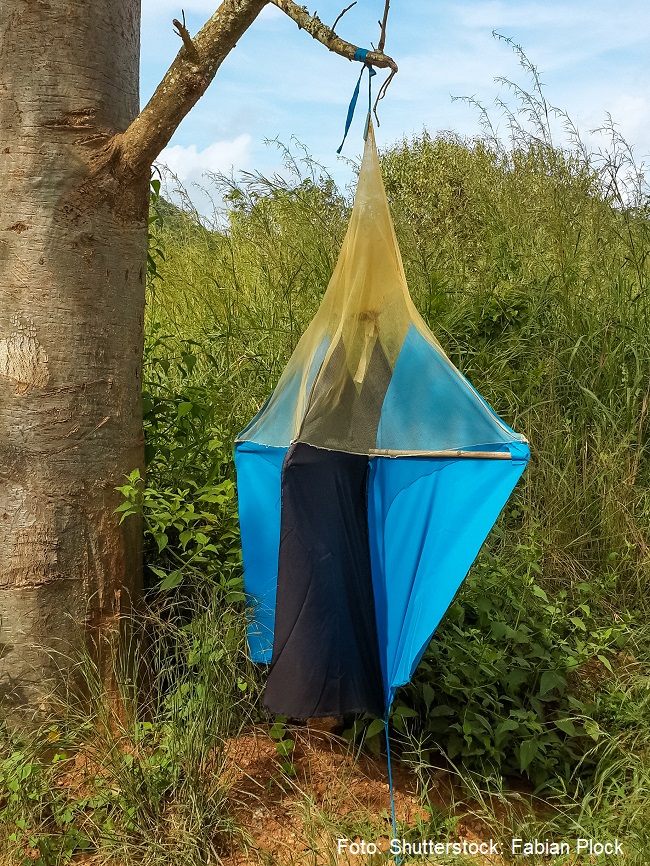
In addition to the use of insecticides, the insects are also caught in traps. The attractants used include substances that also occur in cattle urine and which attract tsetse flies. These substances (3-ethylphenol and 3-propylphenol, or 3-EP and 3-PP for short) are synthesized out of oil derivatives or also extracts from cashew nut shells through chemical processes. However, both processes are complex and neither practical nor affordable for rural communities in Africa.
In the LOEWE collaborative research project MegaSyn, molecular biologists at Goethe University have now succeeded in producing 3-EP and 3-PP in genetically modified brewer’s yeast (Saccharomyces cerevisiae). They used a yeast strain into which they had previously introduced a new metabolic pathway, and changed its sugar metabolism. This enabled the yeasts to produce similarly high concentrations of 3-EP and 3-PP as those which occur in cow urine.
Doctoral student Julia Hitschler from the Institute for Molecular Biosciences at Goethe University explains: “Our yeasts could ideally grow in Africa in nutrient solutions on the basis of plant waste products, food rests or fodder rests. This would make production of the attractant almost cost-free. We are currently looking for partners to help us test our yeasts locally and provide them to the local population.”
The potential for the new yeasts go beyond the tsetse attractants, add Professor Eckhard Boles, who heads the project. In the future, other substances that have been previously won through oil or coal could be produced through the new yeasts: “Our yeasts could be developed to produce other alkylphenols besides 3-EP and 3-PP. These alkylphenols could be used for the production of lubricant additives or surface-active substances in cleaning agents.”
Publication: Julia Hitschler, Martin Grininger, Eckhard Boles: Substrate promiscuity of polyketide synthase enables production of tsetse fly attractants 3-ethylphenol and 3-propylphenol by engineering precursor supply in yeast. Scientific Reports, https://doi.org/10.1038/s41598-020-66997-5
Source: press release from 22 June 2020