Online banking and paying by card or smartphone are becoming increasingly widespread. While convenient for many, it also has a dark side, as the research of economic sociologist Barbara Brandl shows: the trend toward digital payments poses risks both for individuals and for society as a whole.
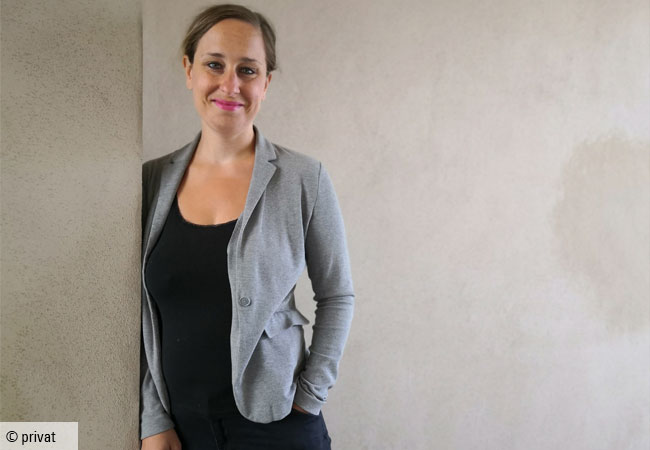
UniReport: Professor Brandl, your research focuses on financial inclusion. What does that mean, and why is it important?
Barbara Brandl: Financial inclusion means being able to make payments, having access to bank accounts, and being able to save money or take out loans. If we assume that opportunities in modern societies are distributed via financial markets or even basic payment infrastructures, then it becomes very important whether or not people have access. The ability to pay is essential in modern societies.
How decisive is the amount of money someone has at their disposal to financial inclusion?
Income and education, which is closely tied to income, are still by far the most important factors when it comes to the distribution of opportunities. However, we observe that unequal access to financial services further amplifies existing inequalities. Our data shows that loans, and especially digital financial products, are used much more frequently by people in higher income groups than those in lower ones.
Does this apply to all digital financial services?
The difference is minimal among those using debit cards, whether EC cards, standard debit cards, or both. For all other digital financial services, we see a significant gap between high- and low-income groups. The disparity is particularly pronounced with credit cards, where there is a 24 percent difference in usage between the lowest and highest income groups. Considering that credit cards are often a prerequisite for accessing certain services – like renting cars or booking flights – this has a noticeable impact. We also see a significant gap with services like Apple Pay, Google Pay, and PayPal. The more digital the service, the more pronounced the exclusions become.
How do you explain these differences between income groups?
Environmental effects likely play a role. We know this from other studies: when we look at who plans for the future and who has knowledge about financial products, we see a significant difference that can be explained by the experiences people have in their surroundings.
In addition to these typical patterns of inequality, you and your co-authors discuss further, in some cases new, patterns of inequality in a recently published study on financial inclusion. What are these?
The second major factor, alongside income, that explains the varying adoption of digital financial services is age. For example, online banking increasingly requires a smartphone. It’s possible that age itself isn’t the determining factor, but rather a person’s affinity for technology. Younger people tend to be more tech-savvy. Additionally, digital financial services are more frequently used by men, which is partly because women, on average, have less money available and are less interested in financial topics. However, the effect of gender is not as pronounced as that of age and income. An interesting exception is “buy now, pay later”: a service more frequently used by women, as shown in our study.
What could be the reason for this?
Women are less likely to take out loans, whether for negative or positive reasons, even when it could lead to an increase in assets. “Buy now, pay later” is an interest-free loan, provided the payment is made within 30 days. It’s considered a fairer alternative compared to credit card debt, which tends to have a negative reputation.
Does this affect women more strongly?
The barrier to using “Buy now, pay later” options is much lower, especially for women who are generally more hesitant about taking on loans. This is likely because women more often purchase items for which “Buy now, pay later” is offered, including household goods and children’s clothing. Another possibility is that these expenses are often linked to advertising on social media, which seems to resonate more strongly with women.
What are the disadvantages for those who do not use digital financial services?
First, access to cash has been significantly restricted in Germany over the past ten years, particularly due to the reduction of bank branches and ATMs, especially in rural areas. This is clearly evident when compared to France, where almost no reductions were made during the same period. For certain groups and many older individuals, cash holds a different significance compared to many younger people with higher incomes. It takes much more effort to access cash at all, and on top of that, it is no longer accepted everywhere. Additionally, analog banking services have become more expensive – for example, if I prefer not to use online banking and instead continue to rely on services at a physical branch.
In your study, you draw a strong connection between digital payments and consumer loans. How would you describe this?
It was digitalization that enabled banks to become heavily involved in granting consumer loans. Digital payments simultaneously gave rise to a new form of consumer loans directly tied to payments. Credit cards introduced a new means of digital payment but also created a straightforward way to access consumer loans. Most checking and debit cards automatically include the option for an overdraft loan, i.e. the ability to overdraw the account. In the majority of cases, one has to actively contact the bank to change this. This extends all the way to “Buy now, pay later” services offered by Klarna and PayPal. That’s why we argue that these elements need to be considered together.
What are the consequences?
Many people don’t even realize whether they’re just making a payment or actually taking out a loan – it’s so closely intertwined. Behavioral studies have long shown that the more payments are made digitally, the more consumer loans are taken out. This is one of the main reasons why digital payments are such a profitable business model for banks, credit card companies, and other payment service providers. Behavioral economics has demonstrated that people often handle money irrationally. A well-known example is overdrawing one’s account and incurring high overdraft fees, even though there’s enough money in another account that’s being used for savings.
Are many people overextending themselves?
This can be particularly problematic for specific groups. Younger people, in particular, face a high risk of over-indebtedness due to consumer loans, especially through “Buy now, pay later” options. In general, consumer loans significantly contribute to social inequality dynamics, although it’s important not to view consumer loans as a single category, as research by Jenny Preunkert highlights. It’s not just lower-income groups; middle-income groups also frequently take out consumer loans, most often for valuable items like cars. Lower-income groups, however, are much more likely to use consumer loans for everyday necessities, such as groceries and medical bills.
In your study, you and your co-authors refer to such everyday loans as an indicator of the precariousness of daily life. However, you emphasize that consumer loans can also help reduce social inequality. Could you provide an example of this?
Consumer loans can help bridge a financial gap – for instance, if I’m starting a new job but don’t yet have the money for a new suit for work or a car to reach the workplace. Traditionally, research has attributed the accumulation of wealth to mortgage loans taken by higher-income groups, but valuable items purchased with consumer loans can also increase my wealth over time.
How can we counteract inequality in financial inclusion?
We need an equivalent to cash in the digital world. That’s why I strongly support the digital euro. We need a form of digital payment that operates on public infrastructure. Additionally, it’s very important to preserve cash because no digital payment method will ever produce as little data as paying with cash – and no payment system will ever be as simple. That is why we must also maintain the associated infrastructure, including branch networks and ATMs.
So, is it not a uniquely German sentiment to regret the decline of cash payments?
The discourse in Germany on “wanting to keep our cash” likely responds strongly to the fact that the branch network has been drastically reduced over the past ten years. We need to remember that cash is a public infrastructure that everyone can benefit from. Digital payments, on the other hand, are currently handled exclusively by private providers, who need to make a profit from it.
The digital euro was recently called into question by the EU Parliament’s designated rapporteur, citing concerns for the private sector. What arguments still support it?
It’s also about providing a European alternative, ideally publicly funded, to the oligopoly of Visa and Mastercard. Almost all cross-border payments are processed through these two companies, and their dominance is growing, even in domestic digital payments. This also has a geopolitical dimension. For example, Trump was able to simply have a Brazilian judge’s credit card blocked. And the banking payment network, SWIFT, which is supposed to be an international system, is in fact dominated by American banks. We are dependent on American companies for payment transactions – another key reason for the digital euro.
Questions: Jannik Waidner
Barbara Brandl is a professor of sociology specializing in organization and economics at Goethe University Frankfurt’s Faculty of Social Sciences. Her research focuses on the sociology of credit, digital financial services, financial inclusion, as well as cash and the digital euro. She has also published work on mobile money, the Global South, green biotechnology, and in the field of political economy.
Further reading: Barbara Brandl, Zsófia S. Ignácz, Alexandra Keiner and Jenny Preunkert: Von der Kreditkarte zu Buy-Now-Pay-Later: Soziale Ungleichheiten in der Nutzung von digitalen Bezahldiensten und Konsumkrediten [From Credit Cards to Buy-Now-Pay-Later: Social Inequalities in the Use of Digital Payment Services and Consumer Credit]. Weizenbaum Discussion Paper #49, October 2025.